Raising Laying Hens: A Beginner's Guide to Fresh Eggs Year-Round
Everything you need to start a small backyard flock and keep healthy hens laying eggs through most of the year.
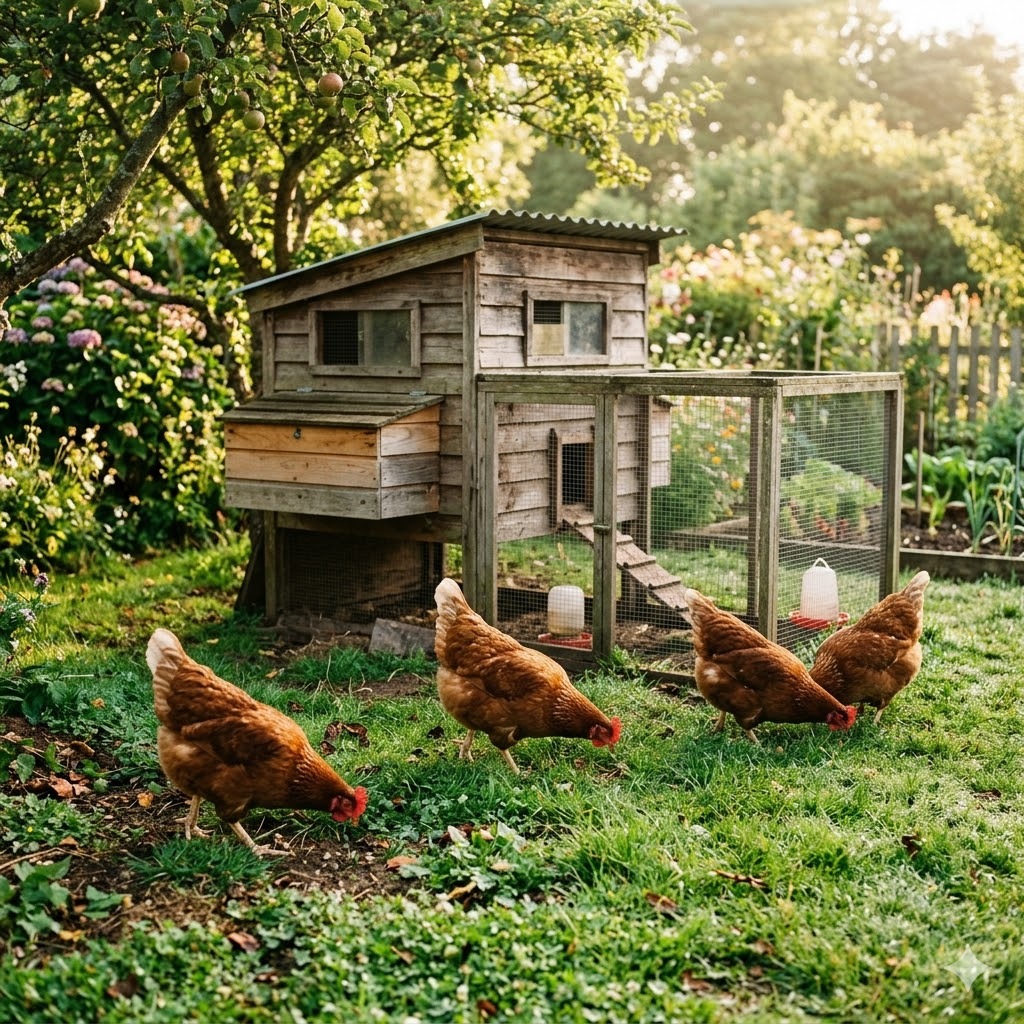
Laying hens are female chickens kept for their eggs rather than meat, and they are the gateway animal of any homestead. A small flock turns kitchen scraps and a bag of feed into fresh eggs nearly year-round, and they forgive the beginner mistakes that would sink a more demanding animal. If you want to take one real step toward feeding yourself, hens are where most people start, and for good reason.
Is it right for you?
Hens are about as low-commitment as livestock gets, but they are still livestock. They need clean water and feed every single day, a secure place to sleep, and someone to shut the coop at dusk and open it at dawn. That ties you down more than people expect - a weekend away means a neighbor on chicken duty.
You need a bit of outdoor space, ideally a small yard or run where they can scratch. Hens are noisy enough to annoy a close neighbor (a laying hen announces her egg loudly), and they attract flies and predators if you let things get dirty. Roosters are a separate question - you do not need one for eggs, and many places ban them outright.
Before you buy a single bird, check your local laws and zoning. Plenty of towns cap the number of hens you can keep, require a permit, set coop setback distances, or ban roosters. A five-minute call to your local council saves a lot of grief later. If you can commit ten minutes a day, have a corner of yard to spare, and your area allows it, hens are a sound choice.
Best breeds
Pick a breed that matches your goal. For steady eggs and a calm temperament, you cannot go far wrong with any of these:
- ISA Brown - a hybrid bred purely for laying; roughly 300 eggs a year, friendly, but tends to burn out and slow down after two or three seasons.
- Rhode Island Red - the classic dual-purpose homestead bird; hardy, reliable brown eggs, and tough in cold weather.
- Australorp - a gentle heavy breed with an excellent laying record; does well in heat and handles confinement calmly.
- Plymouth Rock (Barred Rock) - friendly, cold-hardy, and a steady layer of brown eggs; a good all-rounder for families.
- Leghorn - the white-egg machine; lays heavily and eats less feed, but is flighty and not much of a pet.
- Orpington - big, docile, and beautiful; lays a bit less than the hybrids but is wonderfully tame and good in cold climates.
For a first flock, mix two or three calm brown-egg breeds. Hybrids like the ISA Brown give you the most eggs early on; heritage breeds like the Australorp or Rock lay a little slower but keep going longer.
Housing and space
Housing is where beginners either set themselves up well or invite disaster. Hens need two areas: a coop for sleeping and laying, and a run for daytime scratching.
Inside the coop, allow roughly 3 to 4 square feet per bird for standard breeds. Cramming birds in leads to pecking, disease, and dirty eggs. Provide one nest box for every three or four hens - they share, and you rarely need more. Give each bird about 8 inches of roost bar to perch on at night, set higher than the nest boxes so they sleep on the roost instead of fouling the nests.
The run should give each hen at least 8 to 10 square feet, and more is always better. If you can let them free-range part of the day, even better for the birds and your feed bill. We have a coop-size calculator on the site if you want to plug in your flock number and get exact dimensions.
Predator-proofing matters more than anything else - a single weak spot will cost you the whole flock in one night. Use half-inch hardware cloth, not chicken wire, which raccoons and dogs tear through easily. Bury or skirt the wire outward to stop diggers, cover the run from hawks, and latch the coop with something a raccoon's clever paws cannot open. Our predator-protection guide walks through this in detail; do not skip it.
Feeding
Feeding hens is simple. The backbone of their diet is a complete layer feed - either pellets or crumble - which is formulated with the protein and calcium a laying hen needs. Keep it available all day; hens self-regulate and eat what they need. A standard hen eats roughly a quarter-pound of feed a day, so a few birds go through a 50-pound bag over several weeks.
Alongside feed, offer a separate dish of crushed oyster shell or grit free-choice. The extra calcium keeps eggshells hard, and hens take what they need. If your birds do not range on soil, they also need insoluble grit to grind their food, since chickens have no teeth.
Kitchen scraps and garden trimmings are a fine supplement and one of the real joys of keeping hens - they will happily clean up vegetable peelings, stale bread, and leftover greens. Keep scraps to a treat-sized portion so they do not crowd out the balanced feed. Avoid anything moldy, very salty, raw dried beans, onion in quantity, and avocado, which is toxic to birds. Clean, fresh water at all times is non-negotiable - hens drink more than you think, and a dehydrated hen stops laying fast.
Daily care and routine
The daily rhythm is quick once you settle into it. Each morning, open the coop, check that water is clean and topped up, and refill feed as needed. Collect eggs at least once a day - twice in hot weather - so they stay clean and do not tempt egg-eating habits or predators.
Through the day, a quick glance at the flock tells you a lot. Healthy hens are active, bright-eyed, and noisy. A bird sitting hunched, off on her own, or not eating is your early warning that something is wrong.
At dusk, the hens put themselves to bed - you just need to shut and latch the coop door against night predators. This evening lock-up is the single most important habit you will form.
Weekly, scrape or refresh the droppings under the roost and top up bedding. Every few weeks, do a fuller clean-out of the coop. Once a season, strip the bedding completely, and while you are at it, pick up a few birds and check them over for mites, lice, and general condition. Ten minutes a day plus an hour on the weekend covers nearly everything.
Common health issues
Hens are hardy, but a few problems come up often enough that every keeper should recognize them. Catching trouble early is the whole game.
- Mites and lice - external parasites that live in feathers and bedding; signs include pale combs, restlessness, and dirty-looking vents. Check birds at night when mites are active.
- Worms - internal parasites that cause weight loss and poor laying; common in birds on the same ground for a long time.
- Egg-binding - an egg stuck in the tract, which is an emergency; the hen strains, sits puffed up, and may walk like a penguin.
- Respiratory illness - sneezing, wheezing, nasal discharge, or swollen eyes; spreads quickly through a flock.
- Bumblefoot - a swollen, scabbed infection on the foot pad, usually from a cut or rough landing.
The honest advice here is to find a poultry or avian vet before you need one. Diagnosis is genuinely hard for a beginner, and the wrong home treatment wastes time a sick hen does not have. When something looks off, isolate the bird from the flock and get a professional opinion on diagnosis and treatment rather than guessing.
What you get
The obvious return is eggs - fresh, with deep orange yolks that put store eggs to shame. A productive young hen lays roughly 4 to 6 eggs a week in her first couple of years, so even three or four birds keep a household in eggs through most of the year. Laying naturally slows in winter and during the annual molt, when hens drop feathers and pause to regrow them; this is normal and not a sign of illness.
Beyond eggs, the flock earns its keep in quieter ways. Hens turn food scraps that would otherwise go in the bin into food, their droppings and bedding compost into excellent garden fertilizer, and they patrol the yard for slugs, ticks, and other pests. There is also the plain satisfaction of stepping out each morning to collect breakfast you produced yourself.
Getting started
Start small - three to six hens is plenty for a first flock and a household's worth of eggs. You can begin in one of three ways: day-old chicks, which are cheap but need a heat lamp and about five months before they lay; "point-of-lay" pullets at roughly 16 to 20 weeks, which cost more but lay within weeks; or grown hens from someone downsizing, which is hit-or-miss on age and health.
For most beginners, point-of-lay pullets are the sweet spot - you skip the fragile brooding stage and get eggs the same season. Buy from a reputable local breeder or hatchery so you start with healthy, vaccinated stock, and get all your birds at once if you can, since adding to an established flock causes squabbling.
Have everything ready before the birds arrive: a finished, predator-proof coop and run, feeders, waterers, a bag of layer feed, oyster shell, and bedding. Going in with the setup done turns the first week from a scramble into a pleasure.
Rough costs
Costs vary a lot by region and how much you build yourself, but here is a realistic picture for a small flock.
The big one-time expense is the coop. A decent ready-made coop for a few hens runs roughly a few hundred dollars; building your own from reclaimed materials can cut that sharply if you have the time and tools. Add feeders, waterers, and hardware cloth for another modest chunk.
The birds themselves are cheap - day-old chicks cost only a few dollars each, while point-of-lay pullets run somewhat more per bird. Ongoing, your main cost is feed: budget roughly a bag of layer feed every few weeks for a small flock, plus bedding and the occasional bag of oyster shell. All in, expect a meaningful upfront outlay for housing and then fairly low monthly running costs. Hens will not make you money against the price of supermarket eggs, but the eggs are far better, and the setup pays you back in food and satisfaction rather than cash.