Raising Leghorns: The Prolific White-Egg Machine
A guide to Leghorns - the classic high-output white egg layer behind most commercial eggs, an active, hardy, feed-efficient hen that lays a huge number of large white eggs on little feed.
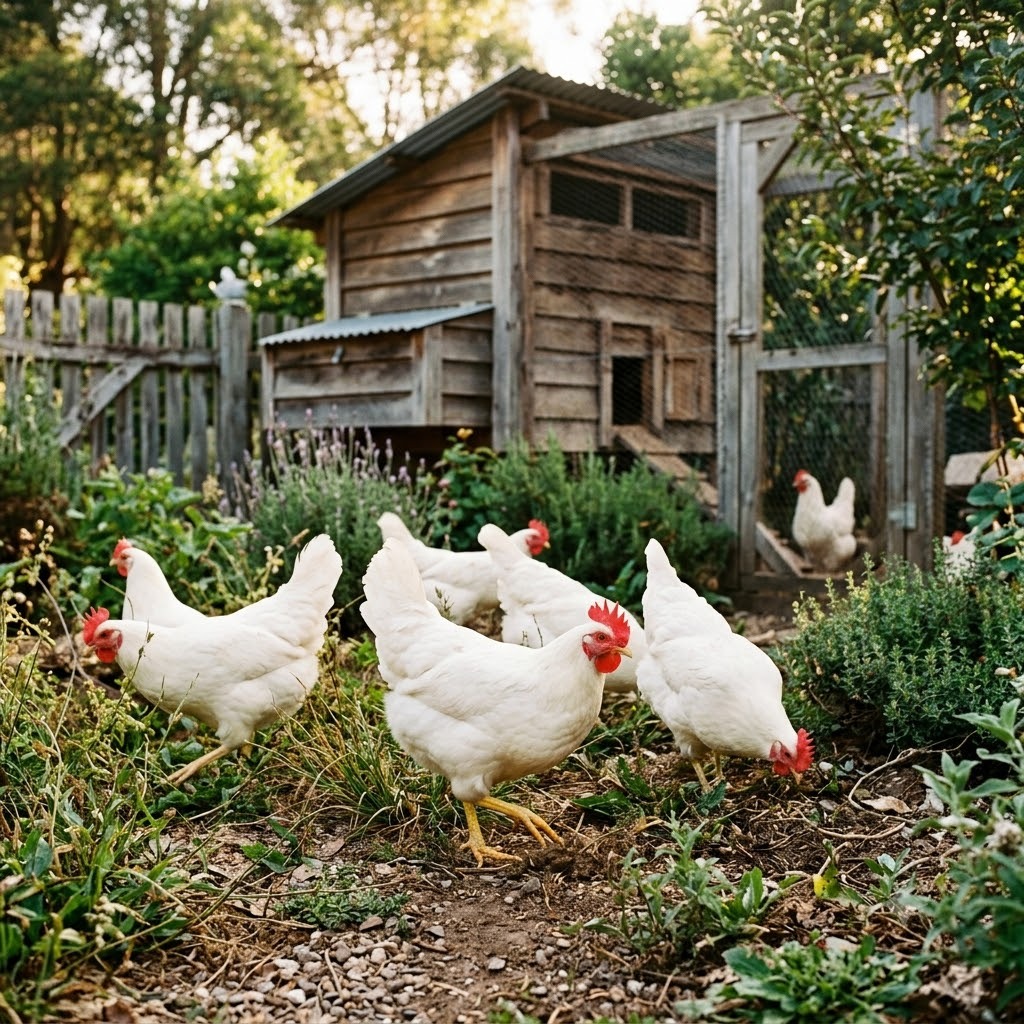
Leghorns are the reason white eggs fill supermarket shelves - the classic high-output layer, prized for converting remarkably little feed into a huge number of large white eggs. Active, hardy and feed-efficient, they are the choice when eggs-per-dollar is the goal. They are flighty and businesslike rather than affectionate, but few breeds match their sheer productivity.
Is it right for you?
Leghorns suit anyone who wants maximum white eggs for minimum feed and doesn't need a cuddly pet. They are the most efficient layers, though active and flighty rather than docile.
Space & Housing
A standard coop and run suits them, but being active flyers they benefit from a covered run or a clipped wing. They forage energetically and dislike tight confinement.
Feeding & Daily Care
Feed a quality layer ration plus forage; their efficiency means they turn modest feed into many eggs. Daily care is food, water and egg collection. Provide calcium for the heavy laying.
Getting Started
Start with a few pullets, provide a secure (ideally covered) coop, and expect a heavy flow of large white eggs by around five months - Leghorns mature and lay early.
Health & Common Problems
Hardy and disease-resistant; their large single combs can be frostbite-prone in hard winters, so ventilate without drafts. Watch the usual mites, worms and standard ailments.
What You Get
A prolific supply of large white eggs on remarkably little feed - the best feed-to-egg efficiency of the common breeds.
Costs & Effort
Very low relative to output - their feed efficiency makes them the most economical layer, with the trade-off of a flighty, non-pet temperament.
Common Mistakes
Expecting a docile lap chicken, uncovered runs (they fly), and frostbitten combs in hard winters are the usual mistakes.
FAQ
Best feed efficiency? Yes - Leghorns convert less feed into more eggs than almost any breed.
Friendly? Not especially - they are active and flighty, bred for eggs, not cuddles.