Raising Llamas: How to Keep Guard-and-Pack Animals That Earn Their Keep on a Homestead
Keep one or two hardy llamas to guard your flock, carry loads on the trail, and grow a coarse but useful fleece - a working animal that is calm, long-lived, and easy on the land.
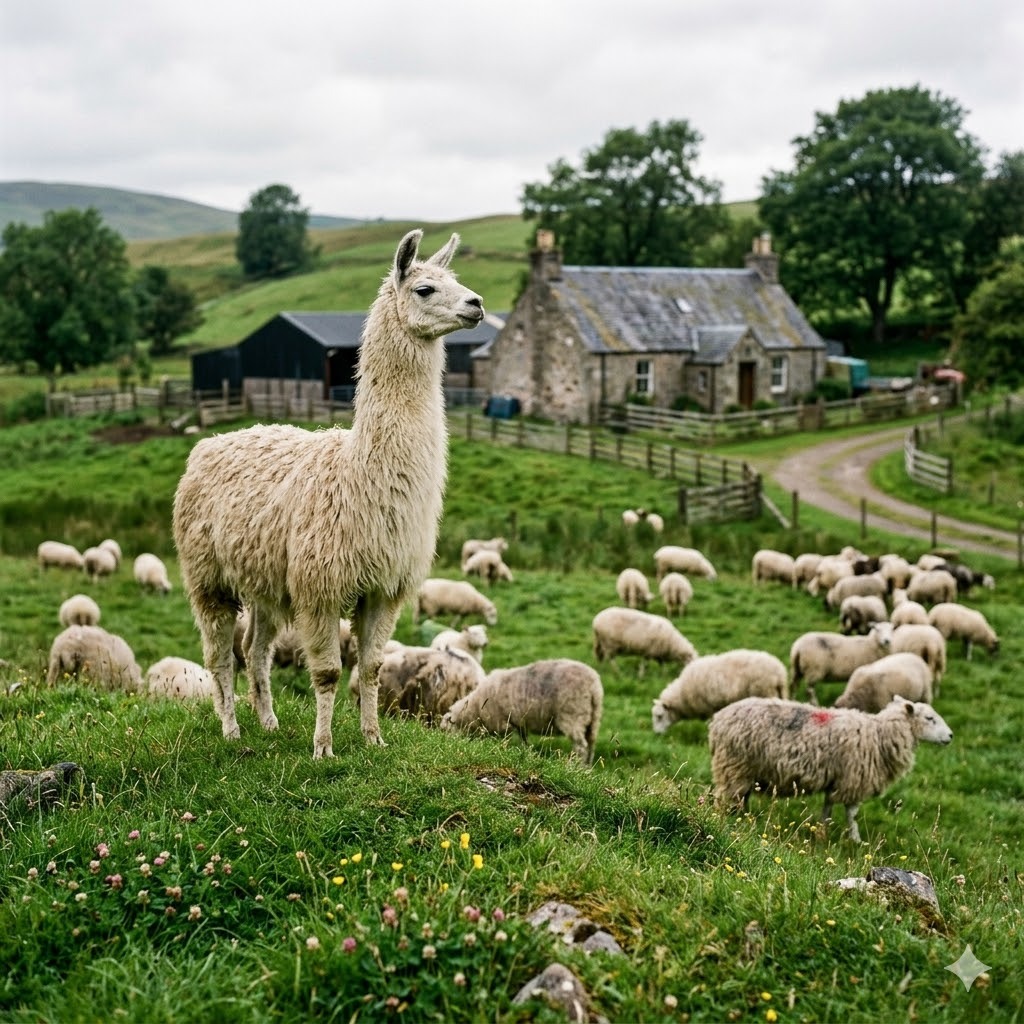
Llamas are the larger, tougher cousins of the alpaca, and on a homestead they earn their keep as working animals rather than fiber specialists. A single gelded llama will guard a flock of sheep or goats from dogs and coyotes; a well-trained one will carry real weight on a pack trip; and any of them grows a coarse fleece you can spin into rugged yarn or rope. They are hardy, calm, long-lived, and light on the land, but they are big enough to demand respect and proper handling.
Is it right for you?
Llamas suit the homesteader who wants a working animal that does a job. The classic homestead role is flock guardian - a llama lives full-time with your sheep or goats and drives off dogs and coyotes, often more cheaply and simply than a guardian dog. If you have a flock losing animals to predators, one good gelded llama can change that overnight.
Their second job is packing. Llamas are strong, sure-footed, and can carry a sensible share of their body weight over rough ground, which makes them genuinely useful for hauling gear, firewood, or supplies where a wheelbarrow will not go. A trained pack llama is a real asset on a hilly or wooded place.
Unlike alpacas, a llama does not have to live in a herd of its own kind, precisely because it will bond to a flock of sheep or goats and treat them as its group. That said, a llama kept entirely alone with no other animals for company is not fair to the animal - it needs either a flock to guard or another compatible animal for company. Decide its job before you buy: a guardian llama should be a single gelded male placed with the flock, because keeping two llamas together can make them bond to each other and ignore the stock they are meant to protect.
Check local zoning and livestock rules before you commit, and be honest that a llama is a large animal - gentle when well handled, but strong enough to be dangerous if spoiled, frightened, or badly trained.
Best breeds
Llamas are usually sorted by build and coat rather than by formal breeds, and for a homestead the type matters less than the individual animal's temperament and training.
- Classic or "ccara" llamas - the shorter-coated, athletic working type. These are the sure-footed pack and guard animals, less fleece to deal with and well suited to a job of work. A sensible default for a homestead.
- Woolly or "lanuda" llamas - heavier-coated animals with more and finer fiber. They grow more usable fleece but need more grooming and shearing attention and can suffer more in heat, so they lean toward the fiber-minded keeper.
- Gelded males for guarding - not a breed but the key choice: for flock protection you want a castrated male, calm and bonded to the stock. Intact males can be pushy or aggressive and are a poor choice as guardians.
Whatever the type, buy for temperament and, ideally, existing training. A calm, halter-broke, well-socialized llama is worth far more to you than an untrained one, however good its breeding.
Land, fencing and shelter
Llamas are light on the land, much like alpacas. Their padded feet and browsing habit are easy on pasture, and a modest acreage of decent grass will support one or two comfortably. They browse a wider range of plants than sheep and will help keep brush and weeds down as a bonus. Rotate them or let them share the flock's ground, and ask a local keeper what your specific pasture will carry.
Fencing for a guardian llama is really the flock's fencing - good stock fencing that keeps sheep or goats in and predators out. Llamas themselves respect fences well and rarely challenge them. As with alpacas, avoid barbed wire, which can injure them and tangle their fleece, and make sure gates and corners do not let a llama get separated from the flock it is guarding.
Shelter can be simple. Llamas are extremely cold-hardy and generally prefer to be outside, so a windbreak, shade, and a dry three-sided shelter to duck into during hard weather are plenty. Heat is the bigger risk than cold, especially for woolly types - in hot, humid climates provide shade, cool water, and shear a heavy coat before summer so the animal does not overheat. A dry loafing area and clean water always on hand complete the setup.
Feeding
Llamas are frugal, efficient feeders, and like alpacas they are more often harmed by too much rich feed than by too little. Good pasture and browse form the base of the diet in the growing season, and they will happily work through brush and rougher plants that other stock ignore. When grass is short or dormant, feed grass hay - a modest amount per animal, well short of what a horse or cow needs.
Keep grain to a minimum. A healthy working llama on decent forage rarely needs concentrates, and overfeeding leads to obesity and health trouble. At most, offer a small measured supplement to an animal that is thin, old, or working hard, and even then sparingly.
Provide a loose mineral formulated for llamas or camelids, since their needs differ from those of sheep, goats, or cattle, and giving them another species' mineral can cause problems. Ask a local keeper or your vet what mineral program fits your area. Constant clean water finishes the diet.
Daily care and routine
Day to day a llama is very low-labor, which is a big part of why guardian llamas are popular. A guarding llama living with the flock mostly looks after itself - your daily check is really your flock check: are all the animals present and content, is the llama alert and with the group, is anyone limping or off. Feed, water, and a glance are usually all it takes.
The periodic care mirrors the alpaca's. Toenails grow on the soft foot and need trimming every couple of months or so to prevent lameness. Teeth need occasional watching, and the sharp "fighting teeth" of an intact or older male may need blunting by a vet for safety. Fleece needs grooming, and heavy-coated animals need shearing before hot weather to prevent overheating, even if you never use the fiber. Getting a llama halter-trained and used to handling young makes every one of these jobs safe and quick.
Handling deserves its own word. Llamas are gentle when well raised, but they are large and strong, and a frightened or spoiled one can kick, barge, or spit. Move calmly, train early, and never let a young llama treat you as another llama to shove around, as a pushy pet llama can become genuinely dangerous - a problem keepers call "berserk" behavior, usually the result of being bottle-raised without limits. Firm, kind, consistent handling from the start prevents it.
Common health issues
Llamas are tough, but a handful of problems recur: internal parasites (worms, best managed with a sensible rotation and vet-guided program), heat stress (a real danger for heavy coats in hot, humid weather), overgrown toenails and teeth (lameness and eating trouble if care lapses), and mineral or vitamin imbalance (particularly if fed the wrong species' mineral). Like alpacas, they are stoic and hide illness, so a subtle change - hanging back, going off feed, losing condition - is often the only early sign.
Because they mask sickness and are large enough that problems can turn serious, find a vet comfortable with camelids before you need one, and learn to read your animal's normal so you notice when it is off. A full coat can hide weight loss, so put your hands on the animal now and then to feel its condition. Lean on your vet for parasite planning, mineral guidance, and any dental or fighting-teeth work, and never guess at doses on an animal this size.
What you get (and processing)
The main returns from a homestead llama are services, not products. A guardian llama's value shows up as sheep and goats that stay alive - fewer losses to dogs and coyotes, and a flock that grazes calmly. A pack llama's value is muscle: gear, wood, and supplies carried where a cart cannot go. These are hard to price but very real on the right place.
The fiber is a secondary bonus. Llama fleece is coarser than alpaca and usually carries guard hair, so it is not a luxury handspinning fiber, but it makes sturdy, hard-wearing yarn, felt, rugs, and rope. You shear it off once a year - which doubles as heat protection - and spin, felt, or sell it as you like. It is a modest, rugged harvest rather than a cash crop.
There is no meat processing to plan. Homestead llamas are working and companion animals kept for their jobs, and they are long-lived, often reaching their late teens or twenties. A llama is a long-term commitment, so take on one expecting years of service, not a season's project. Their tidy manure is a quiet extra benefit for the garden, much like the alpaca's.
Getting started
Decide the job first. For flock protection, buy a single, calm, gelded male that has ideally already been raised with or exposed to sheep or goats, and introduce it to your flock carefully and under supervision so it bonds and does not harass the stock. For packing or general use, look for a halter-broke, well-socialized animal with good feet and legs and a steady temperament. In both cases, an already-trained, people-friendly llama from a reputable breeder is worth paying more for.
Before it arrives, have the flock's fencing sound, a windbreak and dry shelter set up, clean water, and a camelid mineral ready, and know who will help with shearing and foot trimming. Buy local so the animal suits your climate and you have an experienced person to call. Then let it settle into its job, keep handling it calmly and regularly, and you will have a hardy, low-cost working animal that guards your flock or carries your load for many years.
Rough costs
Llama costs are moderate and lean toward the animal and its setup rather than ongoing feed.
- The animal - a gelded guardian or general-purpose llama commonly runs a few hundred to a low four figures depending on training and quality; a proven, well-trained pack or guard llama costs more and is usually worth it.
- Fencing and shelter (upfront) - largely shared with the flock: good stock fencing and a simple windbreak or run-in shed, ranging from modest to a few thousand depending on what you build and already have.
- Feed - low and seasonal: mainly winter grass hay plus a camelid mineral, cheap compared with larger stock since a llama eats sparingly.
- Shearing and foot care - a modest yearly cost for shearing a heavy coat and, if you do not do it yourself, foot and tooth trimming.
- Vet and incidentals - routine parasite control and occasional vet visits, ongoing but modest.
Penciled out, a llama is an affordable and genuinely useful addition to a homestead with a flock to guard or loads to carry. You are buying a service more than a product - and a single good gelded llama that keeps the coyotes off your sheep can pay for itself many times over, quietly, for years.