Keeping Mason Bees: Effortless Pollination for the Homestead
A guide to mason bees - gentle, solitary native bees that out-pollinate honeybees, need only a simple nesting block and no hive management, and dramatically boost fruit and garden yields.
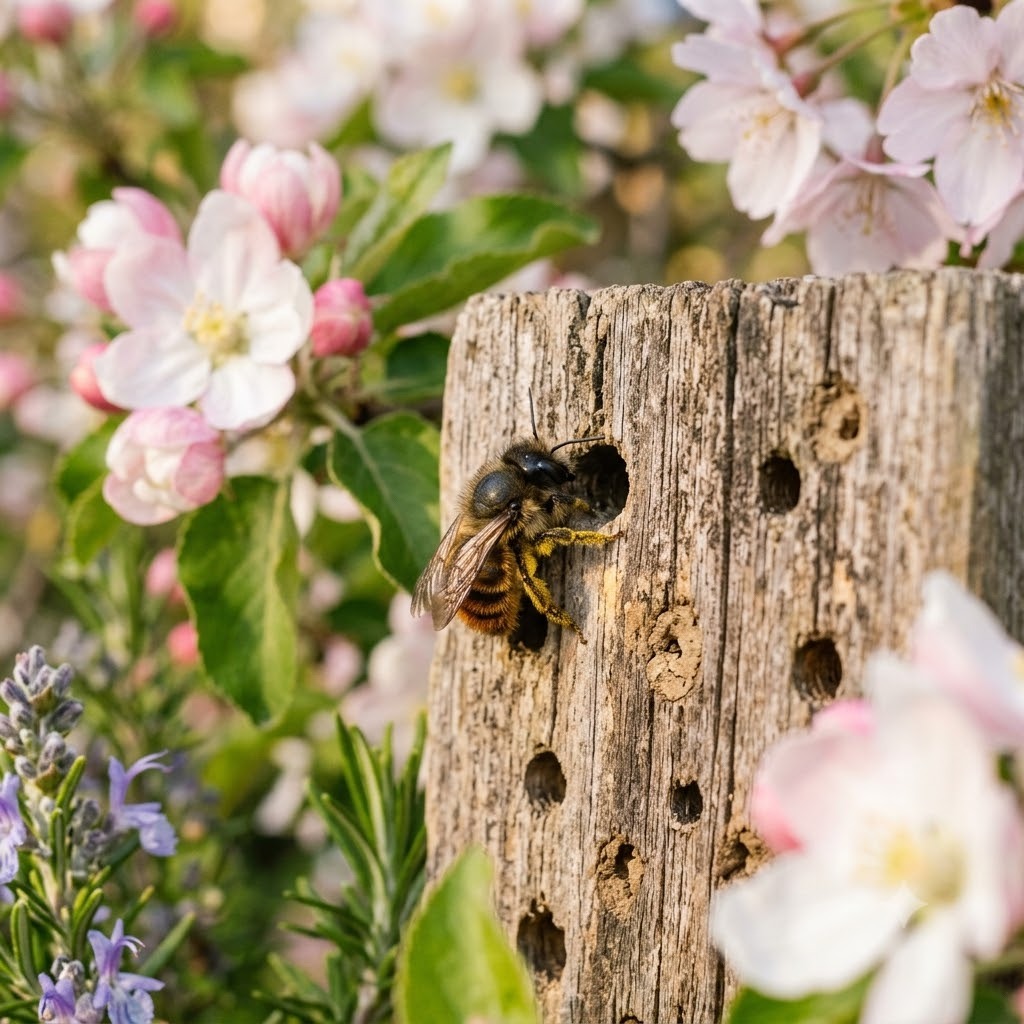
Mason bees are the homestead's secret weapon for pollination. These gentle, solitary native bees are extraordinary pollinators - a few dozen can do the fruit-pollinating work of a whole hive of honeybees - and unlike honeybees they need no hive, no honey harvest and almost no management. You simply put up a nesting block near spring blossoms, and they dramatically boost your fruit and garden yields, stinglessly.
Is it right for you?
Mason bees suit anyone with fruit trees, berries or a garden who wants better pollination without the work of a beehive. They are ideal for beginners and small spaces.
Space & Housing
They need only a simple nesting block or bundle of tubes mounted in a sheltered, sunny spot facing the morning sun, near spring blossoms and a source of mud for nesting.
Feeding & Daily Care
They feed themselves entirely on spring flowers - no feeding required. The only care is putting up (and each year cleaning) the nesting tubes, and providing mud nearby.
Getting Started
Buy mason bee cocoons or attract wild ones, mount a nesting block by early spring near blossoms, ensure mud is available, and let them work.
Health & Common Problems
Cleaning or replacing nesting tubes yearly prevents mite and parasite buildup; otherwise they are nearly trouble-free. Avoid pesticides near their nests.
What You Get
Dramatically improved pollination of fruit trees, berries and garden crops - and more fruit - from gentle, stingless native bees, with no honey to harvest but no hive to manage.
Costs & Effort
Minimal - a nesting block and, at most, a yearly cleaning. They are among the lowest-effort ways to boost a homestead's productivity.
Common Mistakes
Never cleaning the nesting tubes (parasite buildup), no mud source nearby, and using pesticides near the nests are the main mistakes.
FAQ
Do they make honey? No - they are pollinators, not honey producers.
Do they sting? Practically never - they are gentle and solitary.