Farming Mealworms: Self-Renewing Protein for Your Stock
A guide to farming mealworms - darkling beetle larvae raised in stacked tubs on bran and scraps as a rich, self-renewing protein feed for chickens, fish and reptiles, the easiest insect to raise.
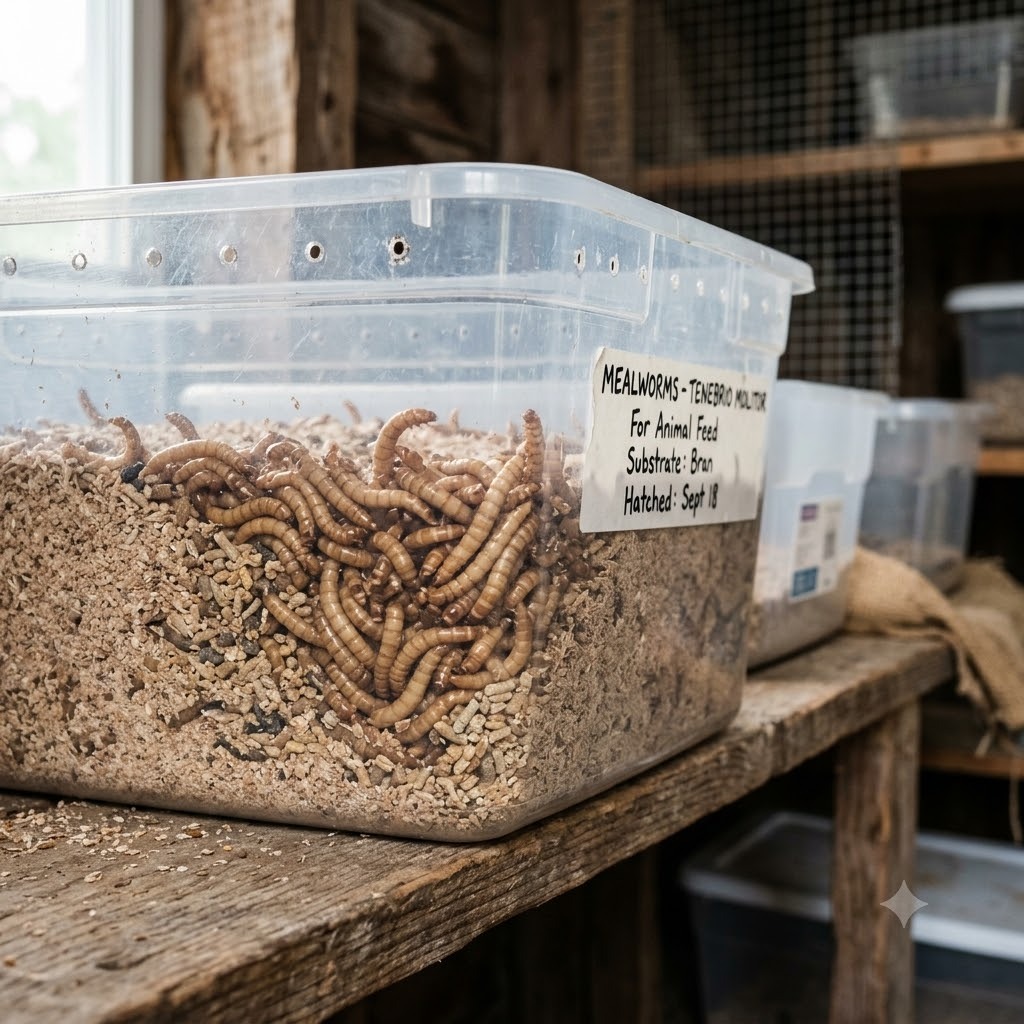
Mealworms are the gateway to insect farming - the larvae of the darkling beetle, raised in nothing more than stacked plastic tubs of bran, and harvested as a rich protein treat for chickens, fish, reptiles and wild birds. The colony renews itself endlessly once the beetles breed, turning kitchen scraps and cheap bran into free, homegrown protein in the smallest of spaces.
Is it right for you?
Mealworms suit anyone with chickens, fish or reptiles who wants free, homegrown protein feed in a tiny space, including apartment homesteaders. They are the easiest, cleanest insect to farm.
Space & Housing
A few stacked plastic tubs on a shelf, kept warm and dry, are all you need; one tub for beetles, others for growing larvae. They need no light and very little room.
Feeding & Daily Care
Feed wheat bran or oats as bedding-and-food, plus slices of carrot or potato for moisture; daily care is minimal - a fresh vegetable slice and a glance. Keep them warm for faster growth.
Getting Started
Start with a cup of mealworms, set up tubs of bran, let some pupate into beetles, and let the beetles lay eggs to start the self-renewing cycle.
Health & Common Problems
Very hardy; the main risks are damp (mold and mites) and cold (slow growth). Keep the tubs dry, warm and not overcrowded, and remove any moldy food promptly.
What You Get
An endless, self-renewing supply of protein-rich larvae to feed poultry, fish, reptiles and birds, from cheap bran and vegetable scraps.
Costs & Effort
Very low - a few tubs, cheap bran, and minutes a week. One of the highest-value, lowest-effort things you can raise.
Common Mistakes
Damp bedding (mold and mites), cold that stalls growth, and overcrowding are the main mistakes.
FAQ
What eats them? Chickens, fish, reptiles and wild birds love them as a protein treat.
Do they smell? No - a dry mealworm colony is clean and nearly odorless.