Raising Meat Chickens: Chick to Freezer in About 8 Weeks
A practical homestead guide to raising broilers for the table, from picking a breed through processing day.
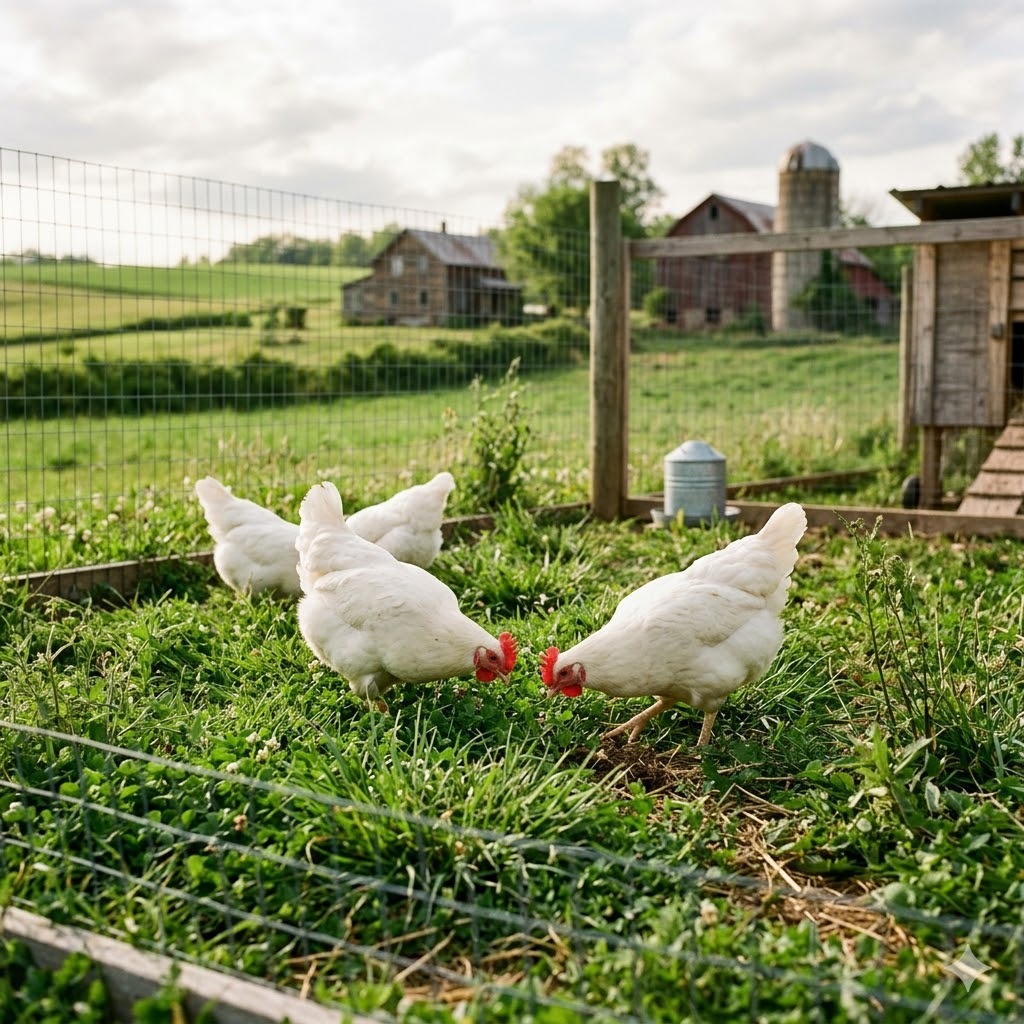
Meat chickens, or broilers, are birds bred specifically to put on weight fast and fill a freezer. They are different animals from laying hens: you raise them for a short, focused stretch and then process them, rather than keeping them around for years. For a first-time homesteader who wants to put real meat on the table without a barn full of equipment, they are about the easiest livestock there is.
Is it right for you?
Meat chickens are a genuinely beginner-friendly project, and that is mostly down to the short timeline. Fast-growing meat breeds like the Cornish Cross go from chick to freezer in about eight weeks - the quickest home-raised meat there is. You commit for two months, not two years, which means a single bad winter or a change of plans does not leave you stuck.
You need a small yard, a draft-free shelter, and a willingness to feed and water the birds twice a day, every day, without skipping. The one part people balk at is the end: you have to be ready to dispatch and process the birds yourself or pay someone to do it. If you cannot picture yourself doing that, raise layers instead. Be honest with yourself before you order chicks, not after.
This works on a surprisingly small footprint. A batch of 10 to 25 birds suits most family freezers and fits in a backyard. Just check your local ordinances first - some towns limit flock size or ban slaughter on residential lots.
Best breeds
- Cornish Cross - the standard meat bird and what most people raise. Ready in roughly eight weeks at a good size, efficient on feed, and produces the broad-breasted carcass you see in stores. The trade-off is welfare: bred to grow so fast they can develop leg and heart trouble if pushed. Process on schedule and do not let them sit.
- Freedom Ranger / Red Ranger - slower-growing colored broilers, usually ready around 9 to 11 weeks. They forage better, move around more, and are far hardier than Cornish Cross, with fewer leg problems. The carcass is a bit smaller and the meat firmer and more flavorful. A great choice if you want a calmer, healthier bird and do not mind waiting a few extra weeks.
- Dual-purpose cockerels - if you keep a heritage laying breed, the spare males (cockerels) can be grown out for meat. They take much longer, roughly 14 to 16 weeks or more, and yield a leaner, smaller bird, but the feed is already in your system and nothing goes to waste. Best thought of as a useful by-product of a laying flock rather than a dedicated meat project.
For a first batch, go with Cornish Cross if you want maximum meat for the time, or Rangers if welfare and hardiness matter more to you.
Housing and space
Meat birds do not need anything fancy, but they do need to stay dry, draft-free, and safe from predators. For the first roughly three weeks they live in a brooder - a sturdy box or stock tank with a heat source, bedding, and good ventilation. After that they move to their grow-out shelter.
Two common setups work well. A small fixed coop with an attached run is simplest, and you keep it bedded deep with pine shavings or straw that you top up as it gets soiled. The other popular option is a chicken tractor - a floorless, movable pen you shift to fresh grass every day or two. Tractors keep the birds cleaner, give them greens and bugs, and spread the manure across your yard instead of piling it in one spot. They are especially good for Rangers, which actually like to forage.
Give grown birds roughly 2 to 3 square feet each inside, plus run or pasture space on top of that. Meat birds make a lot of manure and a lot of moisture, so ventilation matters more than insulation - a damp, ammonia-smelling shelter will make them sick fast. If you are sizing a build, the site's coop-size calculator will get you in the right ballpark for your flock count.
Whatever you build, predators will test it. Raccoons, foxes, hawks, and loose dogs all take chickens, and a slow-moving meat bird is easy pickings. Use hardware cloth rather than chicken wire on openings, shut birds in securely at night, and read the predator-protection guide before your first night outdoors.
Feeding
This is where meat birds differ most from layers: they eat a lot, and they need the right feed. Start chicks on a high-protein starter (a "broiler" or "meat bird" starter, roughly 20 to 24 percent protein) for the first few weeks, then move to a grower ration. The higher protein supports the fast muscle growth these birds are built for.
Clean water must be available at all times - meat birds drink heavily, and running dry even for a few hours in warm weather is dangerous. Plan to refill and rinse waterers daily.
Free feeding around the clock will grow the biggest birds fastest, but with Cornish Cross it also drives the leg and heart problems they are prone to. A common, kinder approach is to give them their feed for about 12 hours a day and pull it at night, which slows the growth just enough to keep their frames and hearts caught up with their weight. Rangers and dual-purpose birds are far more forgiving and can usually be fed freely. Coarse grit helps them digest, especially once they are eating greens or scraps on pasture.
Daily care and routine
The daily routine is short but non-negotiable. Morning and evening, you check and refill water, top up feed, and glance over the flock. Make sure bedding is dry, add fresh shavings where it is wet, and if you are running a tractor, move it to clean grass.
While you work, watch the birds. Healthy meat chickens are active at feeding time, eating eagerly and moving around between bouts of rest. Look for anything sitting apart, breathing hard, limping, or not coming to feed - those are your early warning signs. Because these birds grow so fast, problems develop quickly, so daily eyes-on time is genuinely part of the job, not optional.
Keep the shelter clean. Meat birds are messy, and a buildup of wet manure breeds both illness and flies. Most people find that staying on top of bedding and water is 90 percent of keeping a batch healthy.
Common health issues
Most trouble with meat birds traces back to their fast growth, and most of it is preventable with good management.
- Leg weakness and lameness - heavy fast-growing birds can outgrow their legs. Keep them on dry, non-slip bedding, do not overfeed, and process on time before they get too heavy.
- Heart failure ("flip-over") - sometimes a fast-growing bird's heart cannot keep up and it dies suddenly, often found on its back. Slowing growth with limited feeding hours and avoiding heat stress reduces the risk.
- Pasty vent in chicks - droppings cake over the vent and block it, which can be fatal if missed. In the first week, check chicks' rear ends and gently clean any blockage with a warm, damp cloth.
- Heat stress - big-bodied birds overheat easily. In hot weather give shade, cool water, and good airflow.
For anything you cannot manage - a spreading illness, repeated sudden deaths, or symptoms you do not recognize - consult a poultry vet. Avoid reaching for random medications; correct diagnosis matters, and good husbandry prevents far more than any bottle cures.
What you get (and processing)
A batch of Cornish Cross typically dresses out to roughly 4 to 6 pounds each, giving a family freezer real meat for a couple of months of feeding and a single processing day. Rangers run a bit smaller; dual-purpose birds smaller still.
Processing is the part new homesteaders dread and then find more straightforward than they feared. The basic steps are the same everywhere. You dispatch the bird quickly and humanely, ideally using a killing cone to keep it calm and still. You scald it in hot water (around 145 to 150 degrees F) for a short time to loosen the feathers, then pluck - by hand for a few birds, or with a drum plucker if you are doing a lot. Next you eviscerate: open the body cavity and remove the innards cleanly, saving the heart, liver, and gizzard if you want them. Then you chill the carcass thoroughly in ice water to bring its temperature down fast.
One step people skip and regret: let the birds rest in the fridge for about a day or two before cooking or freezing. Fresh-killed poultry goes through rigor, and resting it first keeps the meat from cooking up tough.
Set up beforehand - sharp knives, hot water, clean bins, cold water, and a helper or two make a world of difference, and a batch goes faster than you expect. Do check your local rules: many places allow on-farm slaughter for your own use, but regulations vary, and selling meat is a different matter entirely with its own requirements.
Getting started
Here is the order of operations for a first batch:
- Check local rules on flock size and home slaughter before you spend a dime.
- Pick your breed and number - 10 to 25 birds is a sensible first run for a family.
- Order chicks from a hatchery or buy them locally, timed so processing day lands when you have help and decent weather.
- Set up the brooder before the chicks arrive: heat source, bedding, starter feed, and clean water ready to go.
- Build or ready the grow-out shelter - coop or tractor - so it is waiting when the birds outgrow the brooder at around three weeks.
- Plan processing day from the start: a date, equipment, and a couple of helpers lined up.
The single best advice is to know your end date before the chicks ever ship. These birds are on a clock, and the welfare of fast breeds depends on processing them on schedule rather than letting them linger.
Rough costs
Costs vary by region and feed prices, but to set expectations:
- Chicks - roughly $2 to $4 each, sometimes less in bulk.
- Feed - the biggest expense by far. Expect to feed roughly 8 to 12 pounds of feed per bird over its life. At typical feed prices, budget in the rough range of $6 to $12 of feed per bird.
- Brooder and shelter - largely a one-time cost you reuse for future batches. A simple brooder and tractor can be built cheaply from scrap; bought equipment runs more.
- Processing supplies - cones, a scalding pot, and bagging add a modest one-time outlay; a plucker is optional and pays off only at higher volumes.
All in, a backyard bird often lands somewhere around $10 to $15 by the time it hits the freezer - more than the cheapest store chicken, less than premium organic, and you know exactly how it was raised and what went into it. For most homesteaders, that last part is the whole point.