Raising Meat Rabbits: A Beginner's Guide to Steady Lean Meat from a Few Hutches
A practical homestead guide to raising meat rabbits - housing, feeding, breeding, and processing - for steady lean meat in a small backyard footprint.
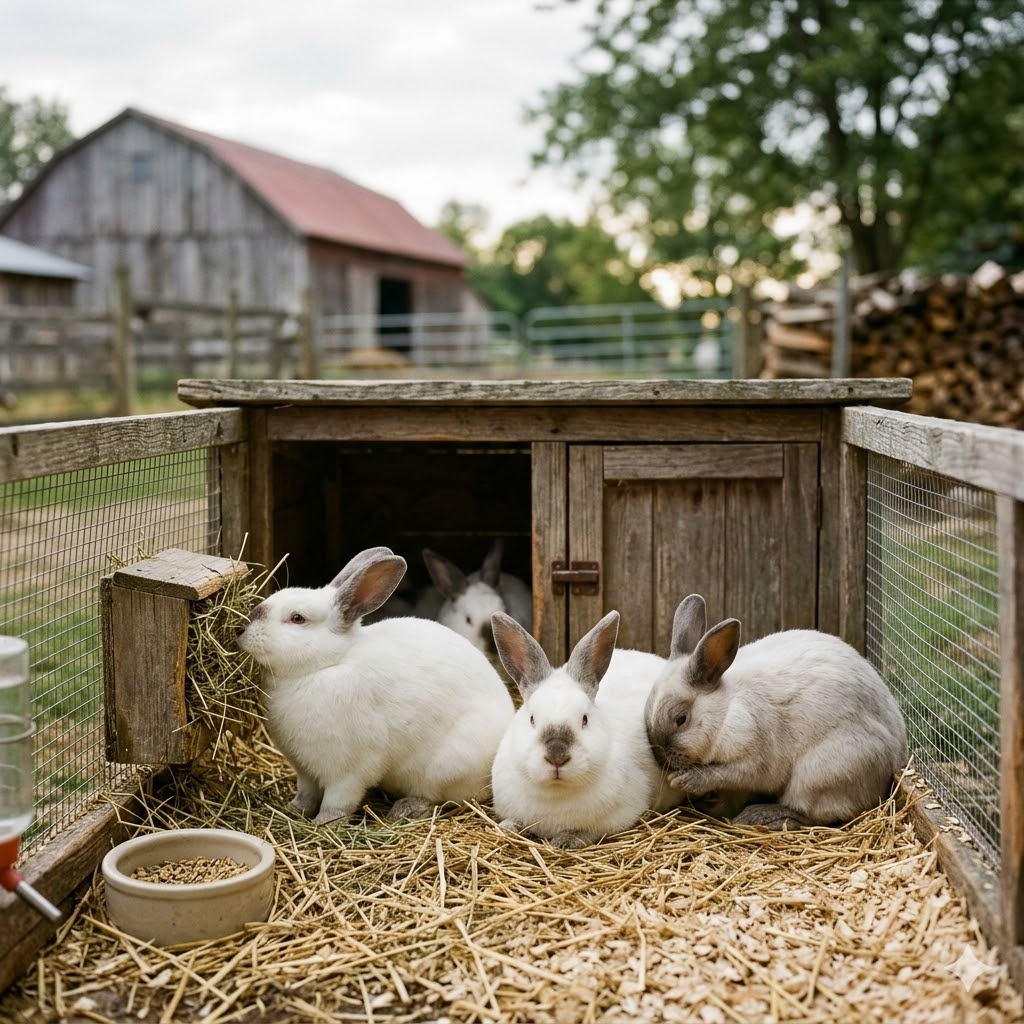
Meat rabbits are one of the best entry points into raising your own food. They are quiet, take up little room, breed prolifically, and turn out lean, healthy meat that costs a fraction of what you would pay at the store. A starter trio - one buck and two or three does - can keep a small family in fresh meat from nothing more than a few hutches, even on a suburban lot.
Is it right for you?
Rabbits suit people who want a real meat supply without the noise, smell, or space that pigs, goats, or even chickens demand. They are silent, which makes them one of the few livestock options that work where roosters and larger animals are banned - though you should always check your local rules before you buy, because zoning and nuisance ordinances vary wildly and a quiet animal can still be against the letter of the law.
The trade-off is honesty about what you are signing up for. Rabbits breed fast and that is the whole point, but it also means you will be processing animals regularly to keep numbers in check. If raising an animal to butcher it is something you are not sure about, start small and sit with that reality before you scale up. Many people find rabbits a gentler introduction than larger stock because the work is quick and contained. Others decide it is not for them, and that is fine to learn early.
On the plus side: the daily chores are light, the feed bill is modest, the meat is genuinely good for you, and the whole operation fits in a corner of a yard or a shed. For a beginner who wants self-sufficiency without a steep commitment, it is hard to beat.
Best breeds
Pick a breed bred for meat, not looks. A few standouts:
- New Zealand White - the classic meat rabbit. Fast-growing, good feed conversion, calm temperament, and easy to find. If you buy one breed, buy this.
- Californian - the other meat-production standard. Slightly smaller than the New Zealand but excellent muscle-to-bone ratio, and the two cross beautifully.
- Rex - a bit smaller and slower, but the meat quality is excellent and the fur is a genuine bonus if you want to use the pelts.
- Flemish Giant - very large and impressive, but they eat a lot for the meat they put on, so they are less feed-efficient than the breeds above. Better as a cross than a pure meat line.
- Crosses - a New Zealand crossed with a Californian (or either crossed onto a Flemish for size) often gives you the best of both: hybrid vigor, good growth, and resilient kits. Many homesteaders settle on a cross once they know their setup.
For a first trio, New Zealand Whites or a New Zealand-Californian mix will serve you well.
Housing and space
Rabbits need cages or hutches raised off the ground with wire floors. The wire lets droppings and urine fall straight through, which keeps the rabbits clean and dry and makes manure collection effortless - the bedding-and-shovel routine you would have with floor pens simply disappears. Give each adult rabbit its own cage; bucks and does must be kept separate except for deliberate breeding, and does will fight if housed together.
Size matters less than you might think - a single doe does well in a cage roughly 30 by 36 inches, with a nest box added when she kindles - but cleanliness and protection from the elements matter enormously. Site the hutches in shade, sheltered from wind, rain, and direct sun.
This is the single most important thing to understand: heat is the rabbit's biggest enemy. Rabbits tolerate cold far better than heat - a healthy adult with a windbreak and dry bedding will shrug off freezing temperatures, but a hot, humid afternoon can kill one quickly. Plan your housing around summer, not winter. Deep shade, good airflow, and a way to cool them when temperatures climb are not optional. Frozen water bottles or ceramic tiles to lie against, a fan moving air across the cages, and misting the surroundings all help. If you only solve one problem with your setup, make it heat.
Feeding
Keep feeding simple and consistent. The backbone of the diet is a good-quality commercial rabbit pellet, fed in measured amounts - free-feeding pellets to adults leads to fat, unproductive rabbits, so portion them out. Alongside the pellets, offer unlimited grass hay (timothy or orchard grass): it keeps the gut moving, wears down teeth, and gives them something to chew through the day.
Clean, fresh water at all times is non-negotiable. A rabbit that stops drinking stops eating, and in summer water disappears fast - check it more than once a day in the heat.
Greens and vegetables are a nice supplement but introduce them slowly and one at a time. A sudden pile of fresh greens can upset a rabbit's digestion badly. Add new foods in small amounts, watch the droppings, and back off if anything looks loose. Avoid lawn clippings (they ferment) and anything sprayed or wilted.
Daily care and routine
The daily work is light - usually well under fifteen minutes for a small setup. Each day: top up water and check it is flowing and clean, give pellets and refresh hay, and run your eye over every rabbit. You are looking for bright eyes, a clean nose, a good appetite, and normal droppings. A rabbit that is hunched, off its food, or has a wet face needs attention.
Once a week or so, do a closer pass: check ears for mites, feet for sore hocks, and give the cages and trays a proper clean. Keep an eye on body condition so you can adjust pellet amounts. In summer your routine shifts toward keeping everyone cool; in winter, toward keeping water from freezing and bedding dry. Rabbits are creatures of habit and a calm, quiet, predictable routine keeps them healthy and tame.
Breeding
Breeding rabbits is refreshingly straightforward. The key rule: always take the doe to the buck's cage, never the other way around. Does are territorial and will attack a buck that intrudes on their space, but in his cage things usually go smoothly. Leave them together briefly until breeding has happened, then return the doe to her own cage.
Gestation is about a month - roughly 31 days. A few days before she is due, put a nest box filled with clean straw or hay in her cage. The doe will pull her own fur to line it and will kindle (give birth to) her litter in there. Litters are often around six to ten kits. Leave her in peace; a quick, calm check to remove any that did not survive is fine, but do not fuss over the nest.
Kits are weaned at several weeks, commonly around six to eight, after which the growers go into their own cages to finish out. Do not overbreed a doe - she needs time to recover her condition between litters. Pushing a doe to breed back too fast wears her out and shortens her productive life. A sensible rhythm, with rest between litters, keeps her healthy and producing for years.
Common health issues
Rabbits are hardy when housed and fed well, but a few problems come up often enough to know by name:
- Heat stress - the most dangerous and the most preventable. A rabbit panting, lying flat, or with wet ears in hot weather is in trouble and needs cooling immediately.
- Snuffles and other respiratory infection - sneezing, a runny nose, or matted front paws from wiping the face. It can spread, so isolate an affected rabbit.
- Sore hocks - raw, sore patches on the underside of the feet, often from wire floors plus heavy weight or damp conditions. A resting board in the cage helps.
- GI stasis - the gut slows or stops, often after a diet upset or stress. The rabbit goes off food and produces few or no droppings. This is a genuine emergency.
- Ear mites - crusty, dark buildup inside the ears and head-shaking.
For any of these, the right move is to consult a vet - ideally one who is rabbit-savvy - for proper diagnosis and treatment. Rabbits react badly to some common medications, so do not guess at remedies or doses. Good housing, clean water, steady feeding, and shade prevent the large majority of problems before they start.
What you get (and processing)
What you get is a steady, renewable supply of lean meat from a footprint smaller than a garden shed. Rabbit is one of the leanest meats available, mild in flavor, and versatile in the kitchen. A productive trio of does can keep meat in the freezer year-round once your rhythm is established.
Processing is small in scale and quick compared with larger livestock - one person can handle a rabbit in a short time with basic equipment. It should always be done calmly, cleanly, and with respect for the animal. Take your time learning the technique properly - watch someone experienced or a good demonstration first - so that it is fast and humane. Treating the work seriously is part of doing it right.
Before you sell or even give away meat, check your local rules. Slaughtering for your own household is widely allowed, but selling rabbit meat is regulated and often requires licensed, inspected facilities. Know where you stand legally before money or meat changes hands.
Getting started
Start with a trio: one buck and two or three does, bought from a breeder raising healthy meat-bred stock. Buying locally lets you see the conditions the rabbits came from and ask questions. Have your hutches built, shaded, and ready before the rabbits arrive, along with feeders, water bottles, hay, pellets, and at least one nest box.
Before any of that, confirm your local zoning and any nuisance ordinances allow rabbits - the fact that they are quiet does not guarantee they are permitted. Once everything is in place, let the rabbits settle for a couple of weeks before you breed, learn each animal's normal behavior, and grow into the routine. Start small, get comfortable, and scale up only once the basics are second nature.
Rough costs
Costs are modest, which is much of the appeal. Expect roughly:
- Breeding stock - a starter trio of decent meat rabbits typically runs somewhere in the range of about $25 to $60 per rabbit, depending on breed and bloodline.
- Housing - cages, hutches, feeders, water bottles, and nest boxes might run roughly $150 to $400 to set up a small operation, less if you build hutches yourself from salvaged materials.
- Feed - a bag of pellets plus hay is cheap per rabbit, and a small breeding setup often costs only modest money each month to keep running.
After the upfront outlay, the ongoing cost per pound of meat is low - one of the cheapest ways to raise your own protein at home. Build or buy smart at the start, and a few hutches will pay you back in lean meat for years.