Raising Muscovy Ducks: A Quiet Foraging Duck for Lean Meat and Pest Control on a Homestead
Keep a small flock of Muscovy ducks for lean red meat, tireless fly and pest control, and a duck that forages for much of its own food without needing a pond.
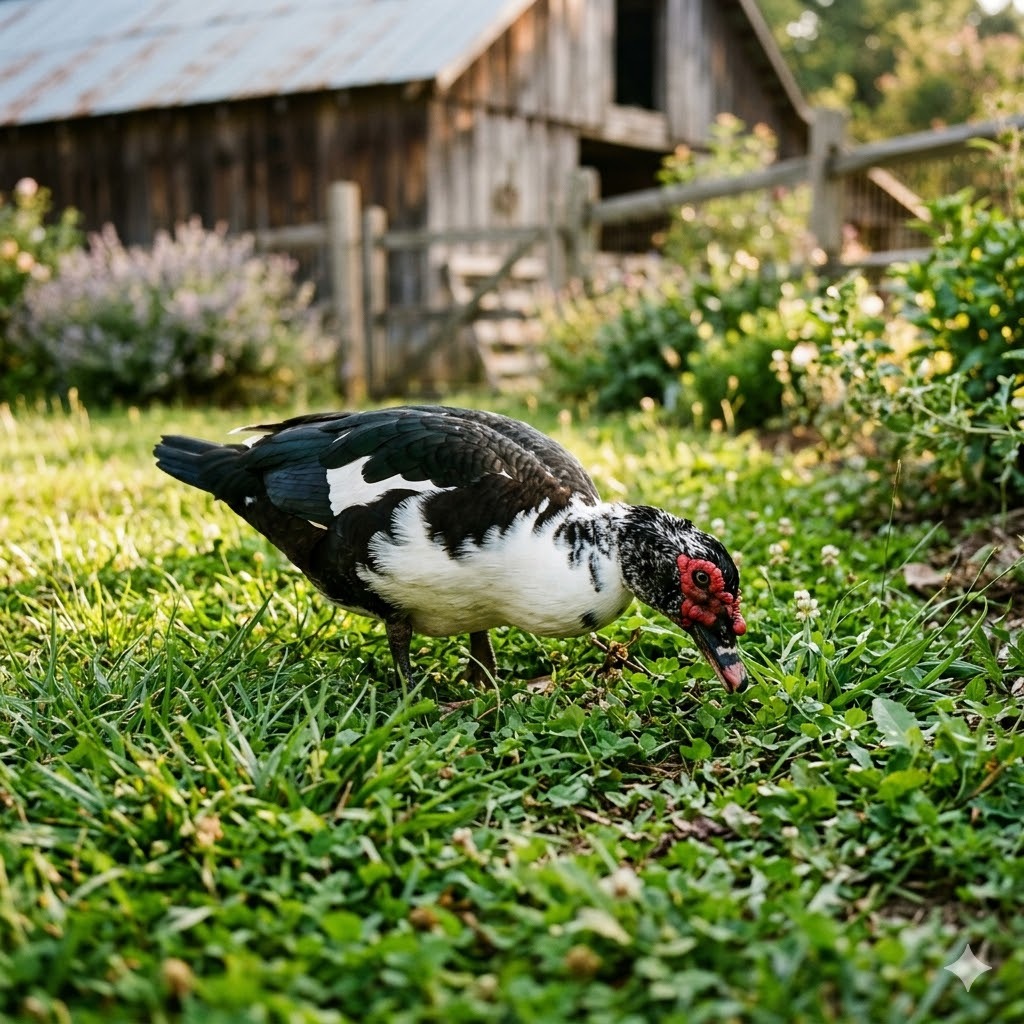
Muscovy ducks are the odd one out among domestic ducks, and that is exactly why they suit a homestead so well. They are quiet, they forage hard, they need very little water, and the hens raise their own young without any help from you. They give you lean red meat that tastes more like a light beef than typical duck, and they will patrol your yard eating flies, slugs, and mosquito larvae all day long. If you want a low-input bird that mostly feeds itself, this is one of the best animals on the whole list.
Is it right for you?
Muscovies are a good beginner bird, but there are a couple of things worth knowing up front. Unlike other domestic ducks, Muscovies are not descended from the mallard - they are a distinct species from South America, and that shows in their behavior. They are much quieter than a regular duck; the hens make only a soft trilling sound and the drakes a breathy hiss rather than the loud quacking that gets you in trouble with neighbors. For anyone on a smaller lot or with close neighbors, that quiet is a real selling point.
The one thing to plan for is that Muscovies can fly, especially the lighter hens, and they love to roost up high. A young flock will happily fly over a low fence, into trees, or onto your roof. You control this either by clipping one wing so they cannot gain height, or by keeping them in a covered run. The heavy drakes fly poorly, but never assume a hen will stay put.
They are hardy, self-reliant, and forgiving of beginner mistakes. If you want fresh eggs, meat, a pest patrol, and a duck that mostly looks after itself, Muscovies fit small and mid-size homesteads beautifully. Check your local rules on poultry first, as some towns limit or ban waterfowl even where chickens are allowed.
Best breeds
Muscovies are a single species rather than a spread of distinct breeds, so instead of breeds you choose among color varieties and strains. What matters most is picking healthy birds from good stock rather than any particular color.
- Black and white (pied) - the classic, most common pattern, and usually the easiest to find. Hardy, good foragers, and a reliable all-purpose choice.
- Solid black - glossy and striking, with the same tough, self-sufficient temperament as the pied birds.
- Blue and chocolate - softer color variations prized by people who like the look; the same practical bird underneath.
- White - a lighter-colored variety that dresses out with a cleaner-looking carcass, since there are no dark pinfeathers, which some people prefer for the table.
- Large meat strains - some breeders select heavier, faster-growing lines specifically for meat. If your main goal is the freezer, ask around for a strain known for size, since a big Muscovy drake can be a genuinely large bird.
Whatever the color, look for a strain that is well-grown, calm, and raised locally, so the birds are already suited to your climate.
Land, fencing and shelter
Muscovies are refreshingly undemanding on space and water. They do not need a pond. This surprises people who think of ducks as water birds, but Muscovies are the most terrestrial of the ducks - they spend their days walking and foraging, not swimming. All they need for water is a container deep enough to dip their whole head and clean their eyes and nostrils, plus of course clean drinking water. A tub, a low trough, or a shallow kiddie pool is plenty, and they will use it more for a quick bath than for real swimming.
Fencing is really about keeping them in rather than keeping much out, because of the flying. A covered run solves it completely. If they free-range, plan to clip a wing or accept that they will roost on fences, sheds, and rooftops. A modest fence with netting over the top, or a poultry-wire run four to six feet high with a covered section, works well.
For shelter, they want a dry, draft-free house at night, safe from predators, much like chickens. Since Muscovies naturally roost, give them a low roost or perch inside rather than expecting them to sit on bare ground. They are hardy in cold but their bare facial skin (the red caruncles) can be nipped by hard frost, so a snug, dry house matters in winter. Good bedding, secure walls, and a door you close at dusk against raccoons, foxes, and mink are the essentials.
Feeding
This is where Muscovies shine. They are outstanding foragers and will get a large share of their own food if you let them range. Turn them loose on a yard, orchard, or garden edge and they hunt down flies, slugs, snails, worms, beetles, mosquito larvae, and any bug they can catch, along with grass and weeds. That foraging is not just cheap feed - it is genuine pest control, and many homesteaders keep Muscovies as much for the clean-up work as for the meat.
To back up the foraging, offer a good poultry feed free-choice: a waterfowl or all-flock feed is ideal, or a standard poultry ration if that is what you have. Growing ducklings need a higher-protein starter, and laying hens do better with a layer-type feed and access to grit and calcium (crushed oyster shell). Always keep clean water beside any feed, because ducks need water to swallow.
Because they forage so well in the warm months, your feed bill drops in summer and climbs in winter when there are fewer bugs and less green. Never let them go hungry counting on foraging alone, but do lean on it - a ranging Muscovy flock is one of the cheapest sources of meat you can keep.
Daily care and routine
Daily care is light and pleasant. In the morning you open the house, top up feed and water, and let them out to forage. Through the day they largely look after themselves, wandering the yard on bug patrol. At dusk they usually put themselves to bed if their house is where they roost, and your job is to count them and shut the door against predators. That nightly lock-up is the single most important habit, because ducks left out overnight are easy prey.
Keep their water clean, as ducks foul water fast and dabble mud into everything. Refreshing it once or twice a day keeps them healthy and keeps the smell down. Muscovies are calm and quiet to be around, and they tame nicely if you handle them young, though drakes can get territorial in breeding season and the big claws on their feet mean you pick them up carefully and firmly.
If you have a broody hen, she will find a hidden nest and disappear to sit; part of the routine becomes knowing where your hens are and deciding whether to let them hatch a clutch or collect the eggs.
Common health issues
Muscovies are one of the hardier, more disease-resistant waterfowl, which is part of their appeal, but a few problems come up. Wet, dirty conditions cause most trouble - foul water and muddy, packed ground lead to dirty feathers, foot infections, and general illness, so drainage and clean water prevent a lot. Foot problems (bumblefoot), a swelling or infection in the footpad, can appear from rough surfaces or minor injuries. Parasites, both internal worms and external mites or lice, show up as with any poultry and are managed with routine checks. Angel wing, a twisted wing tip in fast-growing ducklings, is usually linked to too-rich feed while young.
Because they are so hardy, health management is mostly good husbandry: clean water, dry footing, secure housing, and space to range. Watch for any bird that is hanging back, not eating, or sitting hunched, since that is your early warning. A local poultry or livestock vet is worth knowing for the occasional serious problem, and worth asking about any treatment's withdrawal time before meat birds go to the table.
What you get (and processing)
You get several things at once, which is the beauty of the bird. The meat is the headline: lean, dark, red meat that is genuinely different from grocery-store duck - less fatty, richer, closer to a fine roast beef or veal than to fatty Pekin duck. A mature Muscovy drake is a big bird and dresses out to a substantial roast; hens are smaller but still a good meal. Because they finish largely on forage, that meat is about as cheaply raised as poultry gets.
You also get eggs (rich, large, excellent for baking and eating), tireless pest control around the yard, and, if you keep a drake and let a hen go broody, a self-renewing flock. Muscovy hens are famously good, determined mothers - a broody hen will hatch and raise a clutch of ducklings with no incubator and no help from you, which is a genuine source of free replacement birds and more meat.
For processing, meat birds are butchered at home much like chickens, though the larger size and the pinfeathers on darker birds make plucking a bit more work; many people skin them instead. Handle it cleanly and calmly. Check local rules if you ever intend to sell rather than just eat your own birds, since selling meat usually brings inspection requirements.
Getting started
Start with a small group - a drake and a few hens if you want to breed, or just a batch of ducklings to raise for the freezer. Buy from a local breeder or hatchery, choosing bright, active birds with clean vents and good feathering. Local stock is already suited to your climate and gives you someone to ask questions of.
Before they arrive, have a secure, dry, predator-proof house ready with a low roost, a covered run or a plan to clip wings, water containers deep enough to dunk their heads, and a feeder with a good poultry ration. Ducklings need a warm brooder, a heat source, high-protein starter, and shallow water they cannot drown in for the first few weeks. Once they are feathered and hardy, move them out, let them start foraging, and settle into the open-at-dawn, lock-up-at-dusk rhythm. Within a season you will have meat, eggs, a cleaner bug-free yard, and quite possibly a broody hen raising the next batch for you.
Rough costs
Muscovies are one of the cheaper animals to keep, especially once they are foraging.
- The birds - ducklings are inexpensive, typically a few dollars each; started or adult birds cost more. A starter group is a modest outlay.
- Housing and run - the main upfront cost, and mostly one-time: a secure house and a covered or fenced run, cheaper still if you repurpose an existing shed or coop and add netting.
- Feed - modest and lowest in summer thanks to foraging; a bag of poultry feed goes a long way when the birds are hunting much of their own food, with the bill rising in winter.
- Bedding, grit, and incidentals - small ongoing costs: bedding for the house, grit and oyster shell, and the odd repair.
- Vet or health items - usually minimal, since these are hardy birds; budget a little for parasite control and occasional problems.
Pencil it out and Muscovies come in as one of the best-value animals here: low upfront, low feed once foraging, self-replacing if you let a hen brood, and paying you back in lean meat, eggs, and a yard free of flies and slugs.