New Zealand Rabbit: Homestead Meat Breed Guide
The New Zealand is the classic homestead meat rabbit - fast-growing, calm, and productive in a small footprint. Here is what it gives you and the honest work involved.
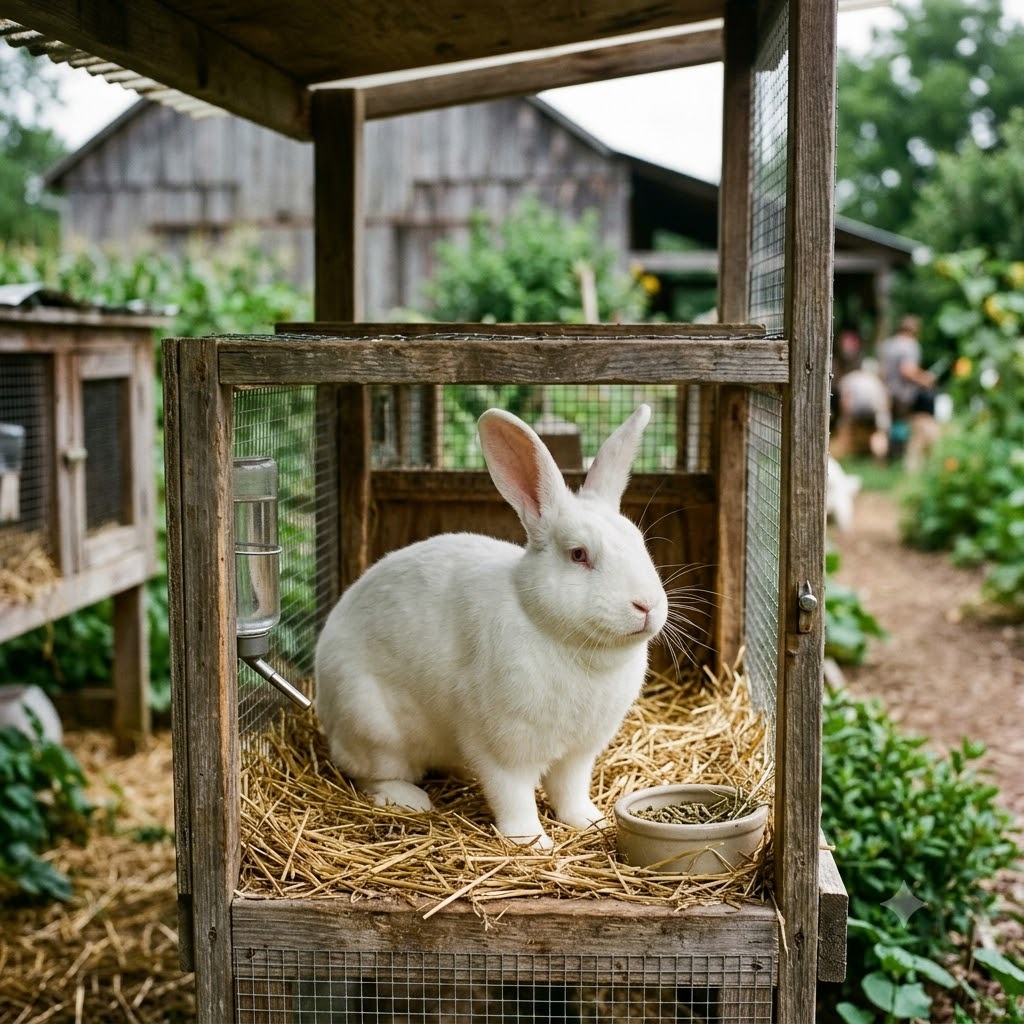
Despite the name, the New Zealand rabbit was developed in the United States in the early 1900s for meat and fur. It is the benchmark meat breed on North American homesteads: a broad, muscular commercial-type rabbit that grows fast, breeds reliably, and stays calm in a hutch. Most homesteaders keep it purely for the freezer.
Is it right for you?
Good fit if your goal is a steady, space-efficient meat supply and you can accept raising animals for slaughter. It suits beginners, small yards, and most temperate climates. If you want a pet, fibre, or a grazing pasture animal, look elsewhere.
What you get
Meat, and a lot of it. Adults weigh 9 to 12 pounds. A single doe can produce four to five litters a year, 6 to 10 kits each. Kits reach a 4 to 5 pound fryer weight by 8 to 12 weeks, dressing out at roughly 50 to 60 percent. The white variety also gives clean, usable pelts.
Space & Housing
Wire hutches raised off the ground, one rabbit per cage, roughly 30 by 36 inches for a doe with a litter. Shade and rain cover are essential; they tolerate cold far better than heat. No pasture or fencing needed.
Feeding & Daily Care
Commercial pellets plus unlimited hay and clean water. A grow-out fryer eats modestly, so feed cost per pound of meat is low. Daily routine is water, feed, and a quick health check - about 10 minutes for a few cages.
Temperament & Handling
Calm and docile, one of the easier breeds to handle. Bucks can be territorial and does protective with a litter. Rabbits are quiet, though thumping and cage noise carry at night.
Health & Hardiness
Hardy in cold, vulnerable to heat above roughly 85F - provide shade, airflow, and frozen water bottles in summer. Watch ear mites, sore hocks, and overgrown teeth at a general level. For any illness, breeding, or medication questions, consult a reputable breeder and a livestock veterinarian.
Getting Started
Start with one buck and two or three does from a reputable breeder. Learn to sex young stock and keep simple breeding records. Rebreed does on a manageable schedule, not flat-out.
Common Mistakes
Overbreeding does into exhaustion, letting summer heat kill stock, and keeping rabbits together in one cage - they fight and breed uncontrolled.
FAQ
How fast do they reach butcher weight?
Typically 8 to 12 weeks for a 4 to 5 pound fryer, faster than most breeds.
Do I need a buck for each doe?
No. One buck services several does; two or three does per buck is a common homestead ratio.