Nigerian Dwarf Goat: Small-Space Dairy Goat
A miniature dairy goat that gives rich, high-butterfat milk from a compact, friendly frame - well suited to small homesteads and first-time goat keepers.
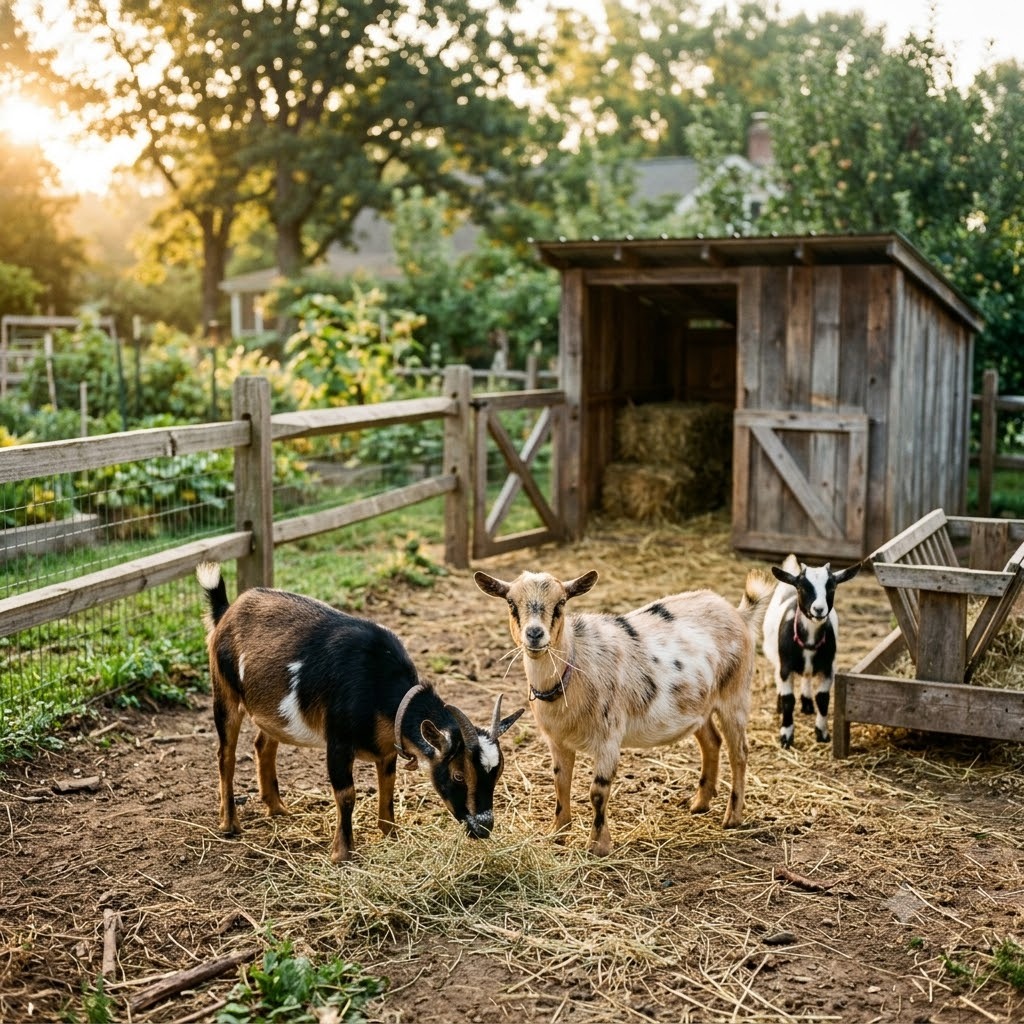
The Nigerian Dwarf is a miniature dairy goat that traces back to small West African goats brought to the United States, where breeders refined them into a compact milker. Homesteaders keep them because they give a surprising amount of rich milk from an animal small enough to pick up and carry - most does stand about 17 to 21 inches tall and weigh 60 to 75 pounds.
Is it right for you?
Good for small properties and beginners. They fit a suburban-sized lot, handle most temperate climates, and suit anyone wanting fresh milk without a full-sized dairy goat. You must keep at least two - they are herd animals and suffer alone.
What you get
A doe in milk gives roughly 1 to 2 quarts a day, about 1 to 2 litres, over a 9 to 10 month lactation. The milk is prized for high butterfat, often 6 to 10 percent, which makes excellent cheese and soap. Extra wethers can be used for meat, but the carcass is small.
Space & Housing
A dry, draft-free three-sided shelter is enough. Budget roughly 15 to 20 square feet of shelter per goat plus a secure run. Fencing matters most - they climb, squeeze, and test every gap, so use tight woven wire at least 4 feet high.
Feeding & Daily Care
Base the diet on good grass hay, with browse and a little grain for milkers. Keep loose minerals and clean water available at all times. The daily routine is quick: feed, water, a health glance, and twice-daily milking when in lactation. Feed bills are modest for their size.
Temperament & Handling
Docile, curious, and friendly - one of the easiest goats to handle and a favorite with children. They are vocal but not especially loud. Bucks develop a strong smell in rut.
Health & Hardiness
Hardy and adaptable, they tolerate cold better than damp or heat. General goat considerations like parasites and hoof care apply, but for anything medical, work with reputable breeders and a livestock veterinarian rather than guessing.
Getting Started
Start with two or three from a registered, health-tested breeder. Buy does or wethers if you only want milk and pets; keep a buck only if you plan to breed. A doe must kid (give birth) before she produces milk.
Common Mistakes
Keeping a single goat, underbuilding the fence, and overfeeding grain are the big three. Loneliness causes stress, weak fences cause escapes, and too much grain causes health trouble.
FAQ
How much milk will one goat actually give?
Expect 1 to 2 quarts a day at peak, tapering across the lactation. Two does keep a small family in milk.
Do I need a buck to get milk?
No. You need a doe that has kidded, but you can use stud service or buy a bred doe instead of keeping a smelly buck year-round.