Raising Pigs: Two Feeder Pigs, a Summer of Work, a Freezer of Pork
Buy two weaned feeder pigs in spring, raise them over the summer on feed and surplus, and butcher in fall for a year's worth of pork.
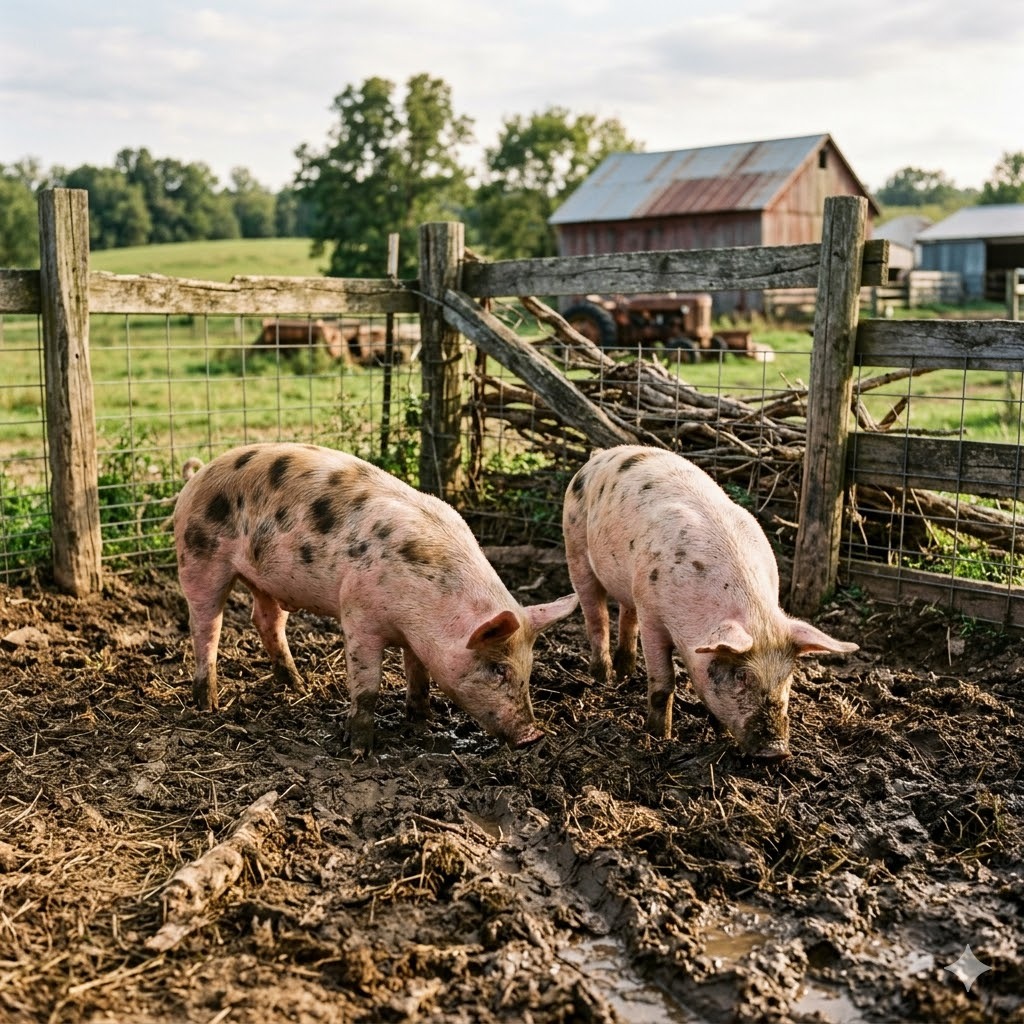
Of all the homestead livestock, pigs give the best return on a single season of effort. A couple of weaned feeder pigs bought in spring will grow to butcher weight by fall, turning feed, garden surplus, and rooting energy into a freezer full of pork. They are smart, strong, surprisingly clean when given room, and they will clear and till any patch of ground you fence them onto. This is the classic seasonal project: not a permanent herd, just a summer of work that pays off at the end.
Is it right for you?
Pigs are an intermediate project. They are not hard to keep alive, but they are strong, intelligent, and determined, which means anything you build to contain them gets tested daily. A weak fence or a flimsy gate will not last a week. If you have decent fencing skills, a spot with shade and water, and the stomach for the end of the project, pigs are one of the most rewarding animals you can raise.
The biggest mental hurdle for most people is that you are raising an animal you will eventually butcher. Feeder pigs grow fast and develop personality, so go in with clear eyes about the goal. Keeping them in a group helps; you are managing livestock, not pets.
Before anything else, check your local zoning. Pigs are restricted or outright banned in many residential and suburban areas, and some places that allow other livestock specifically exclude swine. A quick call to your county or municipal office now saves a world of trouble later. You also want enough room: a couple of pigs need a sturdy pen at minimum, and they do far better with pasture or woodland to root in.
One firm rule: get two. Pigs are social animals and a lone pig is a stressed, noisy, unhappy pig. Two is the practical minimum, and two is also convenient because that fills a freezer nicely and splits well if you are raising one for yourself and one for a neighbor.
Best breeds
You will choose between heritage breeds, commercial crosses, and the small grazing Kunekune. Any of them will give you good pork; the right pick depends on your space, your timeline, and whether you care more about speed or flavor.
- Berkshire - a heritage favorite known for richly marbled, dark, flavorful meat; a reliable all-around homestead pig.
- Tamworth - a hardy, active heritage breed and an excellent forager, sometimes called the "bacon pig" for its lean, long carcass.
- Gloucestershire Old Spots - a docile, easy-going heritage breed that does well on pasture and orchard windfalls.
- Large Black - a calm, hardy heritage breed that grazes well and tolerates a range of conditions, good for low-input setups.
- Commercial crosses - the standard fast-growing, lean modern hogs you will find at most sale barns; they reach butcher weight quickly and feed-efficiently, with milder flavor.
- Kunekune - a small, gentle, grazing breed that thrives on pasture and needs far less space, a strong choice if your acreage is limited (though they grow slower and finish smaller).
For a first-timer wanting a freezer filled by fall, a couple of commercial crosses or a common heritage breed like Berkshire or Tamworth is the safe, proven route.
Housing and fencing
Fencing is where pigs make or break your summer, so do it right before they arrive. Pigs are strong, smart, and persistent: they push, they root underneath, and they will find any weak point. The standard approach is a strong physical perimeter backed by electric fencing. A sturdy perimeter of hog panels, woven wire, or solid posts and rails keeps them in if a fence is breached; a strand or two of electric wire run low on the inside teaches them to keep their snouts off the fence and stops the rooting that undermines it. Pigs learn the electric line fast and respect it once they have touched it, but you must train them to it and keep the charger hot.
Shelter can be simple but must be sturdy. A three-sided shed, a stout hut, or a converted shelter that gives them dry footing and protection from sun, wind, and rain is plenty. They do not need anything fancy, but whatever you build, build it solid, because pigs lean, scratch, and rub on everything.
The thing people forget is heat. Pigs cannot sweat, which means they have no good way to cool themselves and are genuinely at risk in hot weather. They must have shade and a wallow or mud area to cool down. A shallow muddy spot or a designated wet wallow is not optional in summer; it is how a pig regulates its temperature, and it also helps with sunburn and bugs. Plan a shaded corner and a place that can stay wet and muddy through the hottest months.
Because pigs are vulnerable when penned and can attract predators, it is worth reviewing the site's predator-protection guide and making sure your perimeter and shelter account for it, especially overnight.
Feeding
The reliable base for raising pigs is a commercial hog feed, formulated for growing pigs and balanced for steady, healthy growth. Free-choice or measured feedings of a good grower ration will carry your pigs from weaning to butcher weight without guesswork, and clean water must be available at all times. Pigs drink a lot, especially in heat, and a pig short on water goes off feed and stops growing.
The fun part of pigs is that they happily turn garden surplus, bruised produce, overripe vegetables, and pasture forage into pork. Extra zucchini, windfall apples, melon rinds, and the like are welcome supplements and cut your feed bill. Heritage breeds and Kunekunes in particular do real work on pasture, orchard drops, and garden leftovers.
But here is the part you must take seriously: feeding food waste and kitchen scraps to pigs is regulated or outright banned in many places because of disease risk. Feeding so-called "garbage" or swill, and especially anything containing meat or that has touched meat, can spread serious livestock diseases, and the rules around it are strict for good reason. Check your local and state regulations before you feed any food waste at all. As a flat safety rule regardless of where you live: never feed meat, or any kitchen scraps that contain or have contacted meat, to your pigs. Stick to commercial feed plus clean plant-based garden and pasture surplus, and you stay on the right side of both the law and your animals' health.
Daily care and routine
The daily rhythm with pigs is short but non-negotiable. Twice a day you check and top up feed, and every single day you make sure they have clean, abundant water and that the wallow or shade is doing its job. In hot stretches, water and cooling are the whole game; check them more than once.
Walk the fence regularly. Pigs root constantly, and rooting near a fence line is how escapes start, so a daily look for undermined spots, sagging wire, or a dead electric line is part of the routine. Keep the charger working and the line clear of weeds that can ground it out.
Beyond that, pigs are low fuss. Keep their shelter dry, watch how they move and eat, and spend a little time around them so they stay calm and easy to handle. A pig that is eating well, drinking well, active, and cool is a healthy pig. Daily observation is your best early-warning system; you will notice a problem long before it becomes serious if you are paying attention each day.
Common health issues
Pigs are generally hardy, but a few issues come up often enough to know about. Internal and external parasites are the most common ongoing concern, especially on pasture or in pens used year after year, and they quietly drag down growth if not managed. Heat stress is the big seasonal danger, because pigs cannot sweat; a pig that is panting, lethargic, or down in hot weather needs shade, water, and cooling immediately. Clean water and clean living conditions prevent a great deal of trouble before it starts, so dirty water and a fouled pen are themselves health risks.
For anything beyond the basics, work with a livestock or large-animal vet for diagnosis and treatment. They can advise on a parasite plan appropriate to your area, check anything that looks off, and guide you on any preventive care your region calls for. Do not guess with medications; a vet who knows local conditions is the right call for a sick or struggling pig.
What you get (and processing)
Two pigs raised to roughly 250 pounds each give you a serious amount of pork, easily enough to fill a freezer with chops, roasts, ground pork, sausage, ribs, and bacon and ham if you have them cured. For a single summer's work, the payoff is hard to beat, and one season's pigs can supply a household with pork for much of the year.
Processing a pig is a big job. They are heavy, and butchering a hog cleanly is more than most people want to take on themselves, so the common and sensible route is to use a licensed butcher or processor. You haul the pigs in (or arrange pickup), tell them how you want the cuts, and pick up neatly wrapped, frozen pork ready for the freezer. Good processors book up fast, especially in the fall when everyone is finishing their animals, so reserve your slaughter date well ahead, often months in advance, right around when you buy your feeder pigs.
Know your local rules here too. Regulations around on-farm slaughter, using a licensed facility, and especially selling any of the meat vary by location and can be strict. If the pork is strictly for your own family, your options are broader; the moment you want to sell, you are into licensing and inspection rules that you need to understand first. Keep it respectful and businesslike: this is the part of the project the whole summer was building toward.
Getting started
Start in early spring by lining up healthy weaned feeder pigs, ideally two, from a reputable breeder or a good local source. Weaned feeders are young pigs already off their mother and eating solid feed, which is exactly what you want; they will do the growing on your place over the summer.
Before they come home, have everything ready: fencing up and tested with the electric line hot, shelter built, shade and a wallow spot planned, feed and clean waterers in place, and your fall butcher date already booked. Getting the pen and fence truly solid before arrival is the single most important step, because chasing loose pigs on day one sets a bad tone for the whole season.
Then it is a steady summer of feed, water, cooling, and fence checks while the pigs do what they do best, turning rations and surplus into pork and rooting up whatever ground you put them on. Come fall, you load them up, and the freezer fills.
Rough costs
Costs vary a lot by region, breed, and feed prices, so treat these as ballpark figures rather than exact numbers. Expect to pay roughly the cost of a couple of weaned feeder pigs up front, with heritage breeds generally running more than common commercial crosses. Feed is usually the largest expense over the summer, and the total depends heavily on how much garden and pasture surplus you can offset it with; budget for several months of grower ration per pig.
On top of the animals and feed, plan for fencing and the electric charger (a real cost the first year, but reusable after that), a simple shelter, and waterers. The other significant line item is processing, charged by the butcher and typically including a kill fee plus a per-pound cut-and-wrap charge, so the more pork you take home, the more this runs. Add it all up and pork from your own pigs often lands somewhere comparable to good store-bought on a per-pound basis, but you get a freezer full of known-quality meat, cleared ground, and a season's worth of satisfaction in the bargain.