Raising Rheas: The Manageable Ratite for Meat and Eggs
A guide to raising rheas - a large South American ratite, smaller and calmer than an ostrich, farmed for lean meat, eggs and oil, and valued as an alert, insect-eating flock guardian.
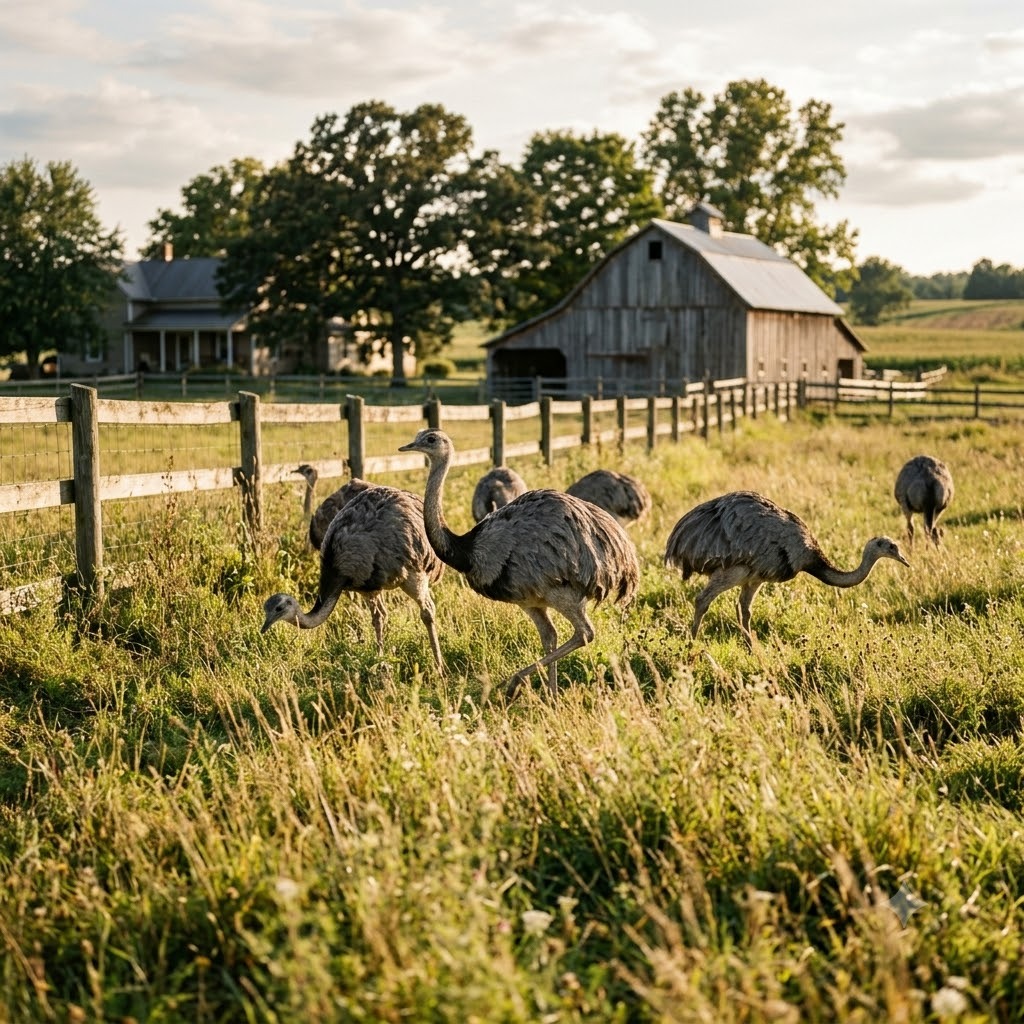
Rheas are the more manageable cousins of the ostrich - large flightless South American birds farmed for lean meat, eggs and oil, but calmer and safer to handle than their giant relatives. They are alert, eat insects and weeds, and even guard other stock, and the males famously incubate the eggs and raise the chicks. For those wanting a ratite without ostrich-level risk, rheas are an appealing choice.
Is it right for you?
Rheas suit a homesteader with acreage who wants a ratite that is more manageable than an ostrich. They are large and fast but calmer and less dangerous.
Space & Housing
They need large grassy paddocks with strong perimeter fencing and shelter; they run fast and need room, though they are less demanding than ostriches.
Feeding & Daily Care
Feed a ratite ration plus abundant forage, insects and greens - they graze and hunt bugs well - with grit and constant water.
Getting Started
Source healthy stock or eggs from a rhea breeder, provide secure fencing and space, and let the males incubate and rear chicks naturally.
Health & Common Problems
Chicks need careful early care to avoid leg and digestive problems; adults are hardy. Good fencing prevents escapes and injuries.
What You Get
Lean red meat, large eggs, valuable oil, plus insect and weed control and an alert presence that guards other stock.
Costs & Effort
Moderate - land and fencing are the main costs, but rheas graze and forage much of their diet and are easier to handle than ostriches.
Common Mistakes
Weak fencing (they run and can escape), neglecting delicate chicks, and underestimating their size and speed are the usual mistakes.
FAQ
Rhea or ostrich? Rheas are smaller, calmer and safer, if less productive per bird.
Who raises the chicks? The male incubates the eggs and rears the young.