Saanen Goat: The High-Volume Homestead Dairy Breed
The Saanen is a large white Swiss dairy goat prized for the highest, steadiest milk output of any breed. It is a calm, productive choice for homesteaders who want serious volume and don't mind shade and steady feeding.
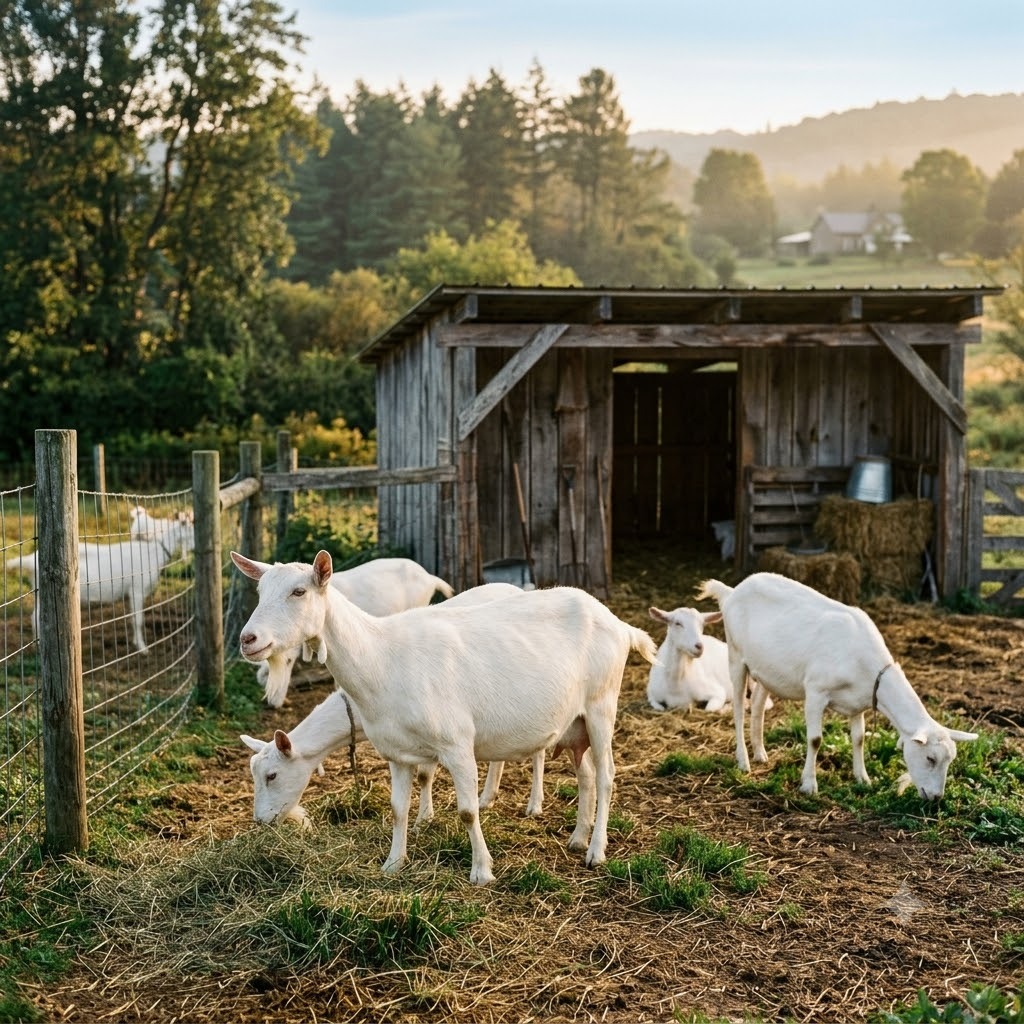
The Saanen is a large, all-white (or cream) dairy goat from the Saanen valley of Switzerland, and it is often called the "Holstein of the goat world" for good reason. Homesteaders keep Saanens because they give more milk, more reliably, than almost any other breed - a steady, mild-flavoured supply for drinking, cheese, yoghurt, and soap. They are calm, hardy, and famously easygoing, which makes them a common first dairy goat for people who want volume over novelty.
Is it right for you?
Saanens suit homesteaders whose main goal is milk and who have room for a big goat. They tolerate cold well but struggle in intense heat and sun - their white coats sunburn - so shade is non-negotiable in hot climates. Their calm nature makes them beginner-friendly, but the sheer milk volume means you must be ready to milk twice a day, every day, for months.
What you get
This is a high-volume dairy animal. A good Saanen doe produces roughly 3 to 4 litres (about 6 to 9 pounds) of milk per day at peak, often 800 to 1,000+ litres across a 10-month lactation. The milk is low in butterfat (around 3 to 3.5%) and mild-tasting - excellent for drinking and fresh cheese. Wethers and surplus bucklings can also be raised for meat, though that is a secondary use.
Space & Housing
Provide a dry, draught-free shelter with good ventilation and clean bedding, plus shade for hot days. Goats are escape artists, so fencing must be tight - woven wire or well-strained electric, at least 1.2 metres high. Allow generous pasture or browse; a bored, penned Saanen gets loud and destructive.
Feeding & Daily Care
A milking Saanen needs quality hay or browse free-choice, plus grain on the milk stand proportional to output, along with minerals and constant fresh water. Heavy milkers burn a lot of energy, so the feed bill is real - expect noticeably higher grain and hay costs than for a meat or pygmy breed. Twice-daily milking anchors the routine.
Temperament & Handling
Saanens are among the most docile, people-friendly goats - gentle, steady on the milk stand, and easy for children and beginners to handle. They are generally quiet, though any goat will bawl when hungry, in heat, or lonely. Bucks in rut are strong-smelling and pushy; most homesteads keep does and buy in stud service.
Health & Hardiness
Saanens are robust and cold-tolerant but heat-sensitive and prone to sunburn, so shade and water matter. As a heavy producer, condition and nutrition need watching. This profile is not medical guidance - source stock from reputable, health-testing breeders and build a relationship with a livestock veterinarian for any health, parasite, or breeding questions.
Getting Started
Never keep one goat - they are herd animals, so start with at least two does or a doe and a wether. Buy from a breeder who tests their herd and can show milk records. Learn to sex kids and understand the breeding cycle: a doe must be bred and kid to produce milk, freshening yearly.
Common Mistakes
The big ones: underestimating feed cost and the twice-daily milking commitment; providing no shade and letting white goats sunburn; and keeping a single lonely goat, which leads to constant noise and stress.
FAQ
How much milk will one Saanen give?
A well-bred, well-fed doe commonly gives 3 to 4 litres a day at peak, tapering over a roughly 10-month lactation. Individual output varies with genetics and feeding.
Are Saanens good for beginners?
Yes. Their calm temperament and steadiness on the milk stand make them one of the easiest dairy breeds to learn on, provided you can commit to daily milking.