Raising Sheep: A Homesteader's Guide to Meat and Wool on Pasture
Sheep convert grass into lamb and wool behind simple fencing, but they need flock company, parasite management, and copper-free minerals to thrive.
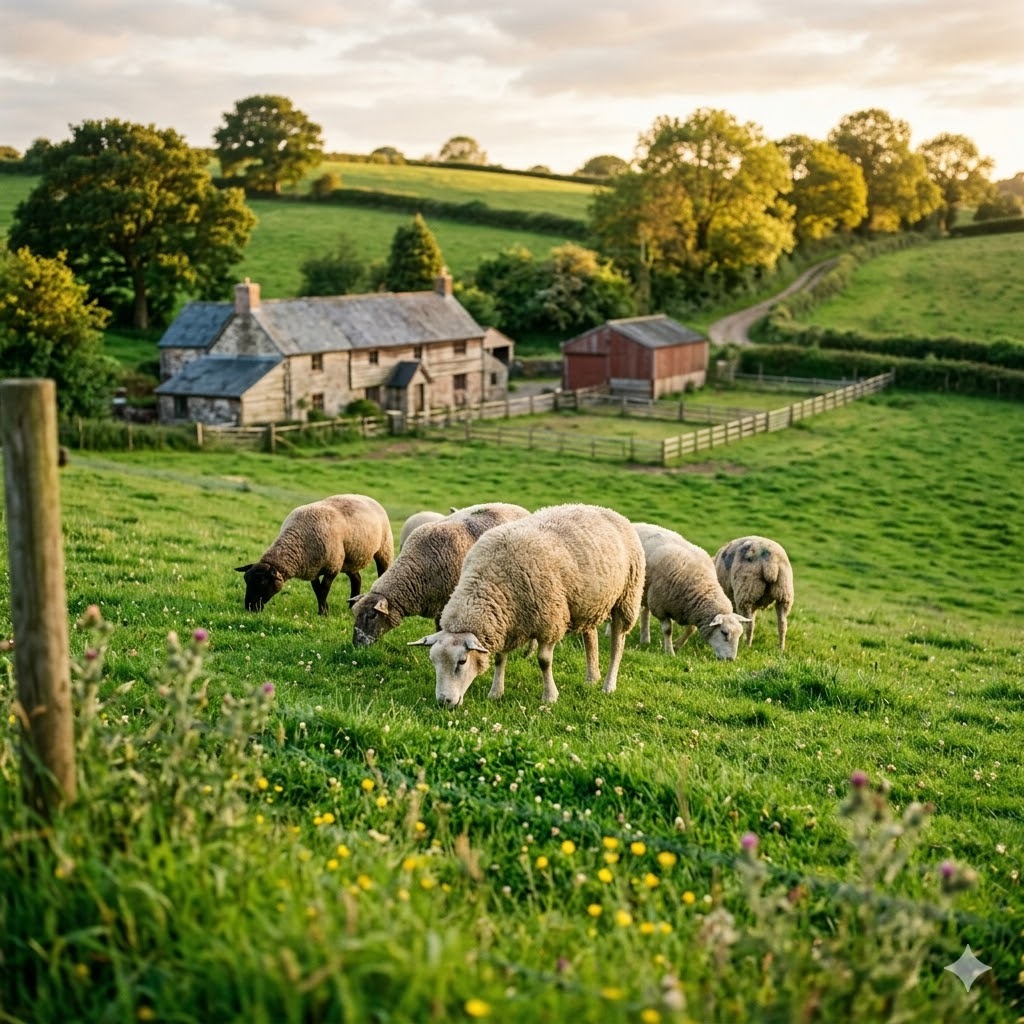
If you have got grass and want to put meat in the freezer without the constant escape-artist drama of goats, sheep are one of the most rewarding animals on a homestead. They graze the pasture you already have, stay behind fencing that would never hold a goat, and the hair breeds even shed their coats so you never have to learn shearing. They are not foolproof - parasites and a few quirks will catch out a careless keeper - but a small flock is well within reach for most people with an acre or two and some patience.
Is it right for you?
Sheep need pasture. Grass is the whole point of keeping them, and a flock that has to live off bought hay year-round gets expensive fast. As a rough rule of thumb, plan on something like an acre of decent pasture for every two to four sheep, though that swings hard with your soil, rainfall, and how you rotate them. If your "pasture" is half an acre of weeds, sheep are probably not your animal yet.
You also cannot keep just one. Sheep are flock animals to the bone - a lone sheep is a stressed, noisy, miserable sheep, and a stressed sheep is a sick sheep. Start with at least three, ideally more. Two is a bare minimum if one dies and you are scrambling, but build toward a small group.
The biggest honest warning: sheep get parasites, and parasites are what kill them. This is the single thing that separates keepers who succeed from those who give up after a hard summer. If you are willing to learn to read the signs, rotate grazing, and work with a vet, you will be fine. If you want a graze-and-forget animal, look elsewhere. Difficulty here is genuinely intermediate - easier than dairy goats, harder than chickens.
Finally, check your local zoning before you buy a single ewe. Plenty of rural and semi-rural properties allow livestock, but some have minimum acreage rules, setbacks from property lines, or limits on numbers. A five-minute call to your county or municipality saves a world of grief later.
Best breeds
Pick your breed around what you actually want - meat, wool, or both - and around whether you ever want to shear.
- Katahdin - A hair breed that sheds its coat naturally, so no shearing, ever. Hardy, good mothers, strong parasite resistance, and excellent for a meat-only homestead. If you just want lamb in the freezer with minimal fuss, start here.
- Dorper - The other great hair breed for meat. Stocky, fast-growing, sheds out, and tolerates heat well. Dorpers and Katahdins are the obvious picks for anyone who never wants to touch a pair of shears.
- Suffolk - A classic wool breed kept mostly for meat. Big, fast-growing lambs and a familiar black face. You will shear once a year, but the carcass quality is hard to beat.
- Merino - The fine-wool specialist. If your goal is spinning, knitting, or selling quality fleece, Merino wool is the gold standard. They demand more shearing care and attention than a meat breed, so keep them only if the wool is the point.
- Dual-purpose breeds (such as Corriedale or Romney) sit in the middle, giving you both a usable fleece and a respectable meat carcass - a sensible compromise if you want a bit of everything and do not mind shearing.
For most new homesteaders chasing meat, a hair breed like Katahdin or Dorper is the lowest-stress way in.
Housing and fencing
Sheep are blessedly easy to house. They do not need a heated barn - they need a dry, draft-free shelter to get out of cold rain, wind, and summer sun. A three-sided run-in shed, a corner of an existing barn, or a sturdy field shelter all work fine. The enemy is wet and wind, not cold; a healthy sheep in good fleece handles freezing temperatures far better than a damp draft. Bed it with straw and keep it dry.
Fencing is where sheep shine compared to goats. They graze grass and do not climb, lean, and test fences the way goats do, so you can get away with simpler containment. Woven wire (sheep and goat netting) is the gold standard and keeps lambs in. Many keepers use electric netting or several strands of electric wire for rotational grazing, which doubles as a real deterrent to predators. Whatever you choose, the priority is less about keeping sheep in and more about keeping predators out.
That predator point matters more than almost anything else. Sheep are a prime target - coyotes, loose dogs, and more will all take lambs and adults given the chance. Good fencing is your first line, but a livestock guardian animal (a dog, donkey, or llama) is what lets many homesteaders sleep at night. See the site's predator-protection guide for how to set that up properly; do not treat it as optional if you have predators in your area.
Feeding
Keep this simple, because sheep do: grass and hay are the base of the diet, full stop. In the growing season they should get most of what they need from good pasture. Through winter or dry spells, switch to grass hay, feeding roughly enough that they always have forage in front of them. Grain is mostly unnecessary - a little may help a ewe in late pregnancy or a lamb being finished for meat, but routine grain feeding leads to fat sheep and health problems. Most of the year, grass and hay is the whole story.
Two things they always need: clean water and the right loose mineral.
Now the single most important warning in this entire guide: sheep are extremely sensitive to copper, and copper is toxic to them. What is a normal, healthy mineral level for a goat, cow, or horse can slowly poison a sheep. You must use sheep-specific minerals, formulated without added copper. Never feed sheep a goat, cattle, or all-stock mineral or feed, because those routinely contain added copper. This is the most common way well-meaning beginners accidentally kill their flock, often without realizing it until sheep start dying. Read every label, buy minerals that say "for sheep," and store them where they cannot get mixed up with other animals' feed. Provide that sheep mineral free-choice, loose, so they can take what they need.
Daily care and routine
Day to day, sheep are low-maintenance. Walk through the flock at least once a day - that daily look is your best diagnostic tool. You want to see animals up, alert, grazing, and chewing cud. A sheep standing apart, hanging its head, off its feed, or lagging behind the flock is telling you something is wrong, and sheep hide illness well, so you have to look closely. Check water daily and top up hay and mineral as needed.
A few periodic jobs round out the routine:
- Hoof trimming - Hooves grow like fingernails and need trimming a few times a year, more often on soft or wet ground. Overgrown hooves cause lameness and invite foot rot. It is a simple skill to learn with a good pair of hoof shears.
- Shearing - Wool breeds need shearing once a year, usually in spring before the summer heat. Many homesteaders hire a traveling shearer rather than learning the craft. Hair breeds (Katahdin, Dorper) shed their coats naturally and skip this entirely - one of the big reasons they are so popular.
- Parasite checks - Build a habit of checking your flock's condition through the grazing season (more on this next). Rotating them onto fresh pasture and not overgrazing is the best parasite control you have.
None of this is hard, but it does have to happen on schedule. Sheep punish neglect quietly.
Common health issues
Most sheep health trouble comes down to a handful of recurring problems. You do not need to be a vet, but you do need to recognize these and have a real large-animal or livestock vet you can call. Do not chase doses off the internet - get a proper diagnosis.
- Internal parasites (the barber pole worm) - This is the big one, the killer. The barber pole worm is a stomach parasite that causes anemia, weakness, and death, especially in warm, wet weather and on overgrazed pasture. Watch for pale gums and lower eyelids, weight loss, and lethargy. Pasture rotation and not crowding sheep onto the same ground are your strongest defenses. When you do see signs, work with your vet - resistance to dewormers is a real and growing problem, so they should not be used blindly.
- Foot rot - A contagious bacterial infection of the hoof that causes lameness and a foul smell, thriving in wet, muddy conditions. Good hoof trimming, dry footing, and prompt attention keep it in check.
- Flystrike - In warm months, flies lay eggs in damp, soiled, or wounded fleece and the maggots attack the skin. It is more of a risk in wool breeds and can turn deadly fast. Keep back ends clean, watch closely in summer, and act immediately if you see it.
For any of these, the right move is the same: call a livestock vet for diagnosis and a treatment plan. A good relationship with a large-animal vet is worth its weight in gold.
What you get (and processing)
The two products are meat and wool.
Meat is the main reason most homesteaders keep sheep. Young animals give you lamb; older animals give you mutton, which is stronger in flavor and excellent in slow-cooked dishes. A meat breed grows out to slaughter weight in a single season, so a spring lamb can fill the freezer by fall. When the time comes, most people take their animals to a local butcher or mobile processor, who handles the slaughter and returns neatly cut, wrapped, and frozen meat. It is a straightforward, respectful end to a well-raised animal, and doing it through a professional keeps it clean and humane.
Be aware that local rules govern this. In many places you can process your own meat for your own family's use, but selling meat to others requires inspected facilities. Check what applies where you live before you plan to sell anything.
Wool is the bonus from wool and dual-purpose breeds. A single fleece off a wool sheep is a real amount of fiber, and depending on quality you can spin it, felt it, sell it raw, or send it to a mill for processing into yarn. Fine wool from breeds like Merino can be genuinely valuable; coarser fleeces are still useful for felting and crafts. Hair breeds, of course, give you no wool at all - which is exactly the point for a meat-focused setup.
Getting started
Start small and start local. Buy three to five healthy young ewes (and arrange a ram or borrow one only when you are ready to breed) from a reputable nearby breeder who can show you their flock and answer questions. Local stock is already adapted to your climate and parasites, and a good breeder becomes an ongoing source of advice.
Before they arrive, have the essentials in place: secure fencing, a dry shelter, clean water, grass hay, and a bag of sheep-specific (copper-free) loose mineral. Line up a large-animal vet in advance so you are not searching for one in a crisis, and sort out your predator protection - fencing and, if needed, a guardian animal - before the first sheep sets foot on the property, not after the first loss.
Then learn by watching. Spend time with your flock daily, get comfortable with hoof trimming and reading body condition, and lean on your breeder and vet. Sheep keeping is a skill that builds quickly once you are hands-on.
Rough costs
Costs vary a lot by region and breed, so treat these as ballpark figures to plan around, not quotes.
- The sheep - Expect roughly $150 to $350 for a healthy young ewe, with breeding stock and registered animals running higher. Hair breeds and wool breeds land in a similar range.
- Fencing and shelter - Usually the biggest upfront cost. Woven-wire or electric-netting fencing for a small paddock can run anywhere from a few hundred to over a thousand dollars depending on the area you enclose, and a simple shelter can be built cheaply or from salvaged materials.
- Feed and minerals - Modest if you have good pasture. Budget for winter hay and a steady supply of sheep mineral; the mineral itself is cheap insurance.
- Ongoing - Vet visits, dewormers as needed, hoof shears, and (for wool breeds) a yearly shearer's fee. Guardian animals, if you go that route, add their own setup and feed costs.
All told, a small starter flock with basic infrastructure is a very achievable project for most homesteaders - and once the fencing is up and the routine is set, sheep are one of the most efficient ways to turn the grass you already have into food and fiber.