Raising Silkies: The Broody, Fluffy Pet Chicken
A guide to Silkies - famously fluffy, gentle bantams with silky, fur-like plumage, kept for pets and their unmatched broodiness as much as for small eggs, the best natural incubators in the coop.
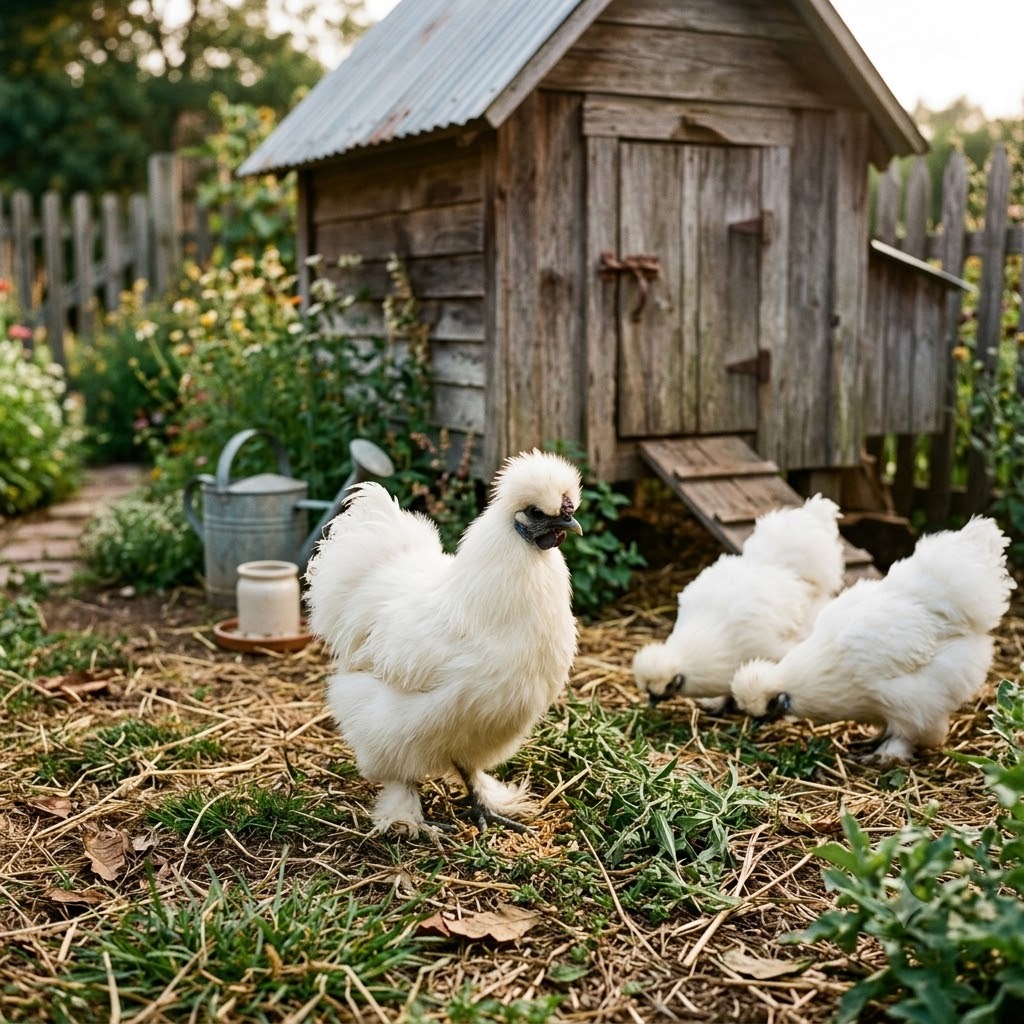
Silkies are unlike any other chicken - fluffy, fur-like plumage, dark skin, and a sweet, docile temperament that makes them beloved pets, especially for children. They lay only small eggs, but their real value is broodiness: no hen goes broody more readily or mothers more devotedly, so keepers use them as living incubators to hatch the eggs of other breeds.
Is it right for you?
Silkies suit anyone who wants a gentle pet chicken, a natural incubator, or a family bird for children. They are not egg or meat producers, but unmatched as broody mothers and companions.
Space & Housing
A small coop and covered run suits these bantams; their fluffy plumage is not waterproof, so they need dry shelter and protection from wet and cold. Keep the run covered and dry.
Feeding & Daily Care
Feed a standard ration in small amounts plus scraps, with grit and water; daily care is minimal. Their crest can obscure vision, so keep it trimmed if needed.
Getting Started
Start with a few birds, provide dry housing, and expect small eggs and frequent broodiness. To use them as incubators, give a broody hen fertile eggs to set.
Health & Common Problems
Their non-waterproof plumage means damp and cold are the main risks; keep them dry. Watch for mites in the fluff and vision issues from the crest. Otherwise hardy and long-lived.
What You Get
Small eggs, devoted broody mothers that will hatch and raise other breeds' chicks, and gentle, affectionate pets.
Costs & Effort
Low - small birds that eat little, though they need dry housing. Their broodiness can replace an incubator, saving money and effort at hatching time.
Common Mistakes
Letting their fluffy plumage get wet or cold, and expecting them to be productive layers, are the usual mistakes.
FAQ
Do they lay many eggs? No - small eggs and often broody; they are pets and incubators, not layers.
Why keep them? For their gentle pet nature and unmatched ability to hatch and raise chicks.