Raising Squab Pigeons: A Low-Space Loft That Feeds Itself and Raises Your Meat for You
Keep a small loft of utility pigeons that pair up, raise their own young, and hand you tender squab in about four weeks with almost no labor and very little space.
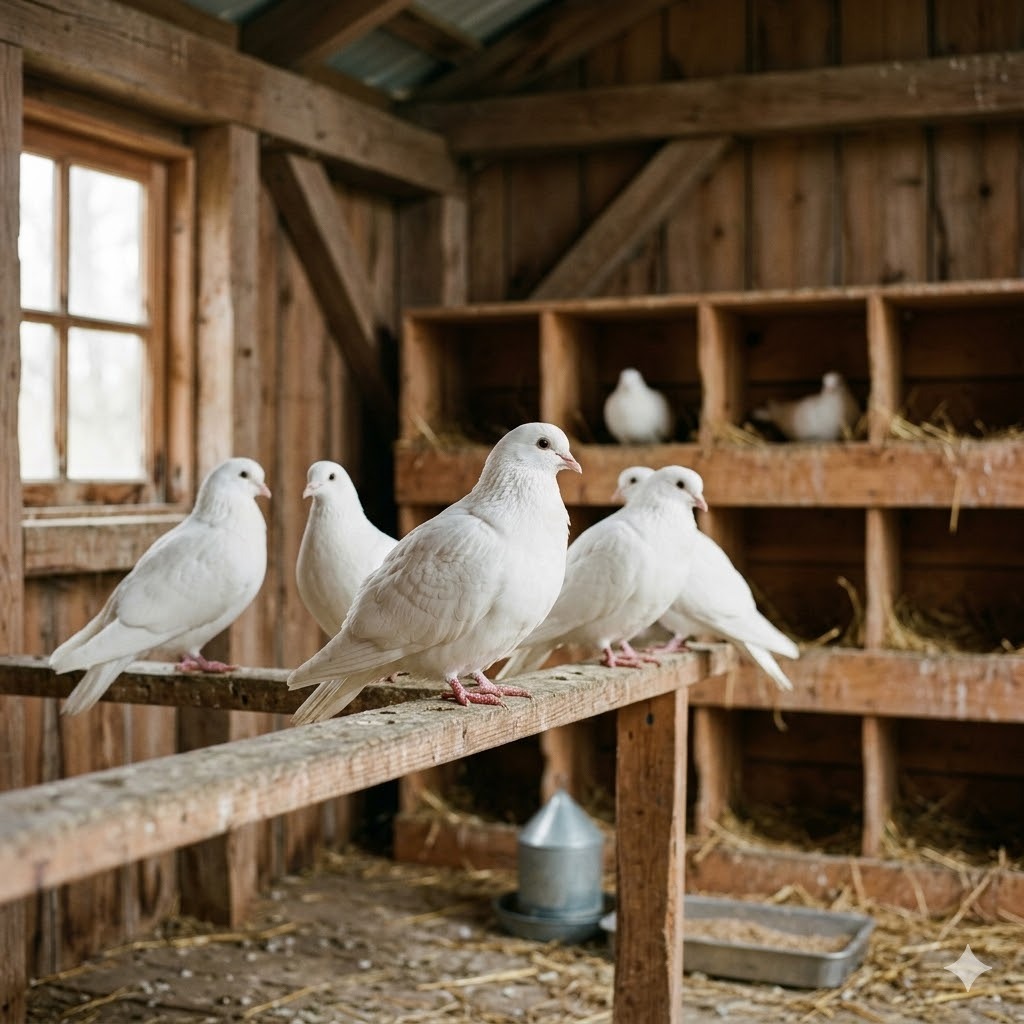
Squab pigeons are one of the most overlooked animals a homesteader can keep, and one of the cleverest. A small loft of utility pigeons pairs off, builds nests, and raises its own babies with no incubator, no brooder, and no help from you. You simply harvest the young birds, called squab, at about four weeks old - just before they fledge - when the meat is at its most tender. It is a delicacy that costs a fortune in restaurants, and you can raise it in a shed-sized loft on a suburban lot. For meat per square foot with the least labor, almost nothing beats a pigeon loft.
Is it right for you?
Squab suits people who are short on space but still want to raise their own meat. Pigeons need a fraction of the room of chickens or ducks and make almost no mess by comparison. They are quiet apart from a gentle cooing, they do not smell strongly if the loft is kept clean, and a pair takes up very little room. If you have a small backyard, a spare shed, or even a well-built loft on a garage, you can keep squab.
The real appeal is how little you do. The parent birds do all the incubating and all the feeding. A mated pair works as a team, and they feed their chicks a rich "pigeon milk" from their own crops for the first days, then move on to softened seed. You are not running a brooder or hand-rearing anything - the birds raise your meat for you. Your job is feed, water, clean loft, and harvest.
One thing to accept up front: harvesting squab means processing young birds at about four weeks, right before they would leave the nest. Some people find that harder than butchering a grown animal. It is quick and humane done properly, but it is worth being honest with yourself that this is the nature of squab. As always, check local rules on keeping pigeons, since some towns have ordinances about them.
Best breeds
Ordinary flying or racing pigeons are too small and slow-growing for good squab. What you want are utility (meat) breeds, bred over generations for large, fast-growing young. Rather than distinct "breeds" in the poultry sense, you are choosing among these established utility strains.
- King - the classic American squab breed and the standard choice. Big, meaty, and productive, Kings raise large squab and are widely available. If you pick one breed, pick this.
- French Mondain - a large, heavy old meat breed that produces big, well-fleshed squab; a strong choice for size.
- Carneau - a good-sized reddish utility pigeon, hardy and a reliable producer of quality squab.
- Runt (Giant Runt) - the largest of the domestic pigeons, sometimes crossed into meat lines to add size, though pure Runts can be slower breeders.
- Utility crosses - many squab keepers run crosses of these heavy breeds, selecting for pairs that are good, steady producers. A proven local strain of meat pigeons is often the best bird you can start with.
Whatever the strain, buy proven meat stock from someone who raises squab, not fancy show or flying pigeons, and look for large-framed, vigorous, well-paired birds.
Land, fencing and shelter
The loft is everything here, and the good news is it is small. Pigeons live in a loft - an enclosed, secure shelter fitted with nest boxes, perches, and a way for you to service it. A modest shed, a purpose-built loft, or a converted outbuilding all work. You do not need land or pasture; you need clean, dry, secure housing.
Inside, each pair wants its own nest box or nesting shelf. Give them plenty, because pigeons pair up and defend their nest space, and crowding causes fighting. Provide roughly two nest boxes per pair, since a hen often starts a new clutch while still feeding the last, and add perches for resting. A landing/exercise area helps if you let them out, but a well-kept squab loft can be run entirely closed, which is common when hawks and predators are a concern.
The loft must be secure and weather-tight. Predators - rats, cats, hawks, raccoons, weasels - will kill pigeons and their young, so wire, solid walls, and a door you keep shut are essential. Keep it dry and well-ventilated but free of drafts, with good light. Because pigeons are kept in a defined loft, fencing in the pasture sense does not apply; your "fence" is the loft wire and a tight door. Cleanliness matters more than size - a clean, dry, roomy-enough loft keeps birds healthy and squab thriving.
Feeding
Feeding a squab loft is simple and one of its best features. Pigeons eat a grain and seed diet - a pigeon or dove mix of grains and legumes, or a homemade blend of things like corn, wheat, peas, sorghum, and milo. You keep the feeder filled and let the birds eat their fill; they are efficient and waste little. Peas and other legumes in the mix add the protein that growing squab need, so a good meat-pigeon mix leans a little richer than feed for pet pigeons.
Alongside grain, pigeons must have grit (they need it to grind their food) and a mineral or pigeon "grit and mineral" supplement, often including some form of calcium and salt, which they use heavily during breeding. Fresh, clean water at all times is essential; pigeons drink by sucking, so an open, clean waterer is important, and they will also bathe in a shallow pan if you offer one, which keeps their feathers in good order.
The parents convert this feed into squab for you - they eat, then feed their young from their crops. That means your feed bill is small and predictable, and there is no separate chick starter to buy or brooder to run. Keep the feed clean and dry, since spoiled or moldy grain quickly makes pigeons sick.
Daily care and routine
The daily routine is short and low-stress, which is the whole point. Each day you top up feed, refresh water, and give the loft a quick look: are all the birds bright and active, are the pairs sitting nests, is anyone unwell. Once a week or so you scrape and clean the loft floor and nest boxes, because clean housing prevents most pigeon health problems. That is genuinely most of it.
Beyond feeding and cleaning, your main task is keeping track of the nests. You learn to check which pairs have eggs, which have squab, and roughly how old those squab are, so you know when they are coming up to harvest weight. Ringing or marking nest boxes with dates helps. Because pigeons breed steadily and can raise several rounds of young a year, a working loft is always at some stage of the cycle, and keeping loose track of it is part of the routine.
Handle the birds calmly and gently. Pigeons are easy to catch in a closed loft and quick to settle when handled quietly. There is no daily herding, no pasture to walk, no fence to fix - just a small, contained flock that mostly runs itself.
Common health issues
Pigeons are generally hardy, but a handful of ailments are worth knowing, most of them tied to loft conditions. Canker (trichomoniasis) is a common protozoal disease, often seen as yellowish growths in the mouth and throat, and it can hit squab hard. Coccidiosis and worms are internal parasites managed with clean conditions and, when needed, treatment. External parasites - lice, mites, and pigeon flies - live in the feathers and nests and are kept down by loft hygiene. Respiratory infections (sometimes lumped as one-eye colds or ornithosis) show up in damp, crowded, poorly ventilated lofts. Paratyphoid (salmonella) can cause losses in a dirty loft.
Almost all of this comes back to the same prevention: a clean, dry, uncrowded, well-ventilated loft, clean feed and water, and not letting numbers outrun your space. Watch for a bird that is puffed up, quiet, not eating, or scouring, and separate it. A vet familiar with birds or a knowledgeable local pigeon keeper is a good resource for diagnosing and treating problems, and for advice on any preventive treatments and their withdrawal times before you eat the birds.
What you get (and processing)
What you get is squab - young pigeon, harvested at about four weeks old, right before it would first fly. At that age the meat is exceptionally tender, dark, and rich, considered a gourmet delicacy and priced accordingly in restaurants. From a small loft of a few pairs, you can harvest a steady trickle of squab through the breeding season, since each pair raises round after round of young. It is small meat per bird, but it comes in constantly and for very little feed and almost no labor.
The reason the timing matters is that squab is harvested just before fledging, while the bird is still nest-fat and has never really flown - that is what makes it so tender. Left even a week or two longer, the young bird slims down, toughens, and becomes an ordinary pigeon. So you harvest on schedule, which is why keeping loose track of nest dates matters.
Processing is quick and done at home, similar in principle to any small bird but faster given the size. Because squab are small and clean-fed, they dress out easily. Handle it humanely and cleanly. If you ever plan to sell squab rather than eat your own, check local rules, as selling meat generally brings inspection and licensing requirements that home use does not.
Getting started
Start with a few proven pairs of a good utility breed, or with young birds you let pair up themselves. Buy from someone who actually raises squab, not from show or racing lines, and choose large, healthy, vigorous birds. Getting mated pairs, or birds old enough to pair soon, gets you to your first squab fastest.
Before they arrive, build or convert the loft: secure and predator-proof, dry and ventilated, fitted with two nest boxes per pair, perches, a feeder, a clean waterer, and a bath pan. Have your grain mix, grit, and mineral ready. Settle the new birds in and give them time to pair, claim nests, and start laying - the first eggs may take a few weeks. From then on the pairs take over: they incubate, they hatch, they feed, and you harvest. Keep the loft clean, the feed and water fresh, and loose track of the nests, and a small loft will quietly hand you tender meat for years.
Rough costs
Squab is one of the lowest-cost animals to keep once the loft is built.
- The birds - utility pairs cost modestly, typically a modest amount per pair for good meat stock, more for proven producers. A small starter flock is an affordable outlay.
- The loft - the main upfront cost, and largely one-time: a secure, dry loft with nest boxes and perches, cheaper still if you convert an existing shed and add wire.
- Feed - low and steady: a pigeon grain mix goes a long way because the birds are efficient and the parents do the rearing, so there is no separate chick feed.
- Grit, minerals, and bedding - small ongoing costs for grit, mineral supplement, and loft bedding or floor litter.
- Health items - usually minor: the occasional treatment for canker or parasites, budgeted modestly.
Pencil it out and a squab loft is remarkable value: small footprint, low feed, self-rearing birds, and a steady supply of a genuine delicacy. For a homesteader tight on space but keen to raise real meat, few things pay back so well for so little work.