Raising Turkeys: A Homestead Guide to Your Own Holiday Bird
How to raise heritage and broad breasted turkeys for meat, from fragile poults to a freezer-filling bird, with honest costs and care.
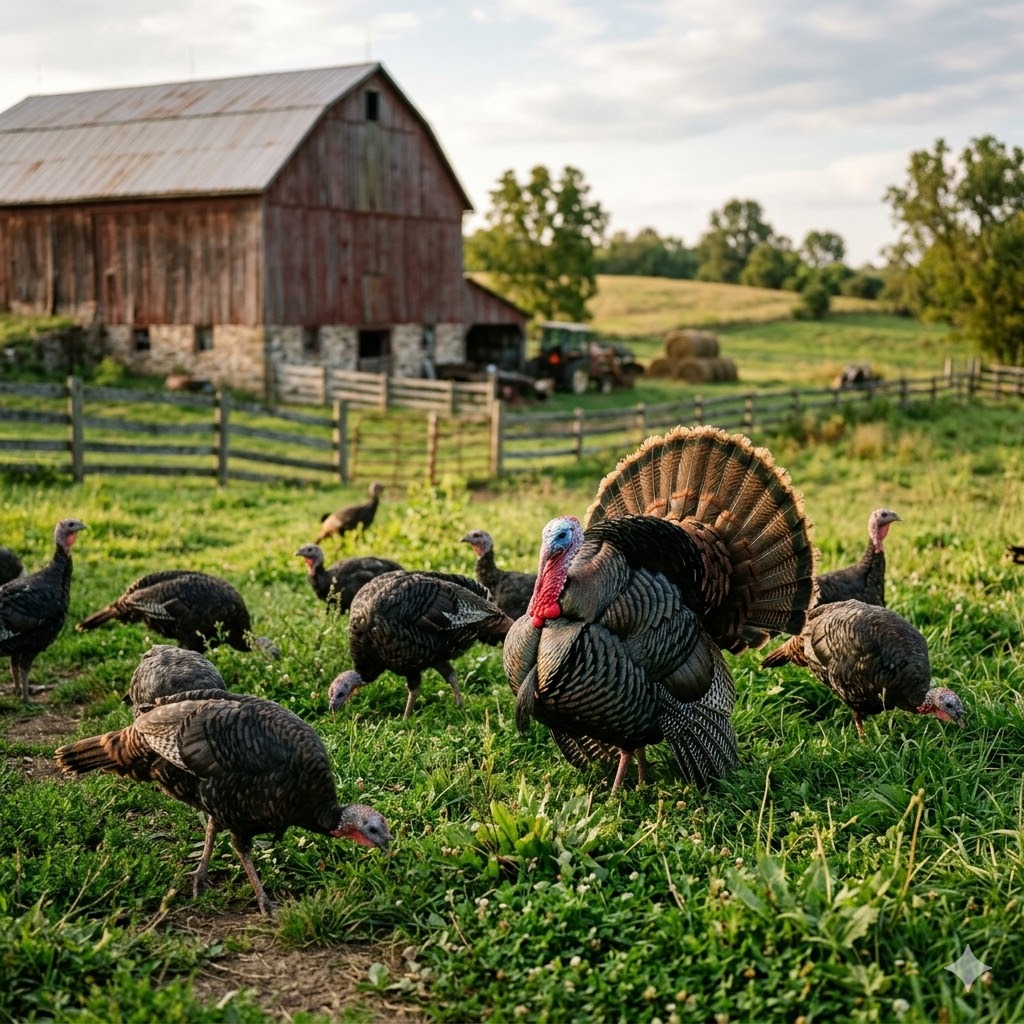
Turkeys give you a big meat bird from a single season - one heritage tom can dress out into a roast that feeds a family for days, and a small flock will cover your holidays with birds to spare. They forage hard, eat a lot of bugs and greens through summer, and put on impressive size on less feed than you might expect. The catch is the first few weeks: poults are genuinely fragile and need more attention than chicks, which is why this sits at an intermediate level rather than a beginner one.
Is it right for you?
Turkeys suit a homestead that already has open ground - a fenced yard, a paddock, or rough pasture they can range over. They are not a balcony or tiny-lot bird. A grown turkey is large, eats accordingly, and ranging heritage birds will fly and roost in trees if you let them, so you need space and a fence line you are comfortable with.
You should be comfortable with the idea of raising an animal for meat, because that is the point of most turkey flocks. They are seasonal in a way chickens are not: many people raise poults in spring and process in late autumn, so it is a project with a clear start and end rather than a permanent fixture. If you already keep chickens, read the health section carefully before you mix the two - there is a real disease risk that catches a lot of new turkey keepers off guard.
You also want to be the kind of keeper who checks on stock daily and acts fast. Healthy turkeys are hardy and easygoing, but a poult that is cold, damp, or not eating can go downhill in hours. If you can give them a careful start, the rest of the season is mostly straightforward.
Best breeds
There are two broad camps, and they behave very differently.
Broad Breasted White - the commercial meat bird, white-feathered for a clean carcass. Grows fast and gets very large, but the breast is so heavy these birds cannot breed naturally and are not built to forage or fly far. Best if your only goal is maximum meat in one season.
Broad Breasted Bronze - same fast, heavy growth as the White with darker plumage; some people prefer the look. Like the White, it cannot breed on its own and is a meat bird, not a self-renewing flock.
Bourbon Red - a heritage breed, rich reddish-brown. Slower to mature and a bit smaller, but a strong forager that can breed and fly, and a good dual-purpose choice for a homestead that wants to keep its own line going.
Narragansett - calm, hardy heritage bird with handsome grey-and-black barring. Excellent forager, good mothering instincts, breeds naturally - a classic backyard turkey.
Royal Palm - a smaller, striking white-and-black heritage breed, more ornamental and a lighter carcass, but a tidy forager that breeds and flies well if you want a manageable bird with character.
If you want the biggest bird fastest, go Broad Breasted. If you want birds that forage well, raise their own young, and come back year after year, go heritage - and accept they take longer and dress out smaller.
Housing and space
Turkeys need a dry, draft-free, predator-proof shelter to roost and shelter in, plus room to range during the day. The shelter does not need to be elaborate, but it must keep rain out and keep predators from getting in at night, when most losses happen. Provide sturdy roosting bars set well off the ground - turkeys like to roost high, and heritage birds especially will seek height.
Give them more room than you would chickens. As a rough guide, allow several square feet of indoor floor space per bird and a generous outdoor run or pasture on top of that - the more they range, the healthier and happier they tend to be. Crowding causes squabbling, mess, and disease. Our coop-size calculator can help you size the shelter to your flock so you are not guessing.
Fencing matters. Heritage breeds fly well and will clear a low fence easily, so plan for higher fencing or be prepared to clip a wing. Broad Breasted birds are too heavy to fly much, so fencing is more about keeping predators out than keeping birds in. Either way, turkeys are a tempting target for foxes, raccoons, dogs, and birds of prey - see the site's predator-protection guide and take it seriously, especially for poults and at night.
Keep the bedding dry. Damp litter is the enemy of poults and a breeding ground for the parasites covered below. Plenty of clean, dry bedding and good airflow without a draft is the combination you are aiming for.
Feeding
Turkeys need more protein than chickens, particularly when young. Start poults on a proper turkey or game-bird starter feed - these are higher in protein than chick starter, and getting this right early makes a real difference to how the birds grow and how well they hold up.
As they grow, move them onto a grower feed, then onto a maintenance or finisher ration as they approach processing weight. Always provide clean, fresh water - shallow at first so tiny poults cannot get chilled or drown - and keep it topped up, because a big bird in summer drinks a lot.
Once they are out on grass, foraging does real work. Heritage birds especially will hoover up insects, seeds, and greens, which cuts your feed bill and gives the meat good flavour. Treat foraging as a supplement, though, not a replacement - they still need a balanced feed to grow properly. Offer grit so they can digest what they forage, and avoid mouldy or spoiled feed, which can make turkeys very ill.
Daily care and routine
The daily rhythm is simple: let them out in the morning, check feed and water, look every bird over, and shut them in securely at dusk. Closing the shelter at night is the single most important habit for keeping predators out.
In the first few weeks, the routine is more hands-on. Poults need a warm, dry brooder - a heat source they can move toward or away from - kept clean and free of drafts. They can also be slow to work out where food and water are, so check that every poult is actually eating and drinking; sometimes you need to gently dip a beak in the water or tap the feed to show them. Keep them dry above all. A chilled, damp poult is a poult in trouble.
As they feather out and the weather warms, you can wean them off heat and let them range. By then they are far hardier and the daily job shrinks back to feed, water, a quick health look, and locking up at night. Watch the flock's behaviour - a bird that hangs back, hunches, or stops eating is your early warning, so step in fast.
Common health issues
Turkeys are hardy once grown, but a few problems are worth knowing.
Blackhead disease is the big one. It can be carried by chickens without making them sick, then spread to turkeys, where it is often fatal. This is exactly why so many keepers advise against running turkeys and chickens together, or on the same ground chickens have used. If you keep both, keep them separated and manage the risk deliberately. Signs of illness in your turkeys warrant a prompt call to a poultry vet.
Coccidiosis mainly hits young poults, especially in damp, dirty bedding - another reason to keep litter clean and dry. It can spread quickly through a brooder, so cleanliness is your best prevention.
Early fragility is less a disease than a stage. Cold, damp, or simply failing to eat and drink causes more poult losses than anything exotic, so the warmth-and-dryness basics matter most in those first weeks.
For any diagnosis or treatment, consult a poultry vet rather than guessing - they can identify what you are dealing with and advise the right course. Avoid reaching for random medications on your own.
What you get (and processing)
A finished turkey is a lot of meat. A Broad Breasted bird can dress out into a large holiday roast; heritage birds come in smaller but with excellent flavour from a season of foraging. For many homesteads, a handful of birds covers the holidays and fills the freezer besides.
When it comes to processing, treat it as the matter-of-fact end of a job done well. The main practical point: a turkey is far bigger than a chicken, so you need a bigger setup - scalding, plucking, and chilling all have to handle a heavy carcass, and a pot or cooler that worked for chickens may not be enough. Plan your equipment and space before the day rather than improvising.
Before you process at home, check your local rules. Regulations on home slaughter of poultry vary by area, and some places have requirements even for birds you raise for your own table. Knowing the rules ahead of time keeps things clean and legal.
Getting started
Decide your goal first: maximum meat in one season points to Broad Breasted; a self-renewing, foraging flock points to heritage. That choice shapes everything else.
Get your brooder ready before the poults arrive - heat source, clean dry bedding, shallow water, and the right starter feed all set up and warm. Source poults from a reputable hatchery or breeder so you start with healthy stock. Have the grown-bird shelter and secure fencing sorted before the birds outgrow the brooder, so you are not scrambling.
Finally, check your local laws and zoning before you buy a single bird. Some areas restrict or limit poultry, and a few minutes confirming you are allowed to keep turkeys saves a lot of grief later.
Rough costs
Costs vary a lot by region and scale, so treat these as ballpark.
- Poults: roughly a few dollars to low double digits each, with heritage breeds generally costing more than Broad Breasted.
- Feed: usually the biggest ongoing cost. Turkeys eat a fair amount over a season, though good foraging trims it; budget for steady feed spend from brooder to finish.
- Brooder and heat: a one-time setup cost - heat source, feeder, waterer - that you reuse each year.
- Housing and fencing: the main upfront cost. You can build modestly with reclaimed materials or spend more on something permanent and predator-proof. Use the coop-size calculator to avoid over- or under-building.
- Processing: either your time plus some equipment if you do it yourself, or a per-bird fee if you use a local processor.
Raised on pasture with a careful start, a few turkeys are one of the better returns on a homestead - a lot of meat from a single season, for the cost of good feed, a safe shelter, and close attention in those fragile first weeks.