Raising Wyandottes: The Cold-Hardy Beauty
A guide to Wyandottes - strikingly patterned, cold-hardy American dual-purpose chickens with frost-resistant rose combs, laying well through winter and growing a solid meat carcass.
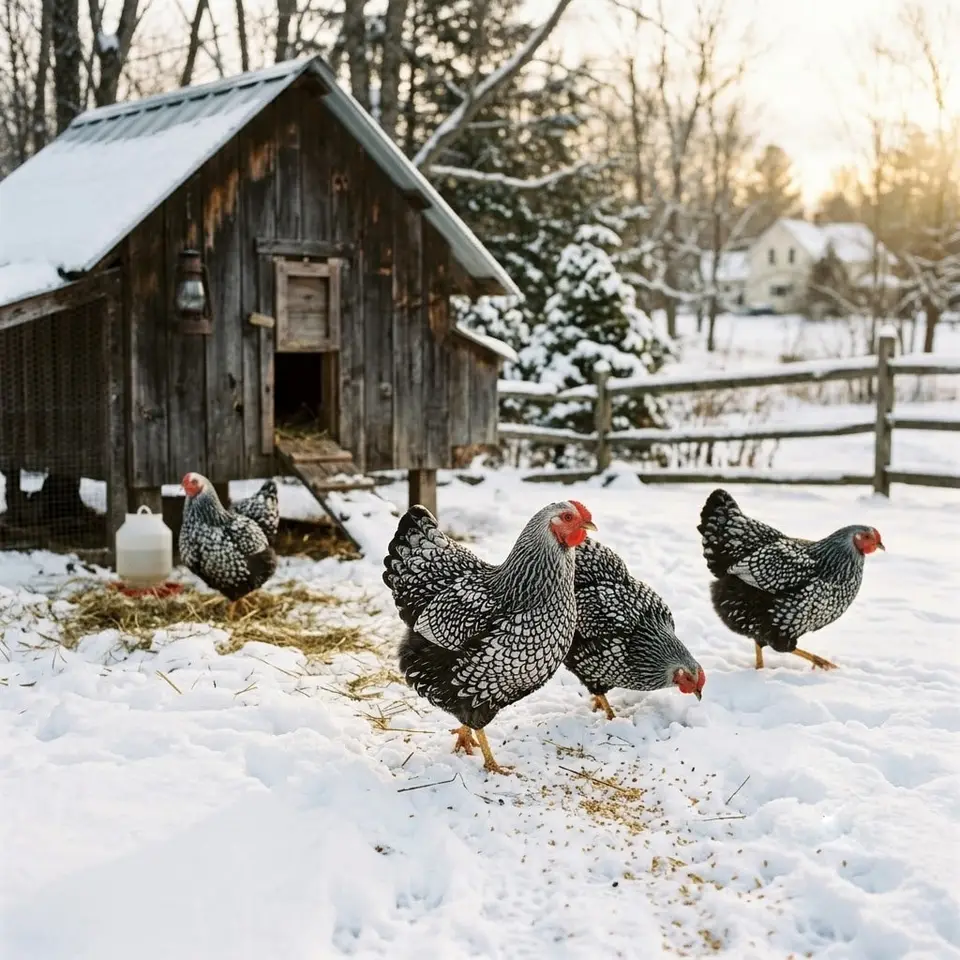
Wyandottes are as practical as they are beautiful - their intricate laced feathering, especially the silver-laced pattern, is stunning, while their low rose comb resists the frostbite that plagues tall-combed breeds. Hardy through hard winters, they keep laying brown eggs when the cold slows other hens, and they grow a solid meat carcass. For cold climates, they are a top dual-purpose choice.
Is it right for you?
Wyandottes suit anyone in a cold climate who wants a hardy, productive, beautiful dual-purpose bird. Their frost-resistant comb and winter laying make them especially valuable where it gets cold.
Space & Housing
A standard coop and run suits them; they tolerate confinement and forage well. Their cold-hardiness means they need less winter fuss than many breeds, but keep the coop dry.
Feeding & Daily Care
Feed a layer or all-flock ration plus scraps and forage, with grit and water; daily care is simple. They keep laying through winter with good feed and light.
Getting Started
Start with a few pullets, provide a secure coop, and expect eggs by around six months. They handle cold from the start with their tight combs and dense feathering.
Health & Common Problems
Very cold-hardy with few issues; the rose comb resists frostbite. Watch for the usual mites, worms and standard ailments, and keep the coop dry and ventilated.
What You Get
A dependable supply of brown eggs, including through winter, plus a solid meat carcass from surplus birds - and a strikingly handsome flock.
Wyandotte Colours, Roosters and Hens
The Wyandotte was developed in the United States in the 1870s, first called the American Sebright, and silver laced was the original colour (Wikipedia; Livestock Conservancy). The American Poultry Association recognises nine colours for large fowl, listed here with the year each was added (Wikipedia):
| Colour | Recognised by the APA |
|---|---|
| Silver laced | 1883 |
| Golden laced | 1888 |
| White | 1888 |
| Black | 1893 |
| Buff | 1893 |
| Partridge | 1893 |
| Silver penciled | 1902 |
| Columbian | 1905 |
| Blue | 1977 |
Bantams have the same nine plus buff Columbian. Blue-laced is on the Poultry Club of Great Britain's list but not among the APA's nine.
Rooster and hen. The Livestock Conservancy gives about 8.5 lb for cocks and 6.5 lb for hens; Wikipedia lists 8-9 lb and 6-7 lb. Both sexes have a low rose comb, smaller in the hen; the cock has full, flowing neck hackles and carries his tail at about 40 degrees. Hens are good mothers and lay light to brown eggs, and the breed is calm, cold-hardy and a poor flyer (Livestock Conservancy).
Waterers for the flock. Two RentACoop waterers, described from the maker's pages (checked 26 October 2026, no prices; the Amazon link searches for the exact product and we may earn a commission): the 2 Gallon Waterer with 4 auto-fill cups and 4 horizontal nipples, with an anti-roost cone and cups the maker says stay about three-quarters full (see on Amazon), and the 32 oz chick drinker for chicks, quail and small birds (see on Amazon).
Costs & Effort
Low - hardy, winter-productive and good foragers, with the added value of thriving where cold defeats other breeds.
Mistakes in the First Year
Few; a damp coop (frostbite risk even with good combs) and weak predator-proofing are the usual slips.
FAQ
Best for cold climates? Yes - the frost-resistant rose comb and winter laying make them ideal.
Eggs or meat? Both - a genuine dual-purpose breed.
Kit for keeping poultry
Links go to Amazon or a partner store (such as OpticsPlanet) and may earn us a commission at no extra cost to you. As an Amazon Associate we earn from qualifying purchases. We link gear types, not sponsors' picks: you choose the exact product.