How to Trap Arctic Fox
The arctic fox comes readily to bait and is far less wary than its southern cousins, so the real challenge is surviving the extreme cold, remoteness, and hazards of the far north.
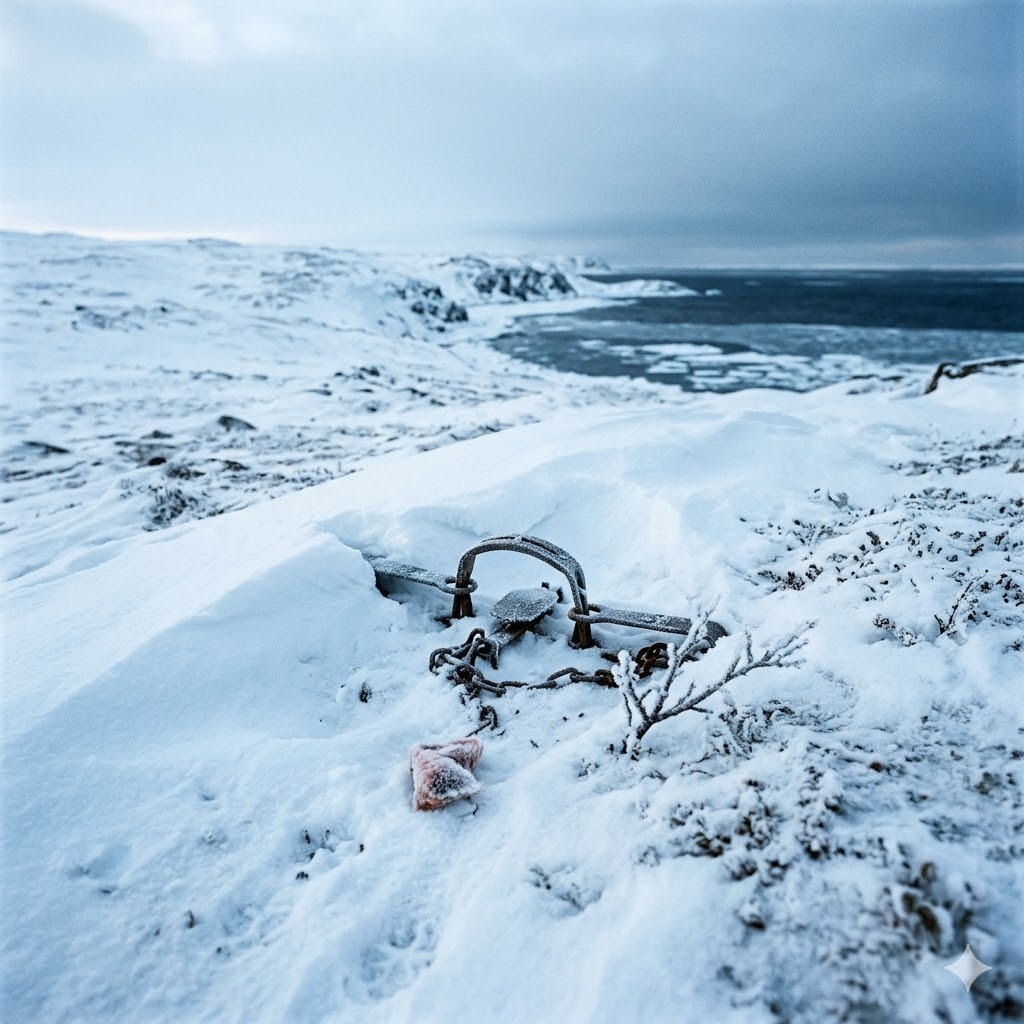
🔴 A very cold, remote pursuit - travel, weather and hypothermia are the real dangers, and rabies occurs in arctic fox. Know local rules and Indigenous harvesting rights, and never work the country alone.
The arctic fox is a specialist of the tundra and cold coasts, wearing one of the thickest, whitest winter coats of any furbearer. Compared with the red or gray, it is surprisingly unwary, often coming readily to bait and set in country where it sees few people. On the animal side, that makes it one of the easier furbearers to catch. Do not mistake that for an easy hunt overall, because the difficulty here has almost nothing to do with the fox.
The real challenge of arctic fox trapping is the environment. Extreme cold, short daylight, storms, sea ice, and sheer remoteness are the true adversaries, and they are dangerous. This is advanced trapping not because the quarry is clever but because the country can kill you. Approach it with respect for the land, for the long tradition of northern harvesting, and for the animal, and keep the law and local rights ahead of everything.
Why trap arctic fox
The arctic fox is trapped mainly for its exceptional winter pelt, a dense, pure-white coat that has been a staple of northern fur harvests for generations. In a good market it carries real value, and in many northern communities arctic fox trapping is part of a long-standing subsistence and cultural tradition, not merely a commercial pursuit. That heritage deserves respect, and where you are a visitor rather than a local harvester, tread carefully.
Fur value swings with fashion and the international market, so treat income as a bonus rather than a reason to over-harvest. Whatever your motive, be honest about it, take only what you can properly handle and use, and let respect for the animal and the tradition shape your effort.
Reading the sign and finding them
Arctic foxes range across open tundra and along coasts and sea ice, following food. In winter that often means scavenging, so they concentrate near reliable food such as carcasses, seal remains along the coast, and areas where prey or scraps gather. Learn the local food sources and you have found the foxes. Tracks in snow show their travel routes across otherwise featureless ground, and they will readily investigate a scent or bait station in country where little else competes for their attention.
Because the animal is far less wary than a red or gray, location and bait matter more than elaborate concealment. Look for travel corridors along the coast, around headlands, and near reliable food, and note where tracks funnel or cross. Local knowledge is invaluable here; experienced northern trappers and Indigenous harvesters understand the ground, the ice, and the fox in ways no general guide can replace, so seek and respect that knowledge before you set out.
Sets and gear
Because arctic foxes come readily to bait, baited sets are the mainstay. Where footholds are used, bed the trap on the approach to a bait station and anchor it against a fox pulling free in deep snow or frozen ground. In much of the north, humane killing traps and snares set to local rules are common, and the choice of legal equipment is dictated by your jurisdiction, so confirm what is permitted before you carry anything onto the line. See /gear/ for equipment and /regulations/ for legal trap and snare types where you trap.
Cold changes everything about your gear. Traps must be prepared so they fire reliably in extreme cold and are not frozen shut by refreezing melt, and anchoring in frozen ground or snow takes planning. Handle metal with care, since bare skin sticks to frozen steel, and keep your equipment simple and robust because complex mechanisms fail in the cold. The fox is forgiving of technique; the weather is not, so build a line you can service safely in brutal conditions.
Because this is deep-cold, remote work, plan your gear around survival first and catching second. Reliable clothing, navigation, communication, and shelter are as much a part of your kit as your traps.
Handling, dispatch and fur
Handle an arctic fox with the same respect owed any animal. A held fox is frightened and can bite, and rabies does occur in arctic fox populations, so wear gloves, never handle an animal that looks sick or behaves oddly beyond what safe dispatch requires, and follow local reporting rules. Approach calmly and stay in control despite the cold and the awkwardness of heavy clothing.
Dispatch must be quick and humane, using a method accepted and required where you trap, and planned in advance so nothing suffers while you fumble with cold hands. For fur, the arctic fox is skinned cased and handled to protect that dense white coat, then fleshed and dried properly. Prime full winter pelts bring the best return and honour the animal and the tradition behind the harvest. Waste nothing you can use.
Ethics and the law
This section matters most, so read /trapping/ethics/ before you set for arctic fox. The animal-welfare standard is unchanged: quick humane dispatch every time, deliberate targeting, and traps checked on the schedule the law and conditions require. But here the ethics extend to your own safety and to respect for the north. The cold and the remoteness are the real danger, and hypothermia, storms, thin ice, and getting lost kill people. Never work alone, tell others your plan and route, carry proper survival gear and communication, and turn back when conditions demand it. A pelt is never worth a life.
Respect for local rights and knowledge is part of the ethics too. In many northern regions, Indigenous peoples hold recognised harvesting rights and long traditions, and management rules reflect that. Know and honour those rights, defer to local and Indigenous knowledge, and do not treat the tundra as an empty frontier.
The law is not optional and it varies sharply by region. Seasons, licensing, legal trap and snare types, harvesting rights, protected areas, and check intervals all differ by place and change over time, so never rely on old numbers or secondhand advice. Read /regulations/, confirm the current rules and rights for your exact area, and secure the permissions you need before you travel. Start at /trapping/ if the section is new to you, and prepare for the country as seriously as you prepare for the fox.