How to Trap Bobcat
Trapping the bobcat, a curious visual-hunting cat that carries one of the highest-value spotted pelts, under strict quota, tagging and export rules you must follow.
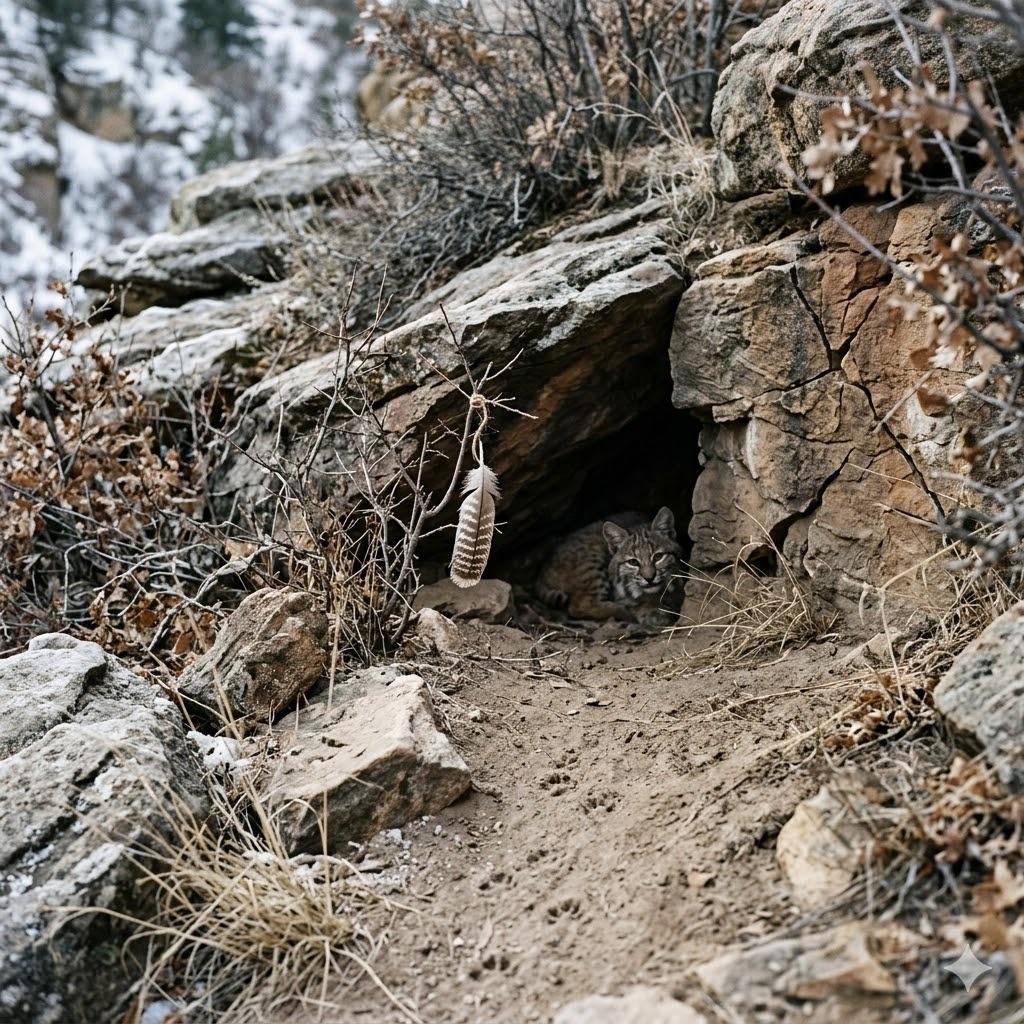
🔴 Bobcat are widely quota-managed with mandatory tags/pelt sealing and CITES rules for export - check and comply before you set. Use legal footholds/cages and humane dispatch.
The bobcat is one of the most sought furbearers on any line, and for one plain reason: the pelt. A prime cat, taken in cold weather from a good fur region, can be worth many times what most other North American furbearers bring. That value draws people in, but it also puts the bobcat under some of the tightest management of any species you will run. In many places you cannot simply set traps and take what you catch. You may need a permit, a limited number of tags, and a mandatory sealing or CITES tagging step before the fur can move or be sold.
None of that is a reason to avoid the bobcat. It is a reason to slow down. This is not a beginner's animal. A cat hunts and travels differently from a coyote or a coon, and the sets that catch dog-family animals often do not catch cats at all. If you understand how a bobcat reads its country, and you commit to doing the paperwork honestly, it is one of the most rewarding animals a trapper can pursue.
Why trap bobcat
Most bobcat trapping comes down to fur value and the challenge itself. A well-handled cat pelt is a genuinely valuable thing, and in fur regions it can make a real difference to a season's return. Beyond that, the bobcat is simply a hard, interesting animal to catch, and many experienced trappers rate it the pinnacle of the sport.
There is also a management angle in some areas, where regulated harvest is part of how populations are monitored and kept in balance with prey and habitat. But be honest with yourself: for almost everyone, this is a fur and challenge pursuit, not a control job. Bobcat populations are managed carefully precisely because demand for the pelt is high, which is exactly why the rules around them are as strict as they are.
Reading the sign and finding them
A bobcat is a cat, and that changes everything about how you find it. Cats hunt largely by sight and curiosity rather than by nose alone. They travel edges, ridgelines, brushy draws, rock outcrops, old logging roads and the seams between cover types. They like a vantage point and they like structure. In broken, brushy or rocky country a cat will use the same travel funnels again and again.
Look for the funnel first, not the animal. A saddle between two ridges, a fence gap, the narrow strip of brush linking two thickets, the base of a rock ledge: these pinch travel and are where a set earns its keep. Bobcat tracks are round, roughly the size of a coyote's but showing no claw marks, with an asymmetric shape and a distinct lobed heel pad. Scat is often left on a rise or a prominent spot. You may also find scratch marks or covered scrapes. Prey sign matters too, because cats follow rabbits, hares and rodents, so good prey cover is good cat country.
Spend the time to learn the ground before you set. A cat that lives in an area has a small number of preferred routes, and finding one of those is worth more than a dozen randomly placed traps.
Sets and gear
Because a bobcat hunts by sight and curiosity, the visual attractor is central. A flash of feather, a bit of tinsel or CD, a swatch of hide or fur turning in the wind at eye level for a cat: these pull a curious animal off its line to investigate. This is very different from dog-family trapping, where scent does most of the work.
The classic approaches are the cubby set and the flat set, placed right at a travel funnel. A cubby is a small recess or box of rocks, brush or a natural pocket, with the visual attractor and bait or lure at the back, and the trap bedded at the entrance so the cat steps into it as it comes to look. A flat set uses a natural backing, an attractor above, and a solidly bedded, well-guided trap. In both cases the trap must be bedded rock-solid with no wobble, blended into the ground, and guided so the cat places a foot exactly where you want it.
For restraint, a properly sized, well-anchored foothold is the traditional tool, and in many areas cage or box traps and cable devices may be options depending on the rules. Whatever you use, it must be legal for cats in your area, correctly sized, and fitted with any required jaw specifications or breakaway components. Read the /regulations/ before you buy, because bobcat trap requirements are often specific. A general run-through of foundational kit is on the /gear/ page.
Handling, dispatch and fur
A cat in a foothold will usually be calmer than a dog-family animal, but it is still a predator with teeth and claws, and it deserves care and respect. Approach quietly, keep control of the animal, and carry out dispatch quickly and humanely with an appropriate method for the tool you are using and the rules you trap under. Do not prolong it, and do not treat the animal as a trophy in the moment. This is the part of the work that demands the most steadiness.
Bobcat fur is the whole point of handling, and it is unforgiving of sloppiness. A cat is skinned carefully, fleshed clean, and the pelt handled to a high standard, because buyers grade cats closely on pattern, spotting, size and preparation. The spotted belly is what carries the value, so protect it. Take your time, keep the fur clean on the line and in the shed, and dry and store it properly. A poorly handled cat throws away most of what made it worth catching.
Ethics and the law
This is the section that matters most, and with bobcat it is not optional reading. The bobcat is one of the most heavily regulated furbearers you can pursue, and the rules exist for good reasons. In many jurisdictions the harvest is quota-managed: there may be a limited number of animals allowed per trapper or per zone, a defined season, and a hard stop once a quota is reached. Mandatory tagging is common, meaning each cat must be registered and a tag attached, often within a set time.
On top of that, most bobcat fur that enters trade is subject to CITES rules, because the species is listed to control international commerce and to make sure it is not confused with more threatened cats. That usually means a mandatory pelt-sealing step, official inspection, and specific tags before a pelt can be sold or exported. Skipping any of this is not a paperwork slip, it is illegal, and it undermines the whole system that keeps regulated cat trapping possible.
So the honest guidance is: confirm exactly what your area requires before you set a single trap. Know your season, your quota, your tagging and sealing obligations, and any CITES export rules if the fur will move across borders. Trap only where and when it is legal, take only what you are entitled to, and complete every registration step properly and on time. Beyond the law, hold yourself to the standard on the /trapping/ethics/ page: check traps as required, use humane and legal equipment, avoid non-target catches, and treat every animal with respect. For an overview of how these species fit together on the line, see /trapping/, and check /regulations/ for the specifics that apply where you live.