How to Trap Coyote
Coyotes are the wariest land furbearer and a serious predator-management target, demanding scent discipline, careful set placement, and strict attention to dog-catch risk and the law.
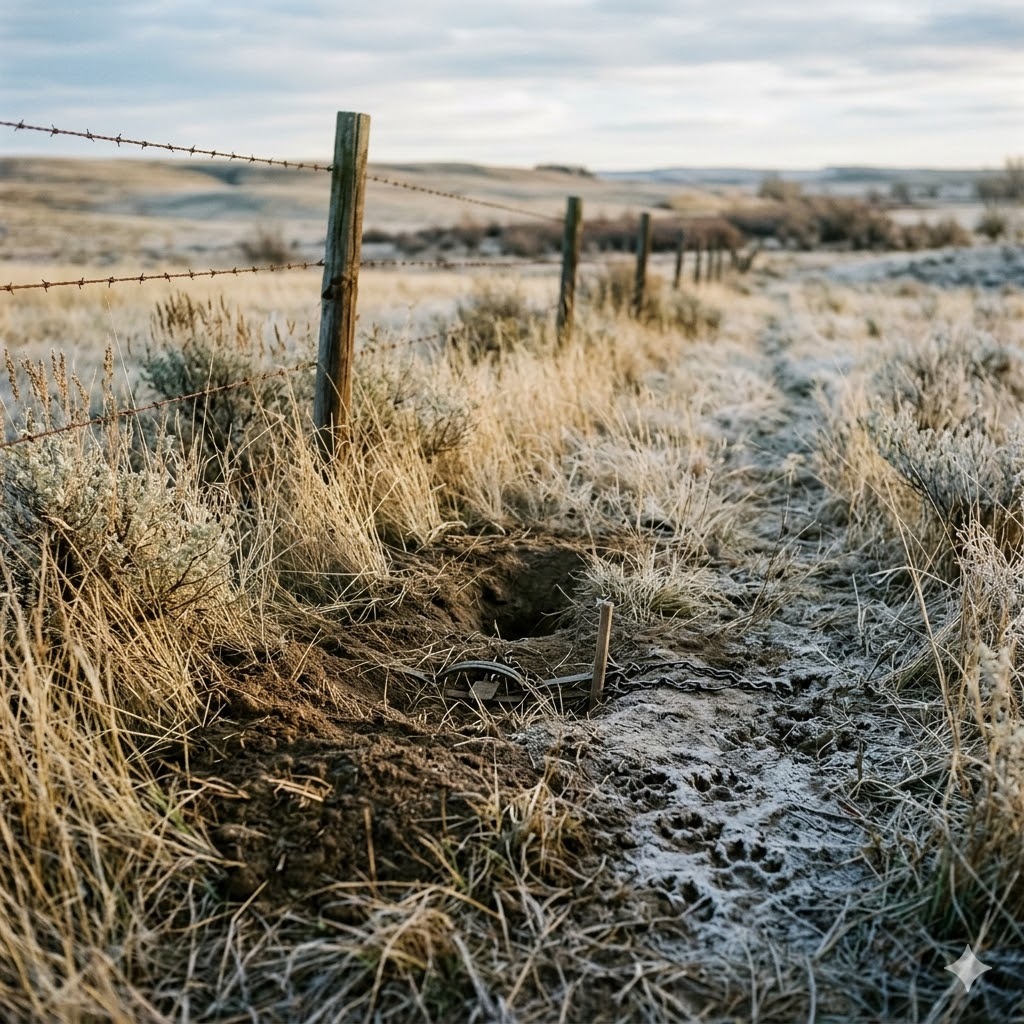
Follow licence, seasons, foothold-size and snare rules exactly - coyote sets can catch dogs, so use dog-proof placement and any required breakaways/stops. Dispatch humanely and legally.
Few animals test a trapper the way a coyote does. They are intelligent, cautious, quick to notice anything out of place, and unforgiving of sloppy work. A single careless footprint, a whiff of human scent on a trap, or a set that looks wrong can be enough for a coyote to circle wide and never come back. For that reason coyote trapping sits firmly in the advanced bracket, and it rewards patience far more than gear.
At the same time, coyotes are one of the few furbearers people trap for reasons beyond fur. They are effective predators, and in some areas they put real pressure on livestock, ground-nesting birds, and fawns. Managed trapping is a legitimate tool where numbers are high and damage is real. None of that changes the standard: a trapped coyote deserves the same clean, quick, respectful handling as any other animal, and the law comes first.
Why trap coyote
Coyote fur has genuine value in a good year, with prime northern pelts carrying dense, silvery guard hair. Prices swing hard with fashion and the international market, so treat fur income as a bonus rather than the main reason. More consistently, coyotes are trapped as part of predator management. Where a landowner is losing lambs, calves, or poultry, or where a wildlife agency is trying to protect vulnerable prey, targeted removal can ease the pressure.
Trapping coyotes also teaches you more about woodcraft and scent control than almost any other quarry. Learn to consistently catch coyotes and every other furbearer becomes easier. Just be honest about your motive before you set a single trap: fur, damage control, or management, and match your effort to that purpose rather than trapping for its own sake.
Reading the sign and finding them
Coyotes are creatures of travel routes and edges. They move along field margins, fence lines, ditch banks, old roads, and the seams where one habitat type meets another. Start by learning where they walk, not just where they live. Tracks in mud, dust, or snow tell you direction and frequency. A coyote track is roughly oval, tighter and more controlled than a loose farm dog, usually stepping in a fairly straight, purposeful line.
Scat left on a rise, a trail junction, or a clump of grass is a scent post, and these spots are prime set locations because the animal is already inclined to stop and investigate there. Look for these natural registers along the routes you have found. Wind and terrain matter too: coyotes tend to travel with cover at their back and use the wind to check ahead, so a set placed where an approaching animal catches lure scent on the breeze will pull far better than one it must stumble across. Spend real time scouting before committing traps. With coyotes, location beats everything, and a mediocre set in a great spot outperforms a perfect set in the wrong place.
Sets and gear
Two sets carry most coyote trappers: the dirt-hole and the flat set. A dirt-hole imitates a food cache, a hole angled into a backing with bait deep inside and a drop of gland lure above, set so the coyote must plant a foot on the trap to work the hole. A flat set uses a natural or mimicked scent post, a bit of lure or urine on a grass clump or stone, with the trap bedded on the approach. Placed at travel routes along field edges and fence lines, both play on the coyote's habit of stopping to investigate scent.
Gear must match the animal. Use a foothold trap sized correctly for coyote, checking your local regulations for legal jaw spread, and consider offset or laminated jaws to spread pressure and reduce injury. Pan tension should be set firm so lighter non-target animals can step off without firing. Every trap needs a solid anchor, an earth anchor or heavy drag, so a caught coyote cannot pull free. Where snares are legal, follow the local rules exactly; many areas mandate breakaway devices and relaxing locks or stops to limit injury and release non-targets. See /gear/ for trap selection and read /regulations/ before you buy anything.
Scent control is not optional with this species. Wear clean gloves, keep traps and tools free of foreign odour, handle equipment with dedicated gear, and kneel on a cloth so you leave as little human sign as possible. Coyotes routinely walk away from sets that a fox would work without hesitation, and the difference is almost always the human touch.
Handling, dispatch and fur
Approach a held coyote calmly and from a distance first, reading its condition and position before closing in. A trapped coyote is frightened and can bite, so keep control and use a catch pole or restraint if you are not confident. The dispatch method should be quick and humane, following the methods accepted and required in your jurisdiction; a firearm of appropriate calibre placed correctly is common where legal. Never let an animal suffer while you fumble, plan your dispatch before you ever reach the set.
For fur, a coyote is skinned cased, then fleshed clean of fat and membrane, and stretched on a properly sized board or wire to dry. Prime winter pelts, taken when the fur is fully furred out and the leather is white, bring the best return; early or late season fur is thinner and worth less. Even when management, not fur, is the goal, using the pelt honours the animal rather than wasting it.
Ethics and the law
This is the most important section, so read /trapping/ethics/ in full before you set for coyotes. Coyote trapping carries real risks that fall on you to manage. The single biggest is catching a dog. Coyotes and domestic dogs share habitat, so place sets away from homes, trails, and areas where people walk pets, use dog-proof placement where practical, and favour foothold sizes and configurations, breakaways, and stops that let a non-target animal escape or be released unharmed. Check your traps often and on the schedule the law requires, so nothing waits longer than it must.
Beyond dogs, you owe a duty to every animal you take. Use quick, humane dispatch every time, target coyotes deliberately rather than trapping indiscriminately, and stop when your legitimate purpose is met. Do not glorify the kill; treat it as a managed act with a clear reason behind it.
The law is not a formality here. Trapping seasons, licensing, legal trap and snare types, jaw spreads, set distances from roads and dwellings, mandatory check intervals, and land permissions all vary by jurisdiction and change over time. Read /regulations/ and confirm the current rules for your exact area, get landowner permission in writing, and never rely on secondhand advice or old numbers. A coyote taken lawfully, cleanly, and for a real reason is defensible. Anything less is not. Start from /trapping/ if you are new to the section, and build your knowledge before your trapline.