How to Trap Ermine (Short-tailed Weasel)
The short-tailed weasel in its pure-white winter coat with a black tail tip - the royal-robe fur, taken in tiny covered sets in deep-winter snow.
Use small, humane sets and follow licence and season rules. Simple to handle, but wear gloves and dispatch humanely.
Ermine is the winter name for the short-tailed weasel, the same animal you might call a stoat elsewhere, wearing the coat that made it famous. Through the warm months it is a brown-backed, cream-bellied little predator. Then, across the northern part of its range, the short days trigger a moult to pure white, leaving only the black tip of the tail. That white winter pelt is the ermine of coronation robes and heraldry, and it is the reason most trappers pursue this animal at all.
Trapping ermine is a deep-winter, small-set craft. You work in snow, along the same hard edges and rodent runs the weasel hunts, tucking tiny covered sets exactly where the animal already travels. The prize is a small, delicate, genuinely valuable skin, but only if it is prime and only if you handle it well. This guide assumes you already know the fundamentals of legal, humane trapping and want to apply them to this particular little animal at its particular season.
Why trap ermine
The honest reason is the fur. In full white winter prime, the pelt is fine, historically prized, and still has a real place in handcraft and the trade. There is genuine tradition and skill in taking and preparing it well. Around poultry and small livestock, a landowner may also have a legitimate reason to reduce weasels that are causing losses.
The poor reasons are the same as for any small predator: taking it because it is easy, or piling up numbers for their own sake. The short-tailed weasel is a native animal that spends its life controlling rodents; it is not vermin to be cleared thoughtlessly. Take it deliberately, in its white-prime season, for fur or a specific problem, and only where the law allows. Confirm what your jurisdiction permits before setting anything - see /regulations/.
Reading the sign and finding them
In winter, snow does your reading for you. The short-tailed weasel bounds in a distinctive paired-print gait, its tracks looping from cover to cover and diving suddenly into holes, under logs, or into snow tunnels. Where those tracks concentrate, you have found its hunting ground.
Follow the hard edges of the land: stone walls, old foundations, rock and brush piles, hedgerows, woodpiles, and the margins where field meets timber. Ermine hunt rodents, so where you see vole and mouse sign - runways under the snow, tunnels, gnawed stems, small burrow mouths - the weasel will be working. Culverts, gaps under buildings, and the bases of walls are natural funnels. Small dark twisted scat left on a rock or log confirms a resident animal.
Because the whole life of this weasel plays out in these tight seams, you do not lure it across open ground. You find the run, the wall base, the brush-pile mouth it already uses, and you set right there. In deep snow, note that the animal may travel below the surface as much as on it, so sets that intercept those under-snow runs and tunnel mouths earn their place.
Sets and gear
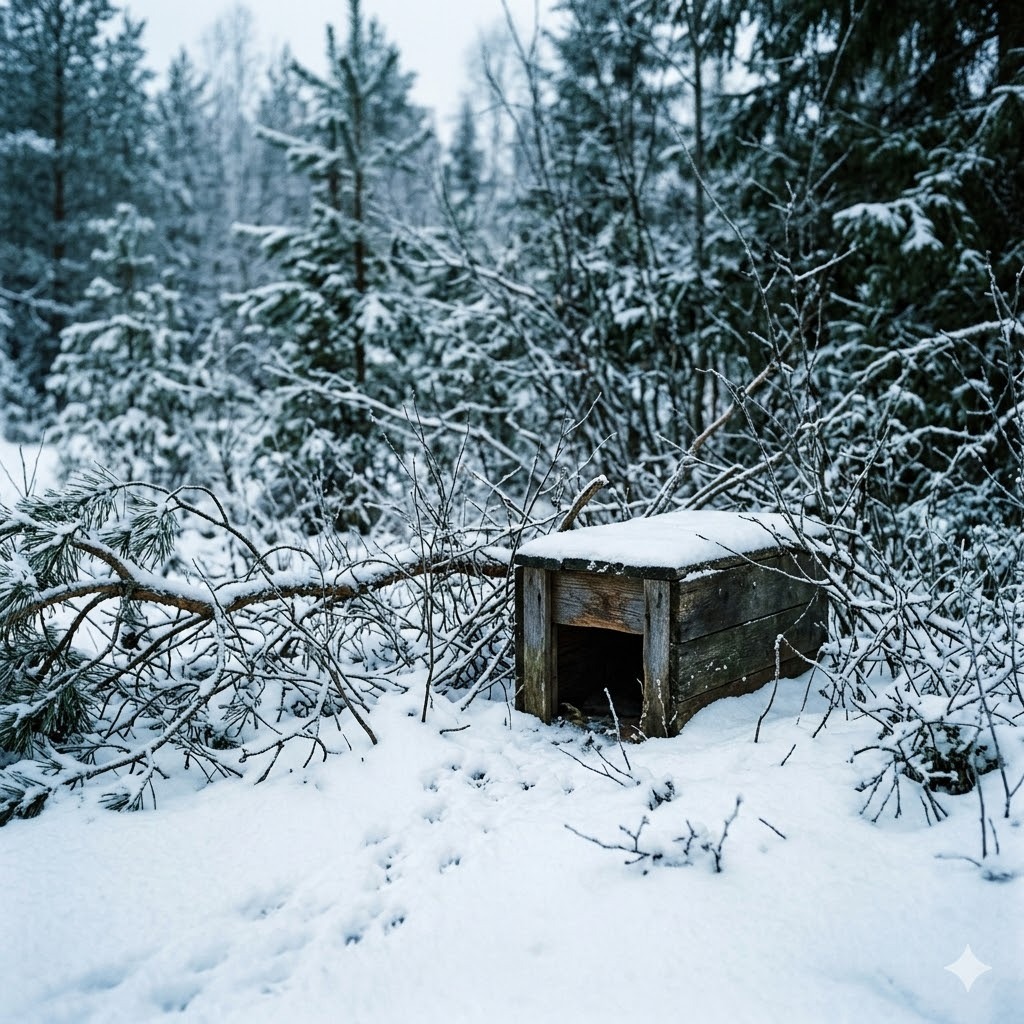
Keep it small, covered, and tight against structure. The standard is a small covered box or cubby: a wooden box, a length of pipe, a natural rock cavity, or a cubby built of bark and sticks, with the trap at the entrance and bait at the back. The cover sheds snow, hides the set from birds, and steers the weasel past the trap. In hard winter, a covered set also keeps snow from freezing the mechanism.
For the trap, a small body-grip in the little 110-size class, set inside a box or in a run, is the common and effective choice for weasels and gives a quick result. Where body-grips are restricted, a properly sized live/cage trap or a small covered foothold can be used, but on an animal this light a foothold demands the right pan tension and jaws to hold without injury. Follow the trap-type and size rules where you trap; they vary widely.
Bait strong and bloody - fresh meat, fish, or a rodent scrap, sometimes with a touch of gland lure. Set snug against a wall, in the mouth of a brush pile or woodpile, or bridging a run or tunnel mouth so the weasel meets the trap on its natural line. Stabilise the box so a caught animal cannot drag it, and, in snow country, be ready to dig out and reset after storms. A handful of well-placed sets beats many hopeful ones. See /gear/ for small-furbearer equipment and winter maintenance.
Handling, dispatch and fur
The risk to you from an animal this small is low, but the standard of care is not. Wear gloves - for the small chance of bites or disease, and to keep your scent off resets. Any animal found alive must be dispatched quickly and certainly; know your humane method and carry what you need before you go out. This is covered fully at /trapping/ethics/.
The ermine pelt is small and delicate, and its value lives in that clean white coat and intact black tail tip - so handle both with care. Skin promptly, flesh gently on thin skin that tears easily, and dry on a small stretcher sized to the animal. Keep the fur clean of blood and dirt; stained white fur loses much of what makes ermine ermine. Prime comes in the depth of winter when the coat is full and fully white - too early and the skin is half-turned and nearly worthless, so patience with the season pays. Cased and dried well, a small skin still looks the part it was named for.
Ethics and the law
This is the most important part, and the small size of the animal is exactly why it must not be taken lightly. The short-tailed weasel is a native predator with a real job in its ecosystem, not vermin to be cleared for sport. Every set ends a life, and it deserves the full standard: take only what you will use or genuinely need to manage, and kill cleanly and quickly, every time, without exception.
Before you set a single trap, confirm the law where you are. Seasons, legal trap types and sizes, body-grip restrictions, licences, and landowner-permission rules vary by jurisdiction and can change from year to year. Do not trust last season's memory or a neighbouring area's rules. Check your current local regulations directly - begin at /regulations/ - and hold whatever licence is required.
Tend your sets promptly, especially through storms that can bury or freeze them; no animal should wait, and live sets must be checked frequently. Set only where you have permission, and lean on the selectivity that tight covered sets give you so you catch the target and leave everything else alone. If any of this is still new to you, read /trapping/ethics/ in full first, and see /trapping/ for the wider context on these animals and the craft.