How to Trap Fisher
A large, powerful forest weasel with a dark, valuable pelt, taken on established forest travelways - quota-managed with tags and sealing in many areas, closed in others.
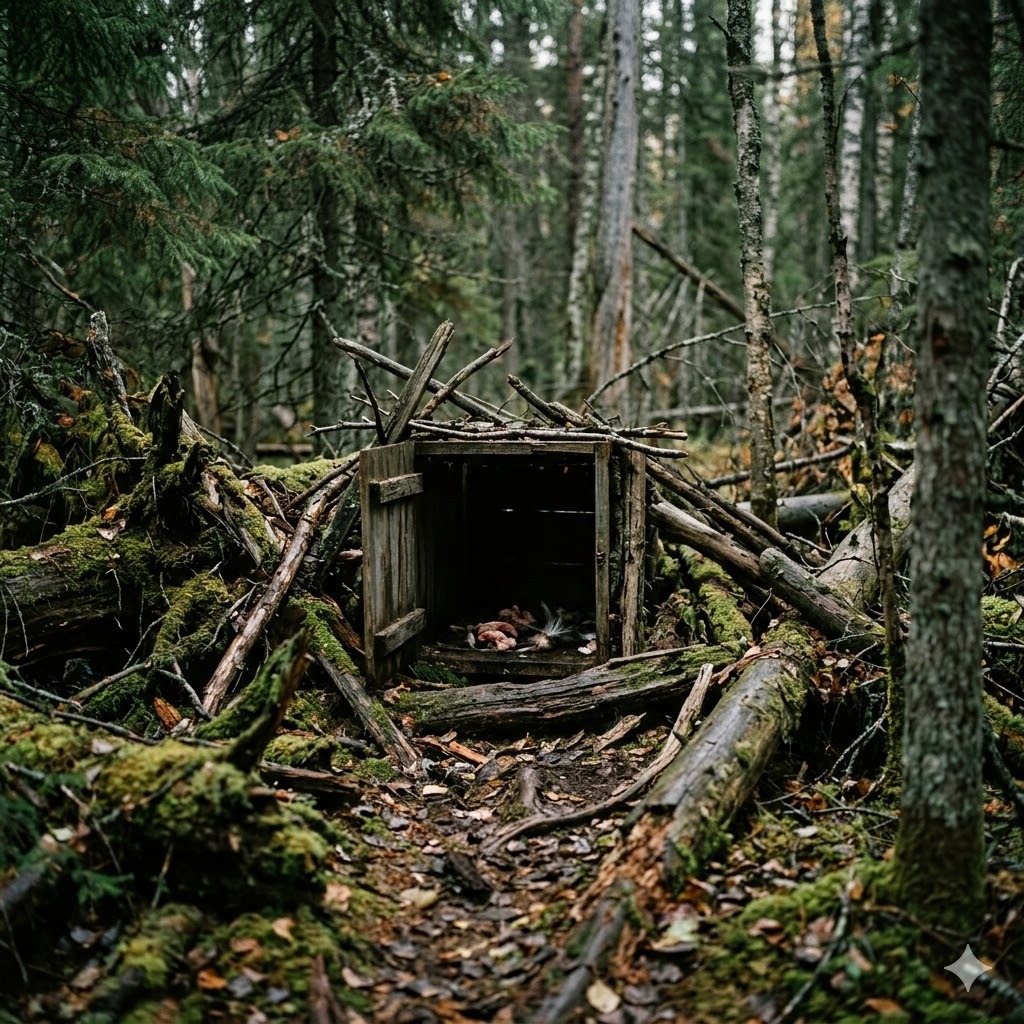
🔴 Fisher are quota-managed with tags and pelt sealing in many areas, and closed in others - check status first. Use legal, humane sets and handle this strong animal with care.
The fisher is a big weasel, and everything about trapping it follows from that. A large male can approach the size of a small house cat but with the build and temperament of a predator that makes its living in deep timber. It is one of the very few animals that regularly kills and eats porcupines, working the quills from below where the guard hairs are thin. Its coat is dark, dense and genuinely valuable, and it is prime in the cold months.
This is not a beginner's animal. The fisher ranges through mature forest on established travelways, it is strong enough to test your sets and anchors, and in a large part of its range it is managed tightly - by quota, by tags, by mandatory pelt sealing, or closed outright. Before anything else, you need to know your local status, because in many areas the honest answer is that you cannot trap it at all. This guide assumes you already understand legal, humane trapping and want to apply that to a large, powerful forest furbearer under close management.
Why trap fisher
The main honest reason is the fur. A prime fisher pelt is dark, thick and among the more valuable furs a trapper can take, and there is real skill and tradition in pursuing it. Where populations support a regulated harvest, a carefully managed fisher season is a legitimate use of the resource. In some areas fishers are also part of managed efforts to balance predator and prey, but that is a management decision made by wildlife agencies, not a justification an individual invents.
The wrong reasons are taking a fisher where the season is closed or your quota is filled, or treating it as just another catch. This is a slow-reproducing forest carnivore that has been over-trapped to local disappearance in the past and brought back through careful management. Take it only within a properly regulated, open season, with your tags in hand - or not at all. Confirm your status first at /regulations/.
Reading the sign and finding them
Fishers are animals of large, mature, mostly coniferous or mixed forest with plenty of downed timber, cavities and cover. They cover ground on regular travelways - along ridgelines, through saddles, beside streams, under blowdowns, and along the edges where forest types meet. Learning those travel routes is most of the work.
Their tracks show the classic weasel bound but at a scale you will not mistake for a marten or a smaller weasel, and in snow their trails run for long, purposeful distances, dipping under logs and into hollows. Look for scat on logs and rocks, for the remains of kills including porcupine carcasses worked from the belly side, and for cavities in large trees and root wads where they rest. Where a travelway pinches through cover - a log crossing, a gap between rock and blowdown, a narrow bench above a stream - you have the natural place for a set.
Because fishers travel far and return to the same routes, the patient work of finding and confirming an active travelway pays off more than clever gadgetry. Set where the animal already wants to go.
Sets and gear
Fisher sets are built around a baited cubby on an established route, and around traps stout enough for a strong animal. A classic set is a cubby - built from logs, bark and brush, or a natural cavity - with bait at the back and the trap guarding the entrance so the fisher must pass it to reach the bait. Placing the cubby on a confirmed travelway does the real work; the bait and lure only close the deal.
For the trap, this is heavier ground than the smaller weasels. Where body-grips of the appropriate large size (commonly the 160/220 class) are legal, they are a standard fisher tool and give a quick result inside a cubby or box. Where you want or must use a foothold, choose one rated for a strong furbearer, anchored solidly, and consider a drowning-free, humane rig appropriate to the animal and the law. Anchoring matters: a fisher will test a weak set. Follow the exact trap-type and size rules for your area - they are often specific for fisher.
Bait with meat - beaver, fish, or other flesh works well - backed with a strong gland or food lure to pull an animal off the travelway and into the cubby. Build the set so the fisher's only comfortable path to the bait runs past the trap, and stabilise the whole structure. Fewer sets on genuinely good travelways beat many on marginal ground. See /gear/ for choosing traps, anchors and lures for large furbearers.
Handling, dispatch and fur
A fisher is strong, quick and equipped to defend itself, so handle it with real care. Wear stout gloves and keep your hands clear of the head; even a dispatched animal should be handled as though it could still react. Any fisher found alive must be dispatched quickly and certainly using a method suited to an animal of its size - do not improvise. Know and carry your humane dispatch method before you go, and never rush it. This is set out fully at /trapping/ethics/.
The pelt rewards good work. Skin promptly, flesh thoroughly - fisher carry a lot of fat and membrane - and case and dry the skin properly on a stretcher sized for the animal. The dark, dense fur is the point, so keep it clean and handle the guard hair with care. Prime comes with hard cold; an early or unprime fisher is worth a fraction of a prime one. Where your area requires it, present the carcass or pelt for mandatory sealing and tagging, and record what the regulations demand - this is not optional paperwork but part of how the harvest is kept sustainable.
Ethics and the law
This is the most important section, and for the fisher it carries extra weight because this is a species we very nearly lost in places and recovered only through careful, sometimes hard-won management. Treat that history with respect. The fisher is a slow-reproducing native carnivore; a single trapper's choices matter more here than with an abundant animal.
Confirm your legal status before you do anything. In many areas fisher trapping is quota-managed with a limited number of tags, mandatory pelt sealing, and a short season; in others it is closed entirely and has been for years. Do not assume it is open because a neighbouring region is, or because it once was. Check your current, local regulations directly - start at /regulations/ - obtain the required licence and tags, and stop when your quota is filled.
Set only on ground where you have permission and on travelways you have genuinely confirmed, tend your sets promptly so no animal waits, and use the selectivity of a well-built cubby to avoid non-targets. Dispatch cleanly and quickly, every time. If you are still building your judgement for an animal this demanding, read /trapping/ethics/ in full before you begin, and see /trapping/ for the wider context on furbearers and the responsibilities that come with them.