How to Trap Gray Fox
The gray fox is the woodland cousin of the red, a brush-and-thicket animal that even climbs trees, and it is caught in the cover it actually uses rather than in open country.
Follow licence, season and trap rules. Gray fox can carry rabies and distemper - handle with gloves and never a sick-acting animal. Use humane, legal sets.
The gray fox is often lumped in with the red, but it lives a different life and asks for a different approach. Where the red fox loves open fields and high visible ground, the gray is an animal of brush, thickets, rocky slopes, and wood roads. It sticks to cover, moves through the woods with a cat-like ease, and is famously the one North American canid that regularly climbs trees. Trap it as a woodland animal, not an open-country one, and your catch rate rises sharply.
Gray fox trapping suits a careful intermediate trapper. The sets are the same familiar dirt-holes and scent posts you would use for a red, but placement is everything: put them where the gray already travels, in the brushy seams and quiet wood roads it prefers. Handle the animal cleanly and respectfully, mind the disease risks, and keep the law ahead of every decision on the line.
Why trap gray fox
The gray fox carries a serviceable pelt with a distinctive grizzled grey coat, a black-tipped tail, and rusty accents. Its fur is generally coarser than a prime red and usually brings a more modest price, so fur income is real but rarely the whole story. Value swings with the market, so treat it as a bonus.
Grays are also taken as part of general furbearer management and, in some areas, predator control where they press on small game or poultry. Where that pressure is genuine and a landowner or agency wants it eased, targeted trapping is a legitimate tool. Decide your honest reason first, fur, management, or both, and let it set the scale of your effort rather than trapping simply because you can.
Reading the sign and finding them
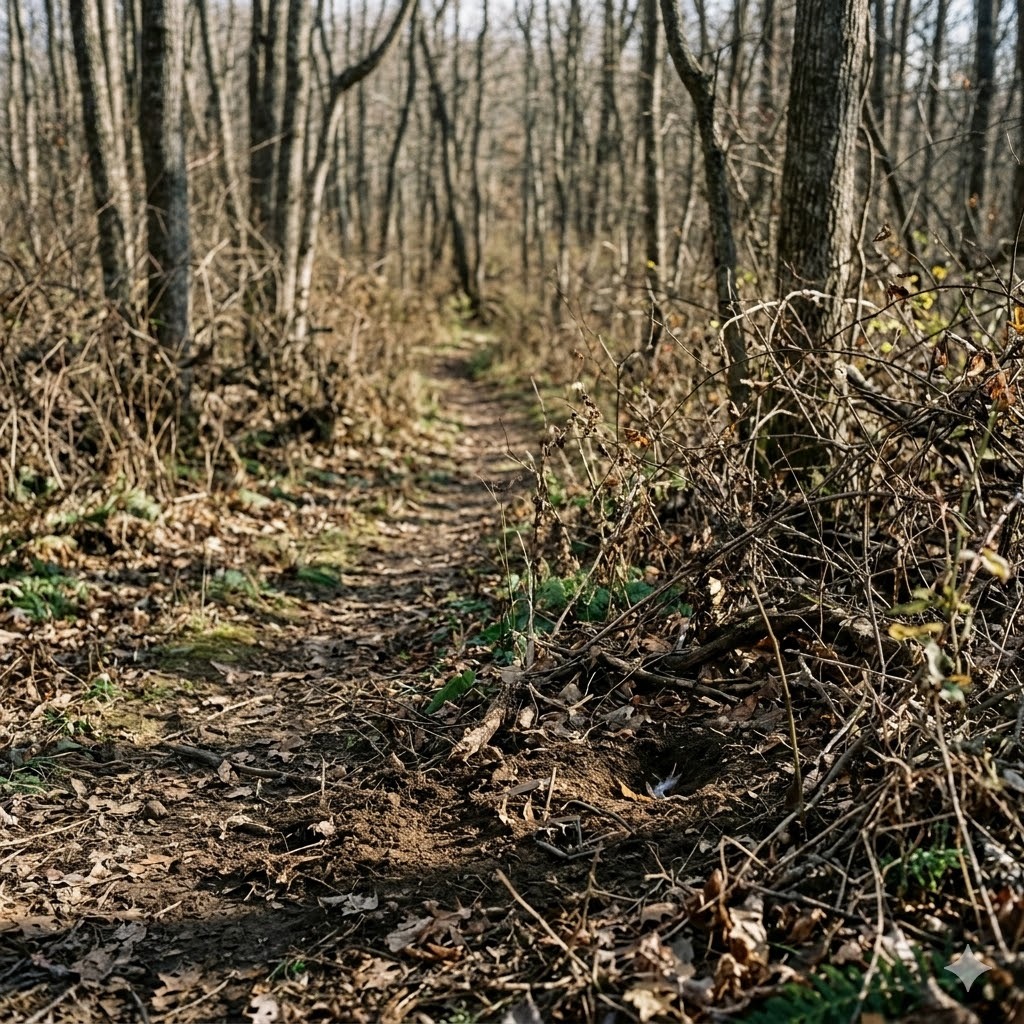
Forget the open knolls that produce red foxes. The gray is a cover animal, so read the sign in brush, thickets, rocky slopes, and along the wood roads, old logging tracks, and game trails that thread through timber. Look where cover is thick and continuous, where a fox can move under concealment and still follow a defined route. Brushy edges, the seams between woodland and field held tight against the trees, and rocky, broken ground all hold grays.
Tracks are similar to a red's but you will find them in different places, tucked into cover rather than out in the open. Scat and scent marks appear along the trails and at trail junctions inside the brush. Because the gray climbs, do not be surprised to find sign around leaning trees, stumps, and rock piles it uses. Set where the animal actually goes: brushy edges and the wood roads it travels, not the exposed spots a red fox would choose. Reading cover correctly is the whole game with this species.
Sets and gear
The dirt-hole and flat scent-post sets that catch red foxes also catch grays, so the difference is location rather than technique. Angle a dirt-hole into a backing along a brushy edge or beside a wood road, bait it deep, add a little gland lure, and bed a foothold on the approach. A scent-post or flat set placed at a trail junction inside cover plays to the gray's habit of moving through defined routes in the brush. Tuck your sets into the cover the animal uses; a set out in the open will simply be passed by.
Use a correctly sized foothold with an appropriate, firm pan tension and an offset jaw to reduce injury, and anchor every trap solidly with an earth anchor or drag. Pan tension helps you avoid lighter non-targets. Check /regulations/ for legal trap types and jaw spreads before you buy, and see /gear/ for trap selection. Where snares are legal, follow local rules on breakaways and stops exactly.
Scent control still matters, though grays can be a touch less finicky than a wary red on good sign. Wear clean gloves, keep traps free of foreign odour, and make a natural-looking set. Clean work in the right cover is what fills the trap.
Handling, dispatch and fur
A held gray fox is frightened and will bite, and it can carry rabies and canine distemper, so wear gloves at every set, never handle an animal that looks sick or behaves strangely beyond safe dispatch, and follow local reporting rules for suspected rabies. Approach calmly, read the animal's condition and position, and stay in control throughout.
Dispatch must be quick and humane, using a method accepted and required in your jurisdiction, and planned before you reach the set so nothing suffers while you decide. For fur, the gray fox is skinned cased, fleshed of fat and membrane, and stretched to dry on a properly sized board. Prime winter pelts, fully furred, bring the best return. Even when management rather than fur is the goal, using the pelt honours the animal rather than wasting it.
Ethics and the law
This is the most important part of the guide, so read /trapping/ethics/ before you set for gray fox. The standard is the same for every animal: quick humane dispatch every time, deliberate targeting, and set placement and pan tension chosen to spare non-targets. Grays live in cover shared with other wildlife and sometimes with pets ranging from homes, so place sets thoughtfully, keep them away from where people walk dogs, and use trap size and tension to let lighter animals escape. Check your traps on the schedule the law requires so nothing waits.
Disease is a real duty of care. Rabies and distemper occur in gray foxes, so wear gloves at every set, decline to handle sick-looking animals beyond safe dispatch, and report suspected rabies as your local rules require. Protecting yourself and preventing spread is part of trapping responsibly.
The law comes first and it varies. Seasons, licensing, legal trap and snare types, jaw spreads, set-distance rules, mandatory check intervals, and land permission all differ by place and change over time, so never rely on old numbers or secondhand advice. Read /regulations/, confirm the current rules for your exact area, and get landowner permission before you set. If the section is new to you, start at /trapping/ and build a clean, lawful, respectful line before you work the fur.