How to Trap Long-tailed Weasel
A small, ferociously effective rodent hunter taken in tight covered sets along walls and brush - low handling risk, but still a life worth taking cleanly.
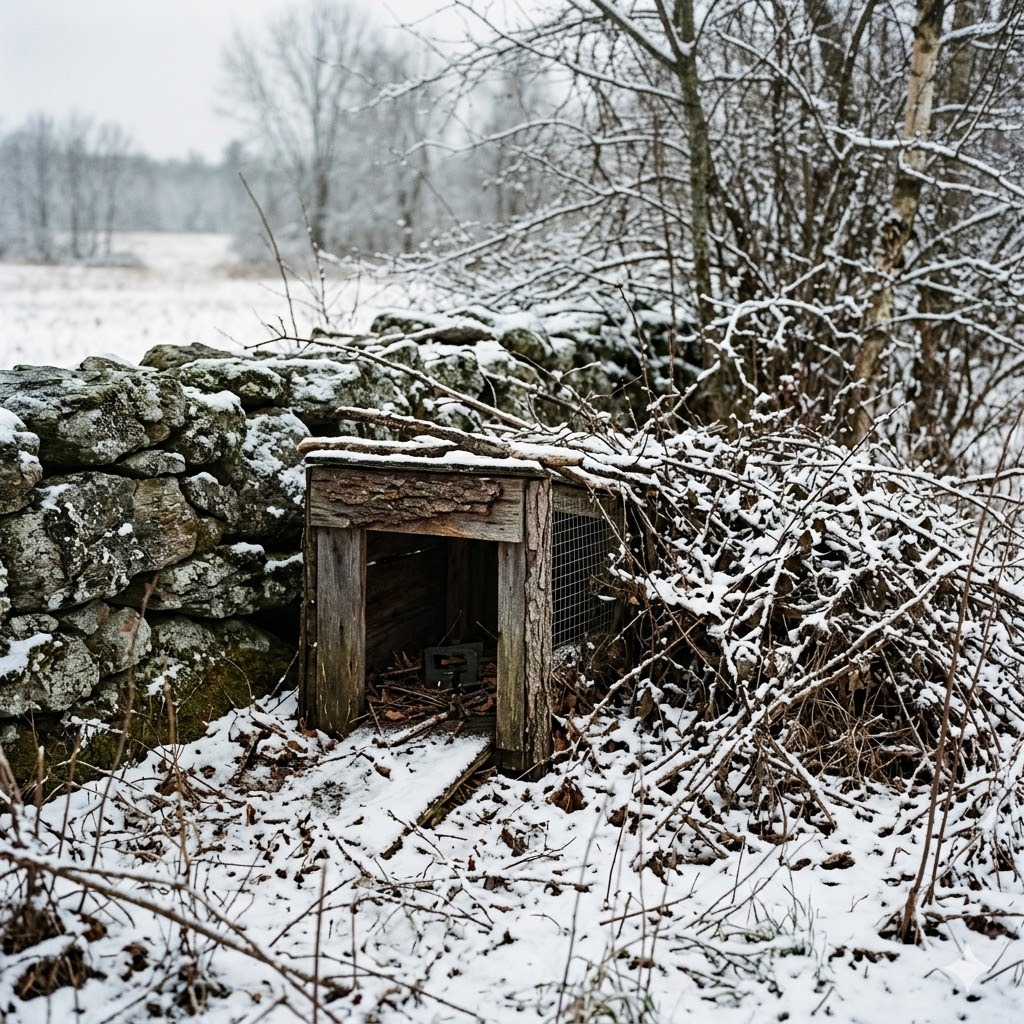
Use appropriately small, humane sets and follow local licence and season rules. Low risk to handle, but still wear gloves and dispatch humanely.
The long-tailed weasel is one of the smallest furbearers most trappers will ever handle, and one of the most efficient predators in the woods. A big male might weigh a few hundred grams and slip through a gap you would swear was too small for a mouse. In the northern part of its range it swaps its brown summer coat for pure white in winter, and that white pelt is the fur the trade has always called ermine. Further south it stays brown year round.
Trapping this animal is a small, close, patient game. You are not setting heavy iron on a travelway; you are tucking tiny sets into the exact seams where a weasel already hunts - the base of a stone wall, the mouth of a brush pile, a rodent run under a fallen log. Done well it is clean and selective. Done carelessly it catches nothing, or catches the wrong thing. This guide assumes you already understand the basics of legal, humane trapping and want to apply them to a specific, demanding little animal.
Why trap long-tailed weasel
There are honest reasons and there are poor ones, and it is worth being clear about which is which. The white winter pelt (ermine) has a genuine, if modest, place in the fur trade and in handcraft; a prime northern skin is a beautiful thing. Some landowners also want weasels reduced around poultry runs, where a single animal can do real damage in a night. Both are legitimate.
What is not legitimate is trapping a weasel for the sake of a body count, or because it is small and easy. This is a native predator that earns its living controlling rodents. Take it deliberately, for fur or for a specific problem, in season, and within your regulations - or leave it alone. Check what your jurisdiction actually permits before you set a single trap; some areas manage weasels loosely, others not at all. See /regulations/ for how to find your local rules.
Reading the sign and finding them
Weasels hunt in a bounding, looping pattern, forever diving into cover and popping out somewhere unexpected. You will rarely see the animal. You read where it works.
Look along the hard edges of the landscape: dry-stone walls, old foundations, rock piles, the tangled bases of brush piles, hedgerows, and the margins where field meets woodland. Weasels follow rodent runs, so where you find vole and mouse sign - runways in matted grass, gnawed stems, small burrow entrances - you have found the weasel's larder and, sooner or later, the weasel. In snow their tracks are unmistakable: paired prints in a bounding gait, often vanishing straight into a hole.
Scat is small, dark, twisted and tapered, often left on a prominent rock or log. Any spot where a wall meets a rodent-rich field edge, where a culvert runs under a track, or where a brush pile sits against cover is worth a set. Because the animal's whole world is these tight seams, you do not need to lure it far - you set where it is already going.
Sets and gear
Keep everything small, covered, and tight against structure. The workhorse is a small covered box or cubby set: a wooden box, a length of pipe, a natural cavity under a rock, or a cubby built from bark and sticks, with the trap set at the entrance and bait or lure at the back. The cover keeps birds and weather off the set and channels the weasel in past the trap.
For the trap itself, a small body-grip (the little 110-size class) inside a box or set in a run gives a quick result and is a common choice for weasels. Where body-grips are restricted, or where you want the animal alive for selective release, a properly sized live/cage trap or a small covered foothold can be used - but a foothold on an animal this small demands care and the right jaw and pan tension to hold without injury. Match the tool to the law where you trap; body-grip rules vary widely.
Bait with something bloody and strong - a chunk of fresh meat, a bit of fish, or a piece of the rodents the weasel already eats works well, sometimes paired with a drop of gland lure. Place the set snug against a wall, in the mouth of a brush pile, or bridging a rodent run, so the weasel meets the trap on its natural line. Anchor and stabilise the box so a caught animal cannot drag or thrash it. A few good sets in the right seams beat a scatter of hopeful ones. See /gear/ for choosing and maintaining small furbearer equipment.
Handling, dispatch and fur
A long-tailed weasel carries almost no risk to you compared with larger furbearers, but treat it with the same respect. Wear gloves - partly for the small chance of bites or disease, partly to keep your scent off resets. If you find an animal alive in a live set, dispatch must be quick and certain; do not improvise or draw it out. Know your humane method before you go, and carry what you need to do it right every time. This is covered in full at /trapping/ethics/.
The pelt is small but fine, and the northern white ermine especially rewards clean handling. Skin promptly, flesh carefully - the skin is thin and tears easily - and dry it on a small stretcher sized for the animal. Handle the tail with care; on ermine the black tail tip is part of what makes the fur valuable, so keep it intact. Cased and dried properly, even a small skin looks the part. Prime fur comes in the depth of winter, when the coat is full and, in the north, fully white; a half-turned or unprime skin is worth little, so timing matters as much as technique.
Ethics and the law
This is the part that matters most, and for a small animal it is easy to take too lightly - so do not. The long-tailed weasel is a native predator, not vermin to be cleared for its own sake. Every set you make is a decision to end a life, and it deserves the same standard whether the animal weighs three hundred grams or ten kilograms: only take what you will use or what genuinely needs managing, and kill cleanly and quickly every single time.
Before you set anything, confirm the law where you are. Seasons, legal trap types and sizes, body-grip restrictions, licence requirements, and rules about landowner permission all vary by jurisdiction and can change year to year. Do not rely on what was true last season or in the next county over. Check your current, local regulations directly - start at /regulations/ - and make sure you hold whatever licence is required.
Check your sets often; small body-grip sets should still be tended promptly, and any live or cage set must be checked frequently enough that no animal waits long. Set only where you have permission. Be selective - the whole point of tight, covered sets is to catch the target and leave everything else alone. If you are still building your judgement on any of this, read /trapping/ethics/ in full before you begin, and see the wider section at /trapping/ for context on the animals and the craft.