How to Trap Opossum
North America's only marsupial is among the easiest furbearers to catch, slow and unwary with low-value fur, but its teeth and parasites still call for gloves and care.
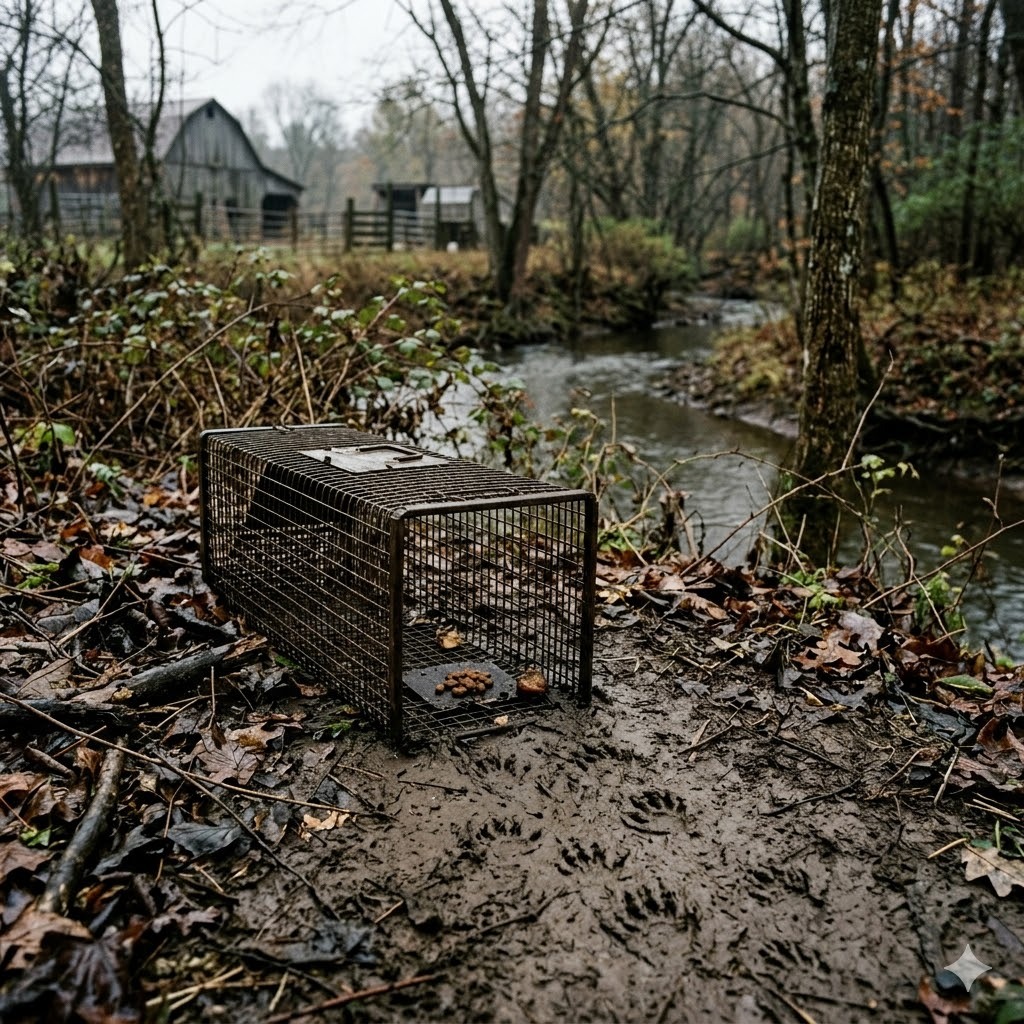
Handle with gloves - opossums have a mouthful of sharp teeth and can carry parasites, though they rarely carry rabies. Follow local licence and season rules even for low-value furbearers.
The opossum is often the first animal a new trapper catches, sometimes without even trying. It is North America's only marsupial, a slow, unhurried, opportunistic animal that eats almost anything and shows little of the caution that makes other furbearers hard to catch. Set a cage or dog-proof trap along a creek bottom or in a farmyard and you will likely catch opossums whether you meant to or not. On many lines they are a constant presence.
That easiness cuts both ways. The fur is coarse and low in value, so nobody runs a line specifically to get rich on opossum. But the animal is so reliable, so widespread and so simple to catch that it is a genuinely useful species for learning the basics, and it turns up steadily alongside whatever else you are after. It is a beginner's animal in the best sense: forgiving to catch, forgiving to handle, as long as you respect the sharp teeth and the parasites that come with it.
Why trap opossum
Honestly, few people set out to trap opossum for its own sake. The fur is coarse and fetches little, so it is rarely the target. What the opossum offers instead is learning value and consistency: it is so easy to catch that it teaches set placement, checking and handling without demanding much skill, and it shows up on the line reliably.
There is also an incidental control element. Opossums frequent farmyards, outbuildings, compost, bins and poultry areas, and they can be a nuisance around a homestead. Managing them where they are causing trouble is a reasonable motive. But the plain truth is that most opossum catches are incidental to trapping for other, higher-value furbearers, and the opossum is best thought of as a steady, easy companion on the line rather than a prize.
Reading the sign and finding them
Opossums stick close to water, cover and food, so creek bottoms, drainage lines, brushy edges, woodpiles, farmyards and buildings are all likely spots. They are not fussy, and because they eat almost anything, dead or alive, they follow food wherever it is. Look for their tracks, which show a distinctive splayed hind foot with an opposable, thumb-like toe that leaves an unmistakable print in soft ground.
You will also find them raiding compost, bins, pet food, poultry and carrion, and denning in hollow logs, brush piles, outbuildings and under structures. Because they are slow-moving and not wary, they use the easiest routes: along water edges, fence lines and the paths between food and shelter. You rarely have to work hard to find opossums; the greater challenge is usually deciding which sets you actually want them in, since they will readily wander into traps meant for other animals.
Sets and gear
Cage or box traps are the natural choice for opossum. They are simple, forgiving, live-catch by design, and an unwary opossum walks into them readily when baited with almost any food. Dog-proof traps also take opossums well, since the animal will reach in for bait much as a raccoon does. Bait is easy, because an opossum eats nearly anything: fish, meat scraps, cat food, sweet baits and more all work.
Because opossums are so easy to catch, the practical challenge is often selectivity rather than attraction. If you are targeting other species, you may catch opossums incidentally, so choose sets and bait with that in mind. Anchor traps firmly, place them along the travel and feeding routes the sign shows you, and make sure your equipment is legal and appropriate where you trap. None of this demands advanced skill, which is exactly why the opossum is such a good animal to build fundamentals on. See the /gear/ page for foundational kit and /regulations/ for local rules.
Handling, dispatch and fur
The opossum rarely carries rabies, and it is far less of a disease concern than the raccoon, but it is not a hazard-free animal. It has a mouthful of sharp teeth and will use them, and it can carry parasites such as fleas, ticks and others. So wear gloves whenever you handle one, whether it is in a cage trap or being processed. An opossum may also feign death, going limp and still, but that is no reason to relax your guard around its teeth.
For an animal you are keeping, carry out a quick, humane dispatch with a method suited to your equipment and legal under your rules, and treat the animal with respect despite its low fur value. If you are releasing an incidental catch, do so carefully and at a safe distance from those teeth. The fur itself is coarse and low-value, so it is not worth elaborate handling, but if you do process it, skin, flesh and dry it properly and keep your gloves on throughout. The opossum will not reward fancy fur work, but it is a fine animal to practise safe, respectful handling on.
Ethics and the law
Even for a common, low-value animal, the rules and the ethics apply. Seasons, licensing and legal methods for opossum vary by place, and some jurisdictions treat it differently from other furbearers, so confirm what applies to you before you set. Abundance and low fur value are not a licence to ignore the law or to be careless.
Ethically, the opossum's very easiness is the thing to watch. Because it is caught so readily, you have a duty to check traps as required so no animal suffers, to dispatch humanely or release incidental catches carefully, and to avoid setting in ways that pile up unwanted catches you have no use for. Wear gloves and respect the teeth and parasites for your own safety. Treat even a low-value marsupial with the same respect you would give any animal on the line. Hold yourself to the standards on the /trapping/ethics/ page, see /trapping/ for how the furbearer species fit together, and check /regulations/ for the specific rules where you live. The opossum is easy to catch, which makes doing right by it a matter of care and attention rather than skill.