How to Trap Raccoon
The raccoon is abundant and beginner-friendly, and dog-proof traps make it one of the safest, most reliable furbearers to learn on if you respect the rabies risk.
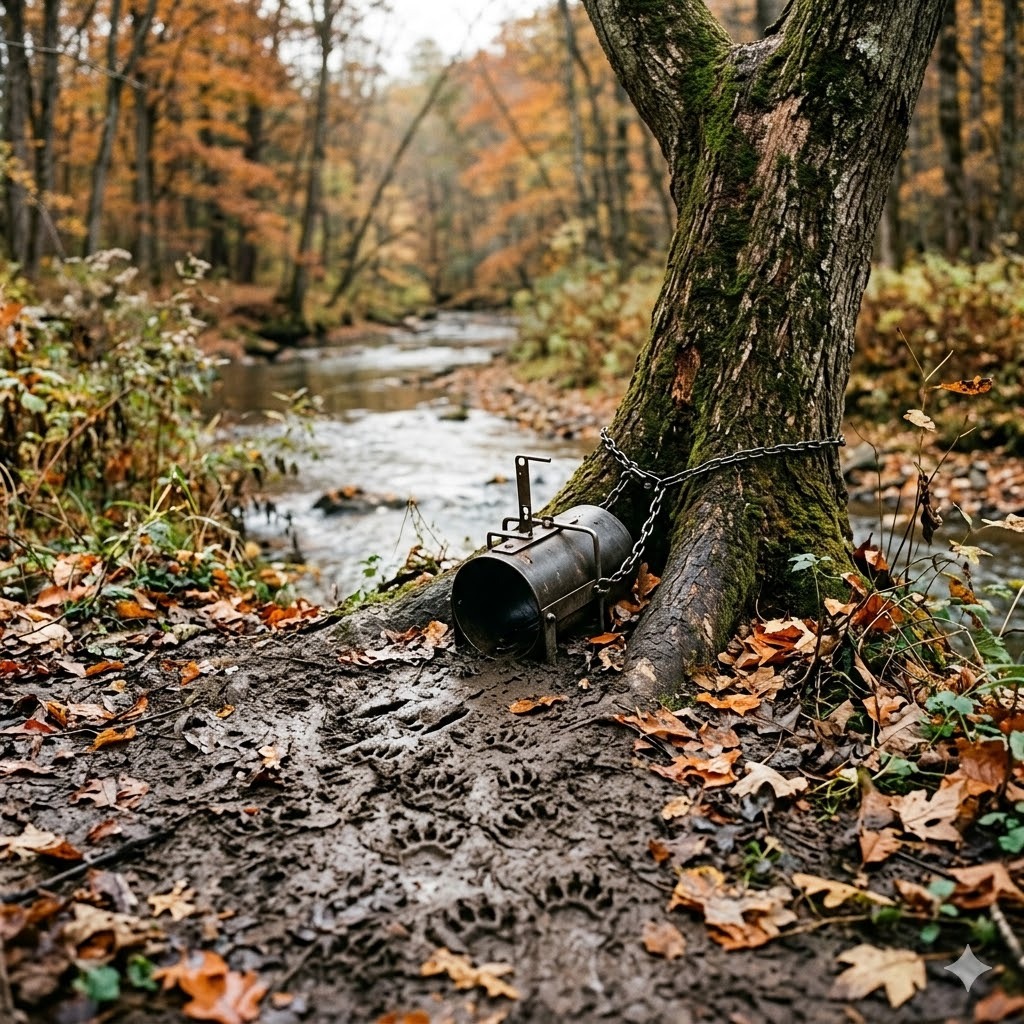
🔴 Raccoons are a major rabies vector - never handle a live or sick-acting raccoon, wear gloves, and avoid any that seem tame or disoriented in daylight. Follow licence, season and trap rules.
The raccoon is where a great many trappers start, and for good reasons. It is abundant across most of the continent, it lives close to people and farms, and it is curious, hungry and easy to catch with the right tool. If you want to learn the rhythm of running a line, checking sets, handling animals and preparing fur, the raccoon is about as forgiving a teacher as you will find. The fur has modest value, but the animal is so common that a steady line can be productive week after week.
There is one thing that must sit right at the front, though, and it is not the trapping technique. The raccoon is a major rabies vector. That single fact shapes how you handle every animal, especially any that is alive, sick-acting or behaving oddly. Take that seriously and the raccoon is a safe, rewarding animal to learn on. Ignore it and you put yourself and your pets at real risk.
Why trap raccoon
Most raccoon trapping is a mix of fur, learning and control. The pelt is coarse and low to moderate in value, but the sheer abundance of raccoons means a line can produce consistently, which makes it excellent for building skill and putting numbers on the ground.
Control is also a genuine motive. Raccoons raid crops, especially sweet corn, get into buildings, outbuildings, chimneys and attics, tip bins and prey on ground-nesting birds and poultry. Around farms and water they can do real, repeated damage. Managing them where they are causing problems is a legitimate reason to run a line, provided you do it under the rules that apply to you. For most beginners the honest picture is a blend: a common animal that teaches the craft while also earning a little fur and keeping numbers in check where they are a nuisance.
Reading the sign and finding them
Raccoons are tied to water and to food, so start there. Creek and pond edges, drainage ditches, culverts, the margins of crop fields, farmyards and any building offering shelter are all prime. Look for the distinctive hand-like tracks in mud and along shorelines, showing long fingers, front and hind feet clearly different. You will also see rolled-back turf where they have hunted grubs, raided sweet corn, tipped bins and left scat on logs, rocks or flat surfaces.
Travel routes are predictable: raccoons follow water edges, fence lines, log crossings and the paths between den, water and feeding areas. A culvert, a log across a creek or a gap in a fence concentrates that travel and makes an ideal spot for a set. Because raccoons are so widespread, the skill is less about finding any raccoon and more about placing sets where travel and feeding pinch together, so you catch animals efficiently rather than at random.
Sets and gear
The dog-proof trap is what makes the raccoon so beginner-friendly and so safe around non-targets. It is an enclosed tube trap that a raccoon must reach into and pull with its dexterous hands to trigger, which is exactly what a raccoon does and what a dog, cat or most other non-targets cannot. That design dramatically reduces accidental catches and is a big part of why dog-proofs have become the standard raccoon tool. Bait them with something sweet or fishy: marshmallows, sweet corn, dry cat food, fish-based baits and similar all work well.
Cage or box traps are another straightforward option, especially near buildings or where a live-catch approach suits the situation, and they too are forgiving for beginners. Footholds at trail and water sets have long been used as well. Whatever you choose, anchor it firmly, place it where the sign tells you to, and make sure it is legal and appropriate for raccoon in your area. Dog-proofs are cheap, simple and effective, which is why they are such a good starting point. See the /gear/ page for foundational kit and /regulations/ for what is permitted where you live.
Handling, dispatch and fur
This is where the rabies warning becomes practical. Never handle a live or sick-acting raccoon. A raccoon out in daylight behaving oddly, appearing disoriented, aggressive or unafraid, or showing signs of illness, must be treated as a potential rabies risk and given a wide berth, not picked up or restrained by hand. Wear gloves whenever you handle raccoons at all, keep pets away, and follow your local guidance on reporting or dealing with animals that look sick.
For a healthy raccoon in a trap, carry out a quick, humane dispatch with a method appropriate to your equipment and legal under your rules, treating the animal with respect. After that, the fur is straightforward for a beginner to learn on: skin, flesh clean, and dry the pelt properly. Raccoon fur will not make anyone rich, but it is forgiving to practise on and a good way to build the handling skills you will need for higher-value species later. Keep your gloves on, keep things clean, and stay mindful of the health risks throughout.
Ethics and the law
Even with an abundant animal like the raccoon, the ethics and the law come first. Raccoon seasons, licensing, legal trap types and check requirements vary from place to place, so confirm what applies to you before you set. Just because raccoons are everywhere does not mean anything goes; the rules on when, where and how you may trap them still bind you.
The rabies dimension is an ethical and safety matter as much as a legal one. Protect yourself, your family and your pets by wearing gloves, never handling live or sick-acting animals, and following local public-health guidance. That responsibility does not end at your own safety, because careless handling of a rabies vector risks others too. Use dog-proof or otherwise selective equipment to spare non-target animals, place sets thoughtfully, and check traps as required so nothing suffers longer than it must. Dispatch humanely and take only what is reasonable for your fur and control purposes. Hold yourself to the standards on the /trapping/ethics/ page, see /trapping/ for how the species fit together on the line, and check /regulations/ for the specific rules where you live. The raccoon is a fine animal to learn on precisely because doing it right is simple, as long as you respect the health risk and the law.