Deer Scent Eliminators Tested
Spray, ozone, carbon clothing - every scent control claim contradicts the next. Here is what actually works, what is marketing, and how to use what does…
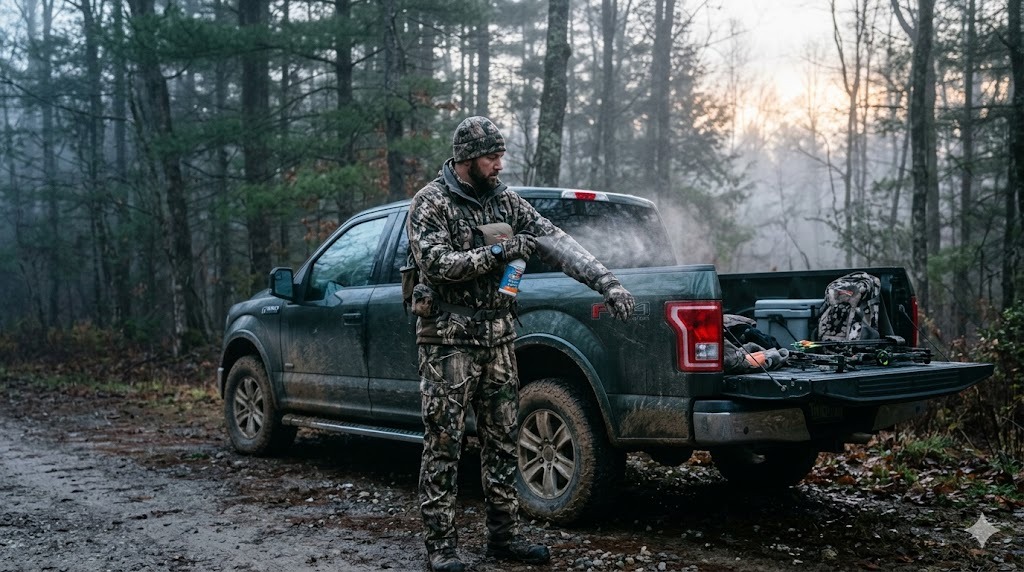
Tested honestly, scent control comes down to this: nothing beats playing the wind, an ozone generator is the one product that genuinely moves the needle, scent-killing sprays help a little, and carbon clothing is a mixed bag. Build a simple routine around the wind and clean, stored gear rather than spending big on snake oil.
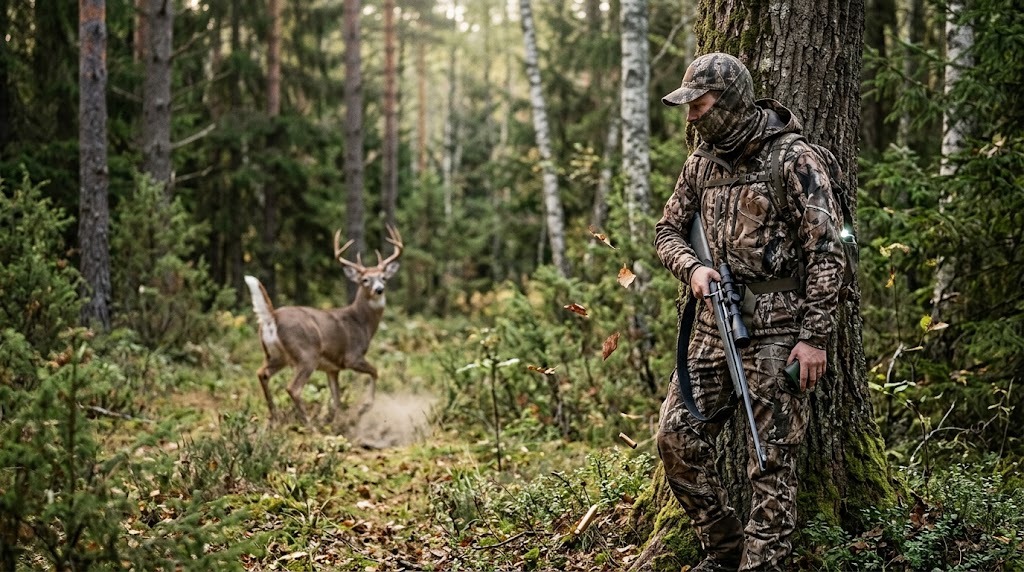
The nose of a whitetail deer is 1,000 times more sensitive than a human’s. They smell hunters through fabric, through ground cover, and from a quarter mile downwind. The scent control industry sells billions of dollars of sprays, carbon suits, and ozone machines promising to defeat that nose. Some of those products genuinely help. Most don’t. This guide breaks down the categories, the science behind what works, and how to build a realistic scent control system without bankrupting yourself.
Why You Smell Worse Than You Think
Human scent comes from several sources:
- Sweat and skin bacteria - produces compounds deer have evolved to fear (post-Ice Age predator association)
- Breath - methane, acetone, food odors
- Clothing residue - laundry detergent, fabric softener, cigarette smoke, cooking oils
- Footwear - your boots absorb every scent of every parking lot you’ve crossed
- Ride to the woods - gasoline, coffee, fast food in the truck cab
Eliminating “you” is impossible. Reducing total scent signature so wind, cover, and stand position do the rest is achievable.
The First Rule: Wind Always Wins
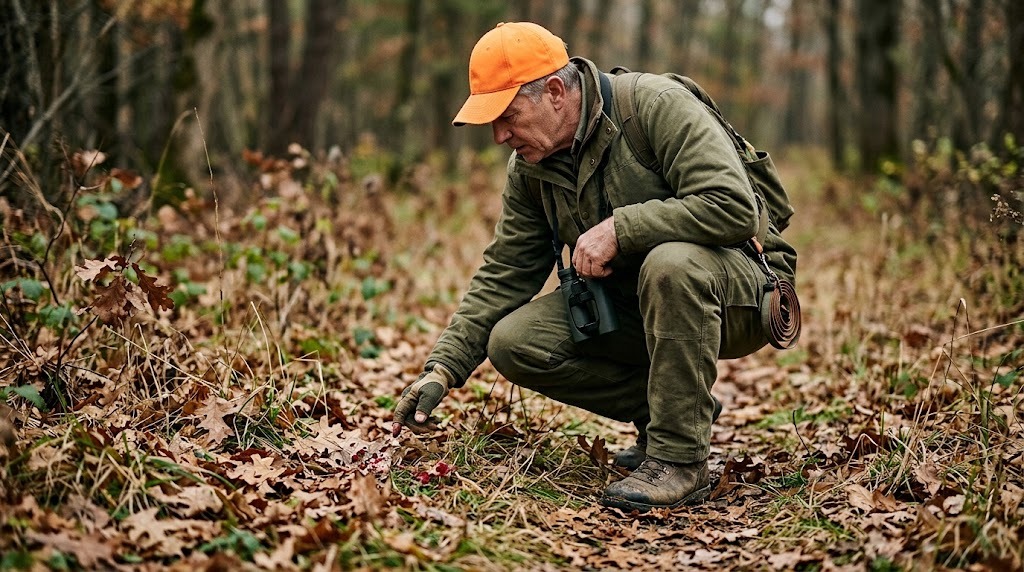
No spray, suit, or machine beats hunting the wind. A deer 30 yards directly downwind smells you regardless of any product. A deer 30 yards crosswind or upwind almost never smells you regardless of any product. Scent control buys you maybe 25-50% reduction in scent intensity in the swirling middle zone. It does not buy you the right to ignore wind.
If you treat scent control as a replacement for wind discipline, you will not kill mature big game. Period.
Scent-Killing Sprays: What Works
The main spray categories:
Carbon-based sprays (Scent Killer, Wildlife Research) - claim to use activated carbon particles to adsorb odor molecules. Reasonable science, mild effect. Useful before each hunt as a top-up.
Enzyme/bacterial sprays (Dead Down Wind, Hunters Specialties Scent-A-Way) - use enzymes to break down odor-causing bacteria. Best applied to clothing 24 hours before a hunt; effects fade.
Silver/antimicrobial sprays (Ozonics Field Spray, Sitka Silvermax) - kill bacteria and prevent recurrence. Effective but expensive.
Plant essential oil masking (red fox urine, fresh earth scent) - not scientifically proven to eliminate scent, but can confuse a deer for crucial seconds.
The honest verdict: all of them help a little, none of them transform your odds. Use them as the last 10% of a scent system, not the foundation.
Ozone: The Real Game Changer
Ozone (O3) destroys odor molecules at the chemical level. The Ozonics HR300 and similar units pump fresh ozone into the downwind air column from a stand. It’s not a gimmick - it works, with two big caveats.
Caveats:
- Ozone only works in the direct downwind cone from the device, not in 360 degrees
- Ozone is irritating to humans - never breathe it directly; mount it above and behind your head
Effective use:
- Mount on a tree branch or stand above shoulder height
- Aim slightly downwind
- Run continuously while in stand
- Pair with carbon suit and quality wind discipline
Ozonics units run $400-700 plus battery. For serious bowhunters in close range scenarios, they earn the price.
A cheaper home-use option is to bag your hunting clothes in an ozone-treated bag (Scent Crusher, Inhibitor) overnight before the hunt. Less effective than in-stand ozone but a big improvement over washing alone.
Carbon Clothing: Mixed Verdict
Carbon suits (Scent-Lok, Robinson Outdoors, Sitka Core Heavyweight Hoody) embed activated carbon in the fabric to adsorb odor molecules.
The reality: activated carbon does adsorb odors, but the effect saturates quickly and requires re-activation (high-heat drying) to renew. A carbon suit worn for 3 hours has lost most of its capacity.
For sit-and-wait hunters, carbon suits provide modest benefit, especially if dried hot between hunts. For hard-hiking western hunters who sweat heavily, the benefit is minimal - sweat overwhelms the carbon almost immediately.
If you have one, use it; activate it between hunts. Don’t blow $400 on a suit expecting magic.
The Pre-Hunt Routine That Actually Works
A realistic scent control routine:
At home, night before:
- Wash hunting clothes in scent-free detergent (no perfumes, no UV brighteners)
- Hang to dry outside, or tumble in scent-free dryer sheets
- Store in a scent-free bag (rubber tote or specialty scent bag)
- Shower with scent-free soap and shampoo (Dead Down Wind, Scent-A-Way)
- Brush teeth with baking soda, not minty toothpaste
Morning of: 6. Use scent-free deodorant 7. Don’t smoke, drink coffee, or eat pungent food before hunting 8. Drive to hunt area in regular clothes - change at the truck 9. Put on rubber boots (boots are the worst scent carrier) 10. Spray down with carbon spray before walking in
On stand: 11. Hunt the wind first, always 12. Use a wind indicator (powder bottle, milkweed) every 5 minutes 13. Don’t urinate near the stand 14. Limit movement and energy expenditure (sweat = scent)
Boots: The Forgotten Battlefield
Knee-high rubber boots block the bacteria-rich foot/lower leg area better than leather. They also don’t absorb scent from parking lots and gas stations. For stand hunting, knee-high rubber boots are non-negotiable.
For spot-and-stalk where you walk miles, leather boots are necessary - but accept that the lower legs will scent more.
Don’t Sweat
Sweat is the single largest source of fresh, fly-attracting, deer-spooking scent. Don’t overdress for the walk in. Strip layers off, walk slowly, and add layers back when you reach the stand. A 10-minute cooldown after the walk in cuts your sweat scent dramatically.
FAQ
Do estrus scents work? During the rut window, yes - they bring curious bucks into range or hang them up for a clean shot. Outside the rut, they’re decoration.
What about masking scents like fox urine? Mild effect. Fresh earth or acorn scent can mask trace human odor, but never relies on this alone.
Are silver-impregnated socks worth it? A small improvement. Smartwool and similar antimicrobial blends do reduce feet odor over time.
How often should I replace my carbon suit? Re-activate by drying hot after each hunt. Replace when fabric is worn through or visibly contaminated - typically 3-5 seasons.
Does chewing gum help? A pack of pine or unflavored gum can reduce breath odor briefly. Don’t expect miracles.
Conclusion
Hunt the wind, wash with scent-free soap, store clothes in scent-free bags, use rubber boots, and apply carbon spray before the walk in. Add ozone if you have the budget. Skip the $300 estrus drippers and miracle sprays - they fund the industry, not your trophy room. Wind discipline plus a sane routine beats every spray bottle on the shelf.
🛒 Recommended Gear on Amazon
- Scent eliminator spray - browse current options and reviews on Amazon.
- Scent-free detergent - browse current options and reviews on Amazon.
- Scent control storage bag - browse current options and reviews on Amazon.
As an Amazon Associate, we earn from qualifying purchases - at no extra cost to you. This helps us keep producing free, in-depth guides.