Ground Blind Setup Guide
A pop-up blind dropped raw into a field will spook deer for weeks. A blind set up correctly disappears into the landscape and produces shots inside 15 yards…
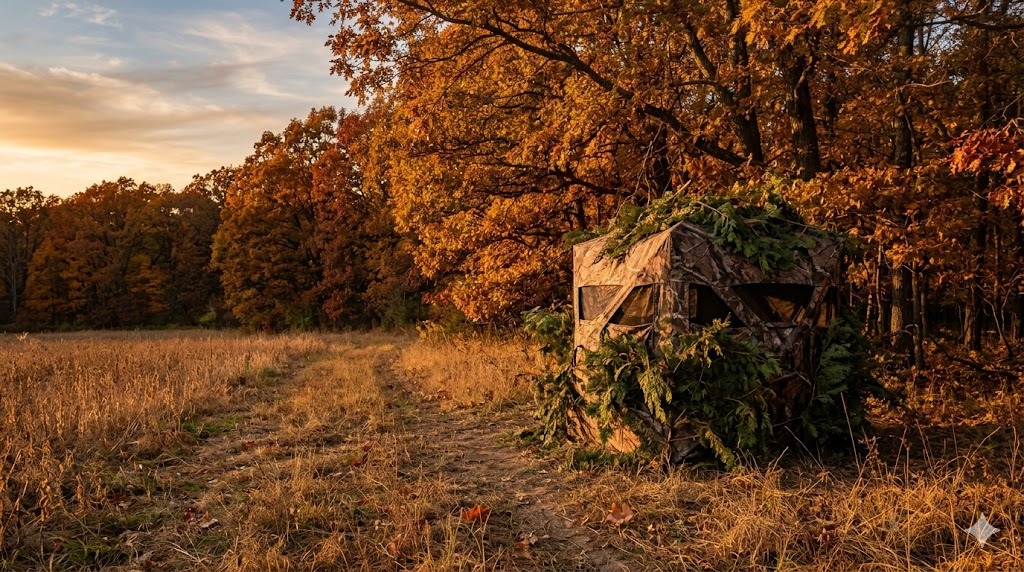
A pop-up ground blind dropped raw into a field will spook whitetail deer and wild turkeys for weeks. A blind set up correctly disappears into the landscape and produces 15-yard shots on relaxed game. The difference isn’t the blind brand - it’s how you site it, how you brush it in, and how you manage scent and shooting windows. This guide walks through the full setup process from selecting a hub blind to taking the first shot.
Choose the Right Blind
Most modern ground blinds fall into a few categories:
- Hub blinds (Ameristep, Primos Double Bull, Barronett) - pop open with cross-tensioned fiberglass poles, set up in 60 seconds, weigh 18-25 lbs
- Pyramid/teepee blinds (older style) - lighter but harder to shoot a bow from due to angled walls
- Box blinds / shooting houses - permanent or semi-permanent wood/aluminum structures for stand sites you’ll hunt for years
- Chair blinds and ghillie wraps - lightweight options for run-and-gun turkey hunting and other hunting methods
For most beginners, a quality hub blind with shoot-through mesh windows, a black interior, and a removable floor is the sweet spot at $150-350.
Site Selection
A blind needs to make sense to the deer. Sites that work:
- Field edges where two cover types meet - woods to ag, ag to CRP, brush to open
- Pinch points between bedding and food
- Inside fence corners, hedge rows, brush piles
- Existing visual breaks - a downed tree, large rock pile, hay bale row, old shed
- Beside an existing tree or stump so the blind blends into something already there
A blind that sits alone in the middle of a clean field broadcasts “predator” to every deer in the county. Park it next to existing structure.
Brushing In
Brushing in is the difference between mediocre and excellent. The goal is to make the blind look like part of the natural landscape from the angle deer will see it.
- Trim hub blind ports/loops are factory-built to hold branches
- Cut natural cover from the area - small cedar boughs, oak limbs with leaves, brush piles, dead grass
- Tuck branches through every loop, on every side facing potential deer travel
- Skirt the bottom with brush so the blind doesn’t appear to float
- Don’t over-cover the windows you’ll actually shoot through
Hub blinds with a tan or “epic” finish blend better than black-finish blinds in mixed habitat. Black exteriors work best deep in shade.
Black Interior Matters
This is the single biggest mistake first-time blind hunters make. Wear all black inside a black-interior blind, including a face cover or balaclava. Black-on-black means the deer sees only blackness through the window opening, not the silhouette of a hunter’s face or hands.
If you have to wear camo, dark camo only - no greens, no tan. Keep windows mostly closed except for the one you’re shooting through. Many veteran hunters keep three small slits open instead of one full window.
Let It Season
Deer notice change. A blind dropped on Saturday and hunted Sunday will get nose-pegged by every doe in the area. Set the blind at least 2 weeks before you hunt it when possible. For turkey hunting, blinds can be set the morning of (turkeys don’t fear blinds the way deer do), but a 2-3 day buffer still helps.
If you must hunt it the day you set it, place it on a transition the deer hasn’t been visiting recently, or use it as a Hail Mary at a food source 200+ yards downwind from where you expect deer to enter.
Scent Management
A blind concentrates and traps human scent. Mitigations:
- Hunt the wind first, every time. Set the blind so prevailing wind carries away from the deer’s expected approach
- Use a carbon-suit or ozone generator (Ozonics, Scent Crusher) inside the blind
- Crack a downwind window to let scent escape downwind rather than building up
- Don’t smoke or vape in the blind, ever
- Stash boots and outerwear in a scent-free bag before driving to the blind
Shooting Windows
For archery, identify lanes ahead of time. Range a few landmarks - fence post at 20, dead snag at 30, oak base at 40. Practice drawing your bow inside the blind before season; many hunters discover their cam catches the window edge or their elbow hits a wall. Adjust chair height and blind window position accordingly.
For rifle or crossbow, you have more flexibility - but practice swinging through the actual openings to confirm clear sight pictures.
FAQ
How big should a blind be? A two-person blind is roomy for one bowhunter; a one-person blind is cramped. Most solo hunters prefer the two-person size.
Do deer really not see ground blinds? After a couple weeks they treat them as part of the landscape, especially if brushed in. Turkeys ignore them almost instantly.
Can I hunt from a blind in the rain? Yes - quality blinds are waterproof. The bigger issue is scent stagnation; ventilate downwind.
How do I anchor the blind in wind? Stake every corner and use the included guy lines. In open country, add sandbags inside the floor corners.
Are box blinds worth the cost? For a permanent farm or lease, absolutely. They protect from weather, sit higher for visibility, and can be heated in late season.
Conclusion
A ground blind buys you weather protection, scent control, and the ability to fidget without being seen. Pick the right site, brush it in like you mean it, wear black inside, and let it season before you hunt. Do those four things and you’ll spend your seasons watching deer at bow range instead of seeing tails over the back fence.
🛒 Recommended Gear on Amazon
- Hunting ground blinds - browse current options and reviews on Amazon.
- Ground blind chair - browse current options and reviews on Amazon.
- Pruning shears - browse current options and reviews on Amazon.
As an Amazon Associate, we earn from qualifying purchases - at no extra cost to you. This helps us keep producing free, in-depth guides.