Hunting Backpack Frame Types
An internal frame disappears under load; an external frame hauls quartered elk. Frameless saves weight but punishes long carries…
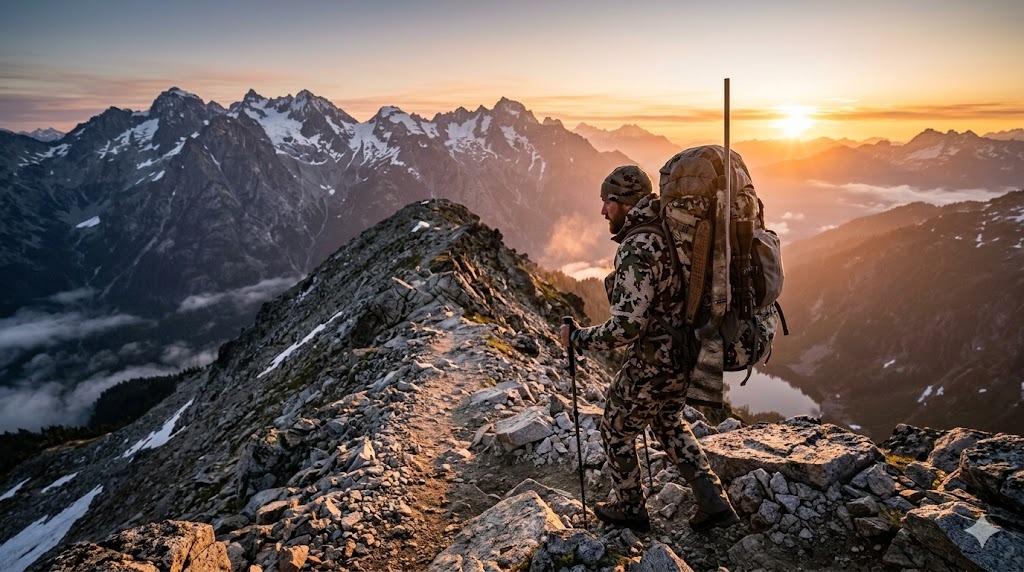
For frame type, an internal-frame pack is the modern standard for most hunters, an external frame still wins for hauling heavy, awkward meat loads like a quartered elk, and a frameless pack suits only ultralight, short trips. The loads you carry and your body decide it, not preference - and getting the frame size right matters more than the style itself.
A hunting backpack is the most important piece of gear most western and backcountry hunters own. It’s the difference between carrying a quartered bull elk 4 miles to the truck without crippling yourself and abandoning meat on the mountain. This guide breaks down the three frame styles, what loads each handles, and which brands to consider.
What a Frame Actually Does
The frame is the structure inside (or outside) the pack that transfers weight from your shoulders down to your hip belt and onto your hips. Hips are the strongest load-bearing structure on your body; shoulders are not. A pack without a real frame puts all the weight on your shoulders and spine, leading to misery and back injury under heavy loads.
A quality frame transfers 80-90% of pack weight to your hips. That’s the difference between hiking 8 miles with 80 lbs and quitting at mile 2.
Internal Frame: The Modern Standard
Internal frame packs use stays - usually two aluminum or carbon stays running vertically inside the pack body, sometimes plus a flexible HDPE frame sheet. The pack rides close to your back, hugs your body, and stays balanced on uneven terrain.
Best for:
- Mountain hunting where you scramble, sidehill, and bushwhack
- Loads from daypack-size (25 lb) to heavy (80-100 lb meat hauls)
- Hunters who value stability over absolute load-hauling capacity
Top brands:
- Stone Glacier (Sky 5900, EVO 56) - ultralight, mountain-bred, carbon frame option
- Kifaru (Reckoning, Shape Charge) - bulletproof, custom-configurable
- Mystery Ranch (Metcalf, Marshall) - Army-tested, three-zip access
- Exo Mountain Gear (K4, K3) - load-shelf design, excellent for meat
- Eberlestock (Mainframe, Operator) - versatile, multiple sizes
For most western hunters, an internal frame pack with a load shelf is the universal answer.
External Frame: The Old Workhorse
External frame packs use a visible aluminum or composite frame outside the pack bag. They sit slightly off your back (with airflow), carry weight high and centered, and excel at strapping awkward loads (whole quarters, large game heads, blocks of camp gear) to the frame directly.
Best for:
- Heavy, awkward loads - entire elk hindquarters, boned-out meat blocks, full camp
- Hunting in moderate terrain where stability isn’t paramount
- Hunters who prefer cooler back contact (frame creates a gap for airflow)
- Tradition-minded houndsmen and packers
Top brands:
- Barney’s Sports Chalet (Alaskan freighter standard)
- Kelty (Pawnee, Tioga) - classic recreation freighter
- MysteryRanch NICE Frame - modular internal/external hybrid
- Eberlestock F4 / Big Top
The external frame has fallen out of fashion with marketing, but it’s still the king of moving huge loads over decent trails.
Frameless: Ultralight Specialist
Frameless packs use foam pads and cinch straps to provide some shape but no rigid structure. They weigh under 3 lbs, pack down small, and excel as day packs or as the “summit pack” stripped out of a larger camp.
Best for:
- Day hunts where you carry less than 25 lbs
- Backcountry hunters who use a frameless pack inside a larger pack
- Ultralight enthusiasts who never carry meat far
Top brands:
- Hyperlite Mountain Gear, Stone Glacier Cirque, Kifaru Antero, Mystery Ranch Pop Up
If you’re hunting elk, a frameless pack is a supplemental tool, not your main pack.
Frame Sizing - The Critical Step
A great frame in the wrong size is useless. Pack frame size is matched to your torso length - measured from the C7 vertebra (the bump where your neck meets your shoulders) down to the iliac crest (top of your hip bones). Most adults measure 17-22 inches.
Pack manufacturers offer Short (15-17 in), Medium (17.5-19.5 in), Long (20-22 in). Buying a pack two sizes off will ruin your back. Measure with a friend before you order online, or visit a store that stocks the brand.
The hip belt should sit on the iliac crest with the belt covering the hip bones. Shoulder straps should anchor at the top of your shoulders, not above them.
Load Capacity vs Volume
Two specs matter:
- Volume (liters or cubic inches) - how much fits inside
- Load rating (lbs) - how much weight the frame and harness comfortably carry
A 5,000 cubic inch (~82 liter) pack typically rates for 80-120 lbs. For multi-day backcountry hunting plus meat hauling, target a pack in the 4,500-6,500 ci range with at least 100 lb rated capacity. If you are not sure how much meat a given animal yields, our meat yield calculator helps you plan the load before you ever draw a tag.
For day hunting with no meat hauling expectation, 1,800-3,000 ci is plenty.
Meat-Hauling Features
For hunters who’ll pack out quartered elk, deer, or bear meat, certain features matter (and a good pack-out checklist keeps you from leaving anything behind on the mountain):
- Load shelf - separates pack bag from frame so meat sits between frame and bag for better load distribution and easier cleaning
- Bombproof compression straps - to lash quarters securely
- Removable or dry-bag liners - to contain blood
- Y-strap or top compression for tying down a head/cape
A pack without these features can still haul meat, but takes more effort and gets messier.
Try Before You Commit
If at all possible, load a candidate pack with 50 lbs and walk a mile uphill before buying. Many outdoor stores will let you fill a pack with sandbags or weighted gear for an in-store test. The pack that felt great empty will reveal its faults under load - pressure points, frame flex, hot spots.
For online orders, brands like Stone Glacier, Kifaru, and Mystery Ranch all offer fitting guides and generous return policies.
FAQ
Can I use a regular hiking pack for hunting? For day hunts, yes. For meat hauling, dedicated hunting packs have better load shelves and compression.
What weight is “too heavy” for a backcountry pack? Most healthy adults can carry 25-30% of body weight for long distances. Above 35-40% for short hauls.
Do I need a rain cover? Most quality packs use water-resistant fabrics; a pack cover is helpful in extended downpours but not mandatory.
What color should I buy? Most modern hunting packs come in solid earth tones (coyote brown, foliage green) that work everywhere. Bright orange covers can be added during gun season.
How much should I spend? Decent day pack: $200-350. Serious multi-day pack: $500-900. Custom shop pack: $700-1,200.
Conclusion
For most western backcountry hunters, an internal frame pack in the 4,500-6,000 ci range with a load shelf and 100+ lb rating is the do-everything answer. External frames still earn their keep for hunters who routinely haul huge loads over moderate terrain. Frameless packs are summit and day packs, not main carriers. Buy the right size, load it, and walk it before you trust it on a mountain. Done correctly, your pack disappears under load; done poorly, it ends your hunt.
🛒 Recommended Gear on Amazon
- Internal frame hunting packs - browse current options and reviews on Amazon.
- External frame hunting packs - browse current options and reviews on Amazon.
- Backpack rain cover - browse current options and reviews on Amazon.
As an Amazon Associate, we earn from qualifying purchases - at no extra cost to you. This helps us keep producing free, in-depth guides.