Hunting Socks: Merino vs Synthetic
Your boots get the credit, but socks are where the actual comfort battle is won. Merino, synthetic, blends, and liner systems each have a place…
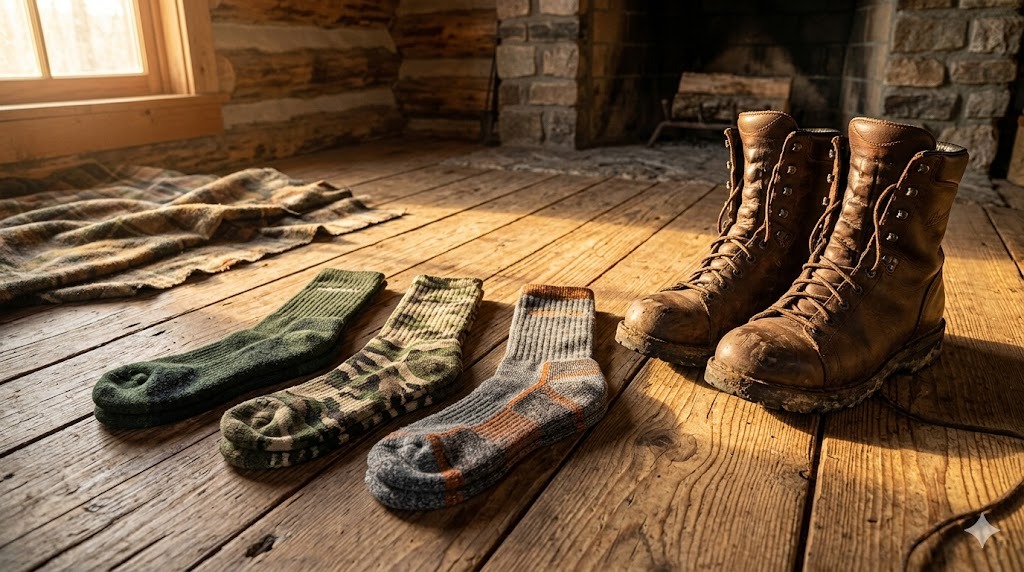
For hunting socks, merino wool is the standard - warm, naturally odor-resistant, and comfortable across a wide temperature range - while synthetics are cheaper and dry faster, and a merino-synthetic blend is the practical everyday pick. Add a thin liner sock for long-mileage days to fight blisters, and never wear cotton.
Your boots get the credit, but socks are where the comfort battle is actually won. The wrong sock causes blisters in 3 miles, soggy feet at noon, and frostbite at dawn. The right sock pulls a thousand-yard mountain day from suffering into something approaching enjoyable. Merino, synthetic, blends, and two-layer liner systems each have a place - this guide breaks down what to wear, when, and why.
Why Cotton Is the Enemy
Cotton holds 27 times its weight in water. It loses all insulation when wet, dries painfully slow, and bunches under pressure points. Cotton socks are the leading cause of blisters in hunting boots. There is no situation in which a cotton sock is appropriate for hunting. Throw out every cotton sock you own.
Merino Wool: The Standard
Merino wool is fine-fiber wool from Merino sheep - soft, not itchy like traditional wool, and naturally antimicrobial. It insulates when wet, regulates temperature in both heat and cold, and resists odor longer than any synthetic.
Brands that dominate the hunting sock category: Darn Tough, Smartwool, Farm to Feet, First Lite, Stio, Sitka, Kuiu. Weight options:
- Lightweight - warm-weather hunts, summer scouting, light hiking
- Midweight - fall to early winter, the do-everything weight
- Heavyweight - cold weather, treestand sits, late-season pursuits
Darn Tough sells with a lifetime guarantee - worn through in 3 years, mail them back, get a new pair. That changes the value calculation completely.
Synthetic: Cheaper, Faster Drying
Polyester, nylon, polypropylene, and acrylic socks dry faster than merino, often cost half as much, and resist abrasion better. The downside: they hold odor aggressively after 1-2 days, and they don’t insulate when wet the way wool does.
For day hunts where you’re back at the truck by evening, synthetic socks work fine. For multi-day backcountry trips, you’ll smell yourself.
Blends: The Practical Choice
Most modern hunting socks are blends - typically 60-70% merino with 25-30% nylon and 5% spandex/Lycra. The nylon adds durability (wool alone wears through fast), and the spandex keeps the sock from sagging.
Look for a blend on the label. Pure merino is for connoisseurs; merino-nylon blends are for hunters.
The Liner System
A sock liner is a thin (usually polyester or polypropylene) sock worn underneath your main hunting sock. The two layers create a slip plane - friction happens between the two socks rather than between sock and skin, dramatically reducing blisters.
Liner systems work especially well for:
- New boots not yet broken in
- Long-distance backcountry hunts (10+ mile days)
- Hunters with chronic blisters or hot spots
- Wet conditions where moisture management matters
Brands: Fox River, Wigwam, Injinji (toe liner), Smartwool PhD Liner. Pair a polypropylene liner with a midweight merino outer for the most versatile setup.
Sock-to-Boot Fit
The most expensive sock in the world fails in a poorly fitted boot. Try boots on with the actual socks you’ll hunt in - sock thickness changes the fit dimension significantly. A boot that fits great with a thin dress sock is too tight with a heavyweight wool sock and ends in frostbite.
When in doubt, size boots for midweight socks plus a thin liner. You can always add a sock layer in cold weather; you can’t shrink a boot.
Late-Season Cold
For sits in single-digit temperatures, layering matters more than sock thickness, and the same discipline that keeps your feet warm applies to your whole late-season cold-weather setup. A typical cold-weather stack:
- Liner (polypropylene or Injinji toe socks)
- Heavyweight merino sock
- Boot blanket or insulated boot cover for stationary sits
- Chemical foot warmer on top of the toes (not under the foot, where you crush it)
The liner is non-negotiable in extreme cold - it traps a microclimate of dry warmth against the skin even if the outer sock dampens with sweat.
Care and Replacement
- Wash inside-out in cold water, mild detergent, no fabric softener (it coats fibers and kills wicking)
- Air dry to extend life; tumble dry low if needed
- Rotate at least 3 pairs so each pair fully recovers between wearings
- Inspect heels and toes monthly during season - early holes are easier to patch with a darning needle than to retire
A quality merino sock lasts 2-4 hard seasons. Darn Tough’s lifetime guarantee makes the math even better.
Specific Sock Recommendations
- Day hunt, mild weather: Darn Tough Hiker Midweight Crew Merino
- Cold-weather treestand: Smartwool Mountaineer Extra Cushion
- Backcountry multi-day: Farm to Feet Damascus or Darn Tough Hunter Heavyweight, paired with Injinji liner
- Western mountain hunts: First Lite Mountain Sock or Sitka Trailhead, the kind of long-mileage days a Western mule deer hunt demands
- Late-season blizzard sits: Heavyweight merino over polypropylene liner, plus chemical warmer
FAQ
Are expensive socks worth it? A $25 merino sock from Darn Tough lasts 3 seasons; a $5 acrylic sock lasts 6 months and causes blisters. Cost per wear, the premium sock wins.
Can I use ski socks for hunting? Yes - heavyweight ski socks are often nearly identical to heavyweight hunting socks.
Do toe-liner socks really prevent blisters? For hunters whose toes rub each other (common with longer second toes), yes. They look weird; they work.
How do I keep socks from slipping inside boots? Spandex blends help, but the real fix is properly tightened bootlaces and a boot that fits your heel.
Is wool itchy? Traditional wool yes; merino wool no. Modern merino is comparable in softness to cotton.
Conclusion
Buy three pairs of midweight merino-nylon blend socks, two pairs of polypropylene liners, and one pair of heavyweight wool for cold days. Rotate them, wash them cold, and replace heels before they blow out. Your feet stop being a problem at hour eight of the day - which is when actual hunting starts to happen.
🛒 Recommended Gear on Amazon
- Merino wool hunting socks - browse current options and reviews on Amazon.
- Sock liners - browse current options and reviews on Amazon.
- Boot dryer - browse current options and reviews on Amazon.
As an Amazon Associate, we earn from qualifying purchases - at no extra cost to you. This helps us keep producing free, in-depth guides.