Pheasant Hunting for Beginners
Pheasant hunting is the easiest upland sport to fall in love with - bright birds, dramatic flushes, and accessible public land across the Plains states…
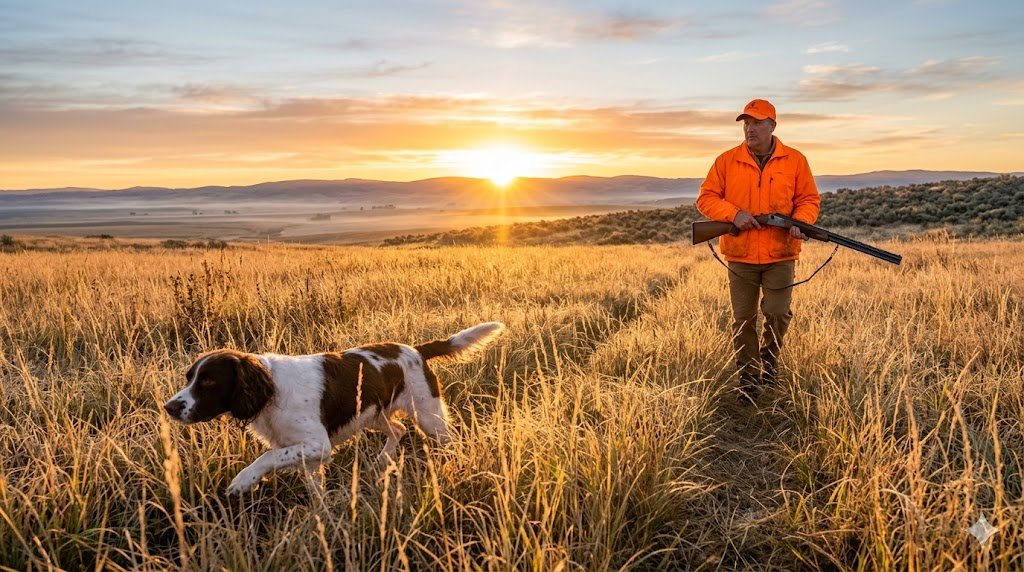
Pheasant hunting is the easiest upland bird pursuit to fall in love with. The birds are bright and dramatic when they flush, the country you hunt is gorgeous, and a dozen states still offer thousands of acres of accessible public land. South Dakota alone draws hunters from every continental state every fall. This guide covers what a brand-new hunter actually needs - the gun, the gear, the public land options, and the truth about whether you need a dog before you can play the game.
The Gun: 12 or 20 Gauge
Most pheasant hunters use a 12-gauge pump or semi-auto with 26 to 28-inch barrels and an improved-cylinder or modified choke. A pump like a Remington 870 or Mossberg 500 runs $400 and lasts forever. Semi-autos like a Beretta A300 or Stoeger M3000 soak up recoil and run reliably in dirt. A Browning Citori or other over/under is the classic upland gun if you want one.
A 20-gauge with 3-inch shells is plenty of gun for pheasant out to 35 yards and weighs significantly less, which matters after 8 miles in CRP grass. Don’t fall for “20 gauge is for kids” - it kills pheasants dead all day long.
Shells and Chokes
Use 2¾ or 3-inch lead loads with #5 or #6 shot as your default early-season pheasant load. Late-season birds with heavier feathers benefit from #4 or #5 with more shot weight. Non-toxic regulations on federal Waterfowl Production Areas and some state lands require steel shot - bump up to #3 or #4 steel, and lengthen your choke to improved-modified to keep pattern density.
A modified or improved-modified choke handles most shots inside 35 yards. Skip the full choke unless you’re hunting late-season roosters at long range.
Boots and Clothing
You will walk. A lot. Quality upland boots are non-negotiable - leather uppers, lugged sole, ankle support, and waterproof Gore-Tex liner. Brands like Irish Setter, Danner, and Kenetrek dominate this category. Spend the money once.
For clothing, layer with a moisture-wicking base, a sturdy briar-resistant pant (Filson tin cloth, Bird’n Lite, Carhartt duck), and a blaze-orange upland vest with shell loops and a game pouch. Don’t forget eye protection - clear or amber shooting glasses protect against bird shot fragments and the surprising number of corn stalks aimed at your face.
Do You Need a Dog?
You don’t need a dog. You can absolutely kick up wild birds along field edges, draws, and walk-in cattail sloughs, and you’ll have a great time. But your success rate doubles or triples with a trained flushing or pointing dog. A dog finds dead birds you’d otherwise leave to coyotes, holds birds long enough for you to get within range, and turns the day from athletic suffering into a partnership.
For pheasants specifically, the proven choices are Labrador retrievers, English springer spaniels, German shorthaired pointers, and English setters. Spend a few seasons hunting before you commit to 12 years of dog ownership. If you don’t have a dog yet, hunt with friends who do - many serious houndsmen welcome a tag-along who tips well and helps with limits.
Public Land Hotspots
The classic pheasant states for public access are South Dakota (the king, with Game Production Areas and CREP), Iowa (Wildlife Management Areas and the Iowa Habitat and Access Program), Kansas (Walk-In Hunting Access), Nebraska (Open Fields and Waters), and Minnesota (Wildlife Management Areas and Walk-In Access).
Most states publish atlas maps showing every public parcel. Download the state’s free atlas app or PDF before you travel, and use onX Hunt or HuntStand to verify boundaries on the ground. Walk-In land in particular is private property leased for public hunting - respect the rules, close gates, park where indicated.
Tactics That Work
Hunt into the wind so dogs catch scent and ring-necked roosters flush in front of you, not behind. Work field edges, fence lines, and the corners where two cover types meet - pheasants love edges. Late-season birds bury in standing corn, switchgrass, and cattails; you have to walk them out by punching through, not skirting around.
Mid-morning and the final hour of daylight are the highest-percentage periods. Hens and roosters move to feed and roost, and the birds you find on a midday loaf are usually willing to flush within range.
FAQ
What’s the daily limit? Most pheasant states allow 3 roosters per day, often 9 in possession. Hens are always protected.
Do I need a separate stamp? Many states require a small-game license plus an upland or pheasant stamp. South Dakota nonresidents pay around $130 for a 10-day pheasant license.
When does season open? Most Plains states open the third or fourth Saturday of October and run through mid-January.
Can I hunt without an orange vest? Most states require blaze orange on the upper body and hat during pheasant season. Wear it whether required or not - it saves lives.
How many shells do I need? For a full day of hard walking, 20 shells is plenty. Bring 40 if you’re hunting public land where shots come fast.
Conclusion
Pheasant hunting is the upland gateway drug. A reliable shotgun, sturdy boots, an orange vest, and a public-land map will get you on roosters this season. Hunt the wind, hunt the edges, and respect the access - and you’ll be back every October for the rest of your life.
🛒 Recommended Gear on Amazon
- Upland hunting vest - browse current options and reviews on Amazon.
- Blaze orange hat - browse current options and reviews on Amazon.
- Shooting glasses - browse current options and reviews on Amazon.
As an Amazon Associate, we earn from qualifying purchases - at no extra cost to you. This helps us keep producing free, in-depth guides.