Squirrel Hunting with a .22
Squirrel hunting with a .22 rifle is cheap and builds real marksmanship. Set up the rifle right, find the load it shoots best, and keep shots inside the range you have practiced.
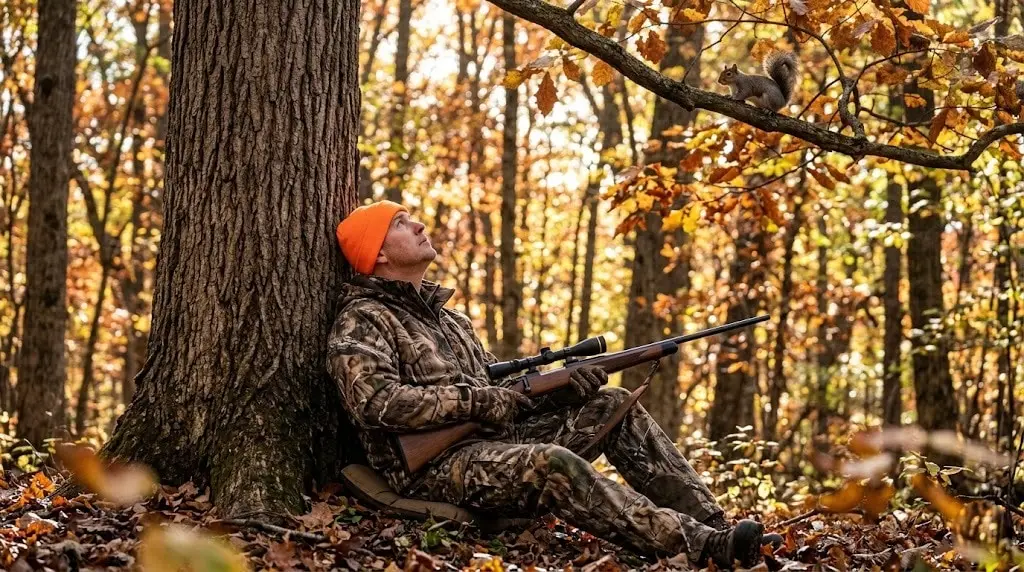
A .22 LR rifle, a box of subsonic ammo, and a fall hardwood ridge make for some of the cheapest and most rewarding hunting there is. Squirrel hunting builds rifle marksmanship in a way no static target can match - every shot is at an unpredictable angle, every miss costs you the animal, and every clean head shot is a tiny celebration. This guide covers rifle setup, ammo selection, effective range, scope choice, and the field tactics that put squirrels on the table.
Why a .22 LR Over a Shotgun
Shotguns kill squirrels efficiently but they ruin meat with shot, scatter game on missed shots, and don’t teach precision shooting. A scoped .22 LR rifle requires you to wait for clean shots, place each round precisely, and recover every animal cleanly. A squirrel season is real shooting practice.
The downside: harder learning curve, fewer animals per outing while you adjust, requires patience for stationary squirrels.
Rifle Choice
Rimfire rifles run from plain plinkers to precision target rifles, and any accurate .22 will do. We have not tested rifles against one another, so we name no models. The types:
- Semi-automatics, box-fed or tube-fed
- Bolt actions, the common hunting choice
- Target-grade bolt actions, built for accuracy first
For squirrel work, a bolt-action .22 with a 16-22 inch barrel and a threaded muzzle (for a suppressor) is the ideal. Bolt actions force discipline and concentrate on precision shots; semis encourage rushed follow-ups.
Optics
The most-overlooked equipment choice. Squirrels are small targets at variable distances, often in dappled light high in trees. Use a scope.
Magnification: A 4-12x or 3-9x variable in the 32-40mm objective range is ideal. You’ll typically shoot at 6-9x. Fixed 4x is fine for younger hunters or close timber.
Reticle: A fine duplex or simple BDC works. Avoid heavy crosshairs that obscure small targets.
Parallax: Rimfire scopes should be adjustable parallax or set for 50 yards. A centerfire scope with parallax set for 100 yards can introduce aiming error at squirrel ranges.
Ammo Selection
The .22 LR cartridge offers a huge variety. For squirrels specifically:
Subsonic loads are the quietest, with a more curved trajectory - for close shots.
High-velocity hollow points are louder and shoot flatter.
Standard-velocity and match loads are made for accuracy; most have solid bullets.
Rimfire rifles are individual about ammunition. Buy three or four kinds, shoot groups from a rest at 25 and 50 yards, and hunt with whichever your rifle shoots best. That test tells you more than any recommendation, ours included.
Suppressors and Squirrel Hunting
A suppressed .22 is far quieter, which spares your hearing and disturbs the woods less. Suppressors are regulated by federal law and by the states, and whether you may hunt with one is a state matter. The federal rules changed in 2026, so do not rely on older articles: read the ATF’s current guidance and your state’s hunting regulations before you buy.
Effective Range
A rough guide to range, to check against your own shooting:
- 15-25 yards: Almost any .22 will hit a head-sized target consistently. Beginners should limit shots here.
- 25-40 yards: Skilled shooters with quality rifle/scope put rounds on heads consistently.
- 40-60 yards: Field positions and wind drift become limiting factors; advanced shooters only.
- 60+ yards: Possible but ethics question. Often you should close distance instead.
How much a .22 LR bullet drops between 25 and 75 yards depends on the load, so shoot yours on paper at each distance and write the figures down. A zero and holdover calculator makes those small-target corrections easy to memorize.
Know what is beyond the squirrel. A shot at a squirrel in a tree is a shot into the sky, and hunter education material is blunt about what that means: a .22-caliber bullet can travel over 1½ miles; if you cannot see what lies beyond the target, do not take the shot. Wait until the squirrel is against a trunk or a thick limb, or on the ground with earth behind it. Where that is rarely possible, a shotgun is the safer tool.
Field Tactics
Sit and wait: Find a feed tree (hickory, oak, beech, walnut), sit downwind 25-40 yards away, stay still. Squirrels return once the woods settle. This is the steadiest method.
Slow stalk: Walk 30 seconds, stop and listen 2 minutes, scan tree canopies methodically. Squirrels betray themselves by movement, cuttings dropping from branches, and the distinctive “thump” of acorns being dropped.
Two-person around-the-tree: Two hunters circle a tree from opposite sides. The squirrel flushes to one or the other.
Use the wind: Squirrels see motion easily but rely less on scent than deer. Sound matters most - quiet boots, no metal-on-metal noise.
Best Times and Conditions
Cool, dry mornings are the classic time. Squirrels feed in the first hours of daylight, rest at midday, and feed again before dark.
Wet, windy days suppress squirrel activity. Stay home or hunt the warmest, calmest pockets you can find.
Late summer through autumn is prime - mast crops are dropping and squirrels are stockpiling food, though full foliage still screens the canopy early on. After heavy frost knocks the leaves down, visibility improves and bushy-tail hunts become almost too easy.
Field Care
Squirrels skin best when fresh and slightly chilled. Two skinning methods:
Tube method: Cut a small slit across the back, insert two fingers and pull the hide off both directions like removing socks.
Slit-and-strip: Slit down the belly, peel hide off in two pieces.
Quarter as you would small game, store cool, and process within a day or two. Squirrel meat freezes well; older squirrels benefit from braising over fast grilling.
FAQ
Is .22 LR lethal on squirrels? Yes. A head shot kills cleanly; a body shot also kills but spoils meat.
Can I use a .17 HMR for squirrels? Yes, but the .17’s high velocity destroys edible meat on body shots. Stick to head shots only with the .17.
Should I use an air rifle? A good pre-charged .22 air rifle is a serious squirrel hunting tool - quiet and accurate. States regulate air guns for hunting differently, so check yours.
What about gray vs fox squirrel? Same techniques, same ammo. Fox squirrels are the bigger of the two; the gray squirrel profile and theirs cover where each lives.
Is squirrel meat good? Yes - flavor like dark-meat chicken with a slight nuttiness. Excellent in dumplings, stews, fried, or braised.
Conclusion
A scoped .22 LR rifle with the load it shoots best is a fine small-game tool. Sit by feed trees, take only shots with a safe backstop inside the range you have practiced, and skin them fresh. You will improve as a shooter, and your freezer will fill with an underrated wild meat.
Recommended Gear on Amazon
- Rimfire scope - browse current options and reviews on Amazon.
- Shooting sticks - browse current options and reviews on Amazon.
- Small game hunting vest - browse current options and reviews on Amazon.
As an Amazon Associate, we earn from qualifying purchases - at no extra cost to you. This helps us keep producing free, in-depth guides.