Tree Stand Safety Harness
Tree stand falls kill or paralyze more hunters than firearms accidents. A harness, a lifeline, and a 5-minute setup eliminate almost all of that risk…
Tree stand falls kill or paralyze more hunters every year than firearms accidents. Industry estimates suggest one in three regular tree stand hunters will fall at some point in their hunting career. Almost every one of those falls is survivable - usually trivial - with a quality harness and a continuous lifeline. The 5-minute investment in a proper setup is the single most important safety decision a treestand hunter can make. This guide covers harness selection, how to use a lifeline, what to do if you do fall, and how to teach kids and new hunters from day one. If you are still deciding whether to hunt elevated at all, weigh it against the alternative in our tree stand versus ground blind comparison.
Why Falls Happen
The statistics are clear about when falls occur:
- 86% of falls happen while climbing in or out of a stand, not while in it
- The next most common time is during transitions - buckling in, unbuckling, setting up the stand
- Mechanical failure of new commercial stands is rare; failure of old straps, rotten tree limbs, and ice on platforms is common
This means a harness worn only while seated does nearly nothing. You must be connected to the tree from the moment your feet leave the ground until you’re back on solid earth.
Full-Body Harness Choice
A safe tree stand harness has four key characteristics:
- Full body - leg straps, chest strap, shoulder straps; NOT a chest-only or waist-only belt
- Single attachment point at the upper back to keep you upright after a fall
- Quick-adjust buckles that work in cold weather with gloves
- TMA-certified (Tree Stand Manufacturers Association) - meets industry safety standards
Top harness options ($60-250):
- Hunter Safety System Pro Series - industry standard, includes lineman’s belt
- Muddy Safeguard / Crossover - affordable, comfortable
- Summit Pro Safety Belt System - quality, integrated lineman
- Tree Spider Speed Harness - premium, comfortable enough for all-day wear
Avoid waist-only belts and chest harnesses - they cause suspension trauma quickly and many users black out before they can rescue themselves.
The Lifeline System
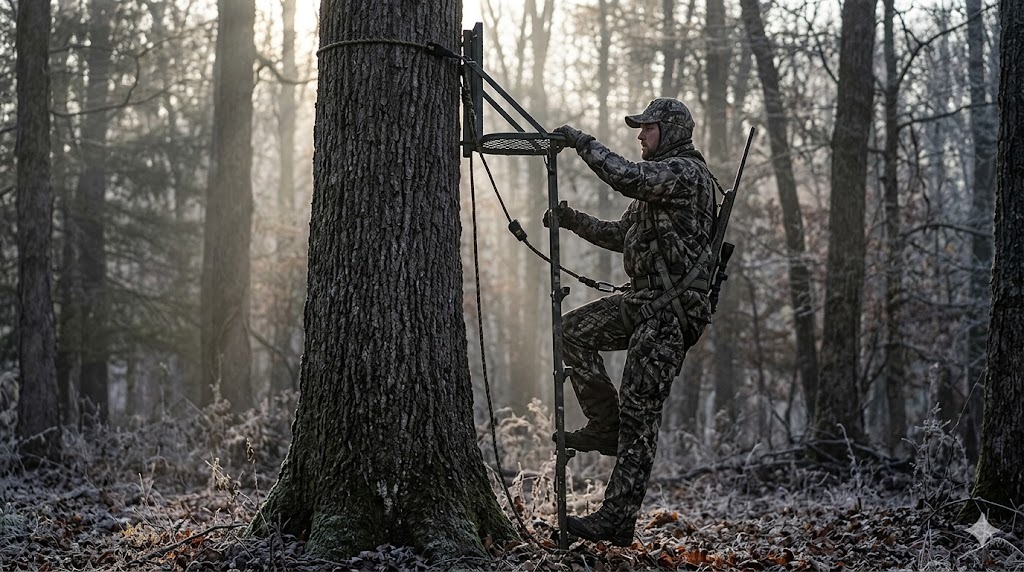
A harness alone doesn’t help during the climb. The lifeline is a rope strung from the ground to above the stand. You attach to it with a Prusik knot or commercial slider that moves up and down as you climb.
Setup:
- Anchor a strap around the tree above the stand (8-10 feet above platform)
- Run the rope down to the ground with a stopper knot at the bottom
- Use a Prusik knot or commercial ascender to attach the harness tether to the rope
- The slider locks under load but slides freely when you move
Buy a commercial lifeline ($30-60) like Hunter Safety System Lifeline, Summit Lifeline, or Muddy Safety Line. Don’t try to MacGyver one from random rope.
With the lifeline installed, you are continuously protected from the moment your feet leave the ground until you reach the platform - and the same in reverse.
The Lineman’s Rope
For setting up new stands or moving existing ones, a lineman’s rope (often included with quality harnesses) wraps around the tree and lets you work hands-free without falling. Attach lineman rope to harness D-rings, loop around tree, climb supported.
What to Do If You Fall
Even with a harness and lifeline, you can fall and be left hanging. Here’s the survival sequence:
1. Don’t panic. A modern harness absorbs the shock; you’ll be uncomfortable but typically uninjured initially.
2. Get weight off the leg straps within minutes. Suspension trauma - blood pooling in legs, returning poorly to the heart - can cause unconsciousness within 10-15 minutes and death within 30 minutes for some people.
3. Reach the stand or tree. If the stand is below you, lower yourself onto it. If above, climb back up via stand straps or branch.
4. Use a Suspension Relief Strap (SRS). This is a short loop you keep clipped to your harness. In a fall, you step into the loop, raising your legs and relieving blood flow constriction. Costs $10. Carry it always.
5. Self-rescue. If you can climb back to the stand, do so. If not, descend using your lifeline (release the slider carefully) to the ground.
6. Call for help. Carry a cell phone and a backup whistle in a pocket you can reach while suspended.
Tell Someone Where You Are
Before any hunt, tell someone:
- Exact stand location (GPS coordinates or specific named site)
- Expected return time
- What to do if you don’t return - start checking, then call 911
A hunter suspended in a harness 6 miles from the trailhead with a dead phone needs someone who knows where to look. Plan that conversation before you leave.
Climber Stand Specific Risks
Climbing tree stands (Summit Viper, API Grand Slam) carry extra risk because you’re moving up the tree, transferring weight repeatedly. Specific rules:
- Always tether to the upper section before standing up to move it
- Test bite into the tree with each climbing step
- Stay in continuous contact with the tree via lineman’s rope as you climb
Many climber fatalities involve hunters who took a “quick” step without re-tethering.
Hang-On Stand and Ladder Stand Specifics
Hang-on stands installed via climbing sticks are the most common stand type for serious whitetail deer hunters. Risks:
- Climbing stick attachments failing under load
- Ratchet straps degraded by UV exposure
- Tree growth distorting straps over years
Install a lifeline at setup, replace straps every 2-3 years, and check before every season. Old straps fail without warning.
Ladder stands are safer overall but still require harnesses - falls from 12 feet kill regardless of stand type.
Children and New Hunters
Kids and adults new to elevated stands must use a harness and lifeline from day one - no exceptions. Make it part of the routine, like a seatbelt in a car.
For very young hunters, two-person ladder stands with safety rails are the appropriate first stands. Climbers and hang-ons can wait until they’re physically and emotionally ready.
Pre-Season Stand Inspection
Before every season, inspect every stand:
- Cables, chains, welds - look for cracks, rust, frayed strands
- Straps - UV-degraded, sun-bleached, brittle
- Platforms - rotted wood, loose nuts/bolts
- Trees - any rot, dead limbs above the stand, lean or split
Replace anything questionable. A new ratchet strap costs $10 and could save your life.
FAQ
How long can you survive suspended in a harness? 20-40 minutes safely; longer with a relief strap. Beyond that, suspension trauma can be fatal even after rescue.
Are climbing sticks safe? Quality sticks (Lone Wolf, XOP, Hawk) installed properly are very safe. Connect with a lineman’s rope while installing.
Do I need a harness for ground blinds? No - but always wear a blaze orange vest for visibility from other hunters during gun season.
Can I share a harness? Each harness should be sized to the user. Adjustments take 30 seconds; don’t skip them.
What if my harness gets wet? Modern harnesses are weather-resistant. Air dry after each season. Replace any harness showing fraying.
Conclusion
A quality harness, lifeline, and suspension relief strap together cost about $150 and weigh about a pound. They eliminate almost every cause of tree stand death. Buy them, learn to use them properly, and use them every single time you hunt elevated - including when you’re “just climbing to check the stand.” The hunters who don’t make it home from the woods almost always weren’t connected to the tree when they fell.
🛒 Recommended Gear on Amazon
- Tree stand safety harnesses - browse current options and reviews on Amazon.
- Tree stand lifelines - browse current options and reviews on Amazon.
- Suspension relief strap - browse current options and reviews on Amazon.
As an Amazon Associate, we earn from qualifying purchases - at no extra cost to you. This helps us keep producing free, in-depth guides.