Black-tailed Jackrabbit
The black-tailed jackrabbit is not actually a rabbit but a hare - a big, long-eared, open-country runner built for speed across the arid West.
🗓️ Last reviewed: July 2026
Overview
The black-tailed jackrabbit is not actually a rabbit but a hare - a big, long-eared, open-country runner built for speed across the arid West. With its enormous ears, powerful hind legs, and explosive bursts of speed, it offers fast, challenging shooting for hunters who like to cover ground and shoot on the move. It is most often pursued by spot-and-stalk hunting with a rimfire rifle, or taken as bycatch while predator calling. Many hunters treat the jackrabbit as varmint or predator-call quarry rather than table fare, and there is an important health caution - tularemia - to respect when handling any hare.
Identification & Appearance
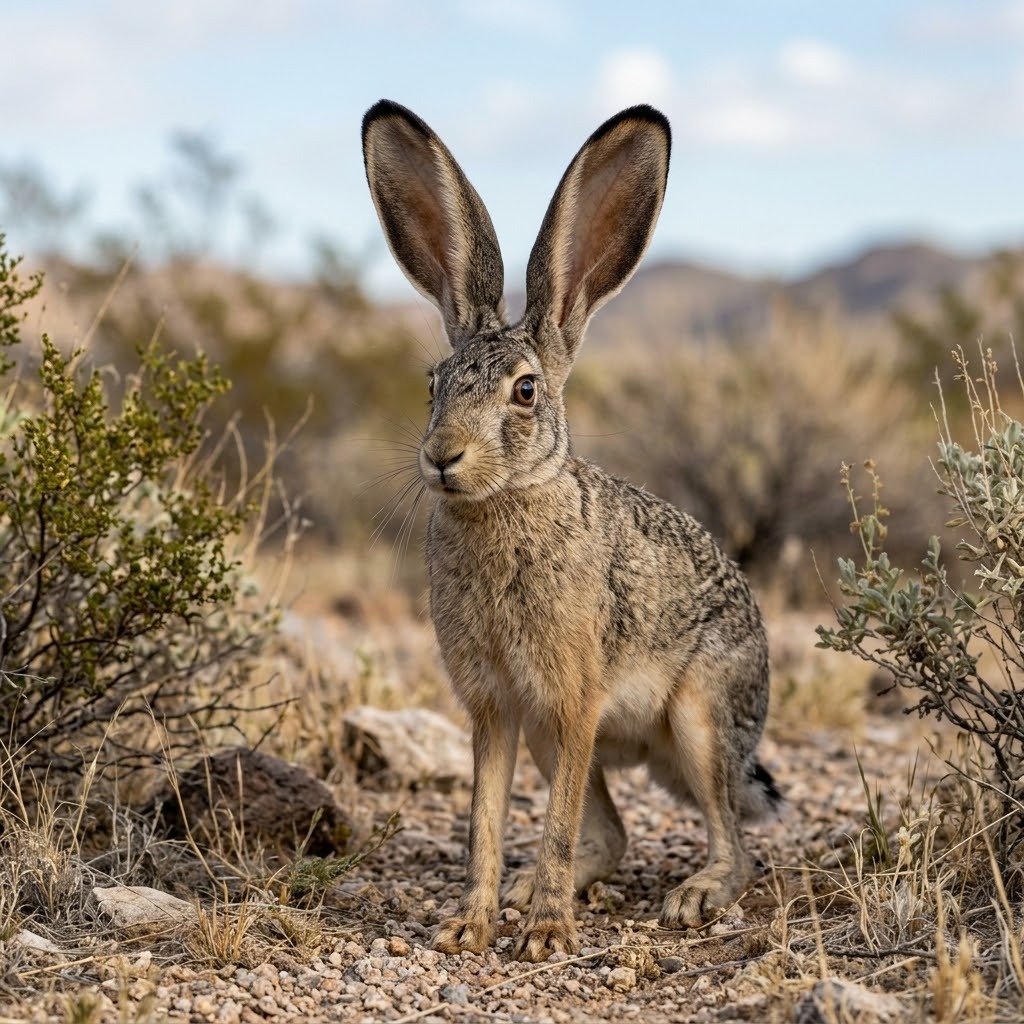
The black-tailed jackrabbit is a large hare, noticeably bigger than a cottontail, with very long ears tipped in black, long powerful hind legs, and a grayish-brown, sandy body that blends into desert and grassland. The key field mark is the black stripe running down the top of the tail and onto the rump, which gives the species its name. The eyes are large and set high for a wide field of view. When it runs it covers ground in long, low bounds, sometimes leaping high to look around, and can reach impressive speed over open terrain. Its size and black-topped tail separate it clearly from smaller cottontails.
Range & Habitat (US)
The black-tailed jackrabbit ranges widely across the western and southwestern United States, from the Great Plains through the Great Basin, deserts, and into parts of the Pacific coast. It favors open country - desert flats, sagebrush, grasslands, agricultural edges, and sparse brush - where its speed and eyesight give it the advantage. It does not dig burrows; instead it rests in a shallow scrape or "form" in the shade of a bush or clump of grass during the heat of the day. Open landscapes with scattered cover for hiding and feeding are classic jackrabbit country.
Behavior & Sign
Jackrabbits are most active at dawn, dusk, and night, spending the hot midday hidden in a form under brush. They rely on keen eyesight and blazing speed to escape, often freezing until nearly stepped on, then exploding away in a zigzag run. They feed on grasses, forbs, sagebrush, and crops. Sign includes pea-sized round droppings on feeding grounds, clipped vegetation, large hind-foot tracks in dust, and worn forms - shallow oval depressions - beneath sheltering bushes. Spotting a resting jack in the shade of a bush is a common way to locate them.
Hunting Seasons & Timing
In many western states the black-tailed jackrabbit is classified as a nongame or unprotected species, often huntable year-round with liberal or no bag limits, though regulations vary and some areas apply seasons. The most productive hunting is in the cooler months and the cooler hours of dawn and dusk, when jacks are active and feeding in the open. Cool-season hunting also reduces disease risk and keeps meat, if kept, in better condition. Always confirm the current classification, any seasons, and local rules before hunting.
Hunting Methods
Two approaches dominate. The first is spot-and-stalk with a rimfire rifle: hunters walk or glass open country, spot jacks resting in forms or feeding, and take a careful shot, often at a stationary target before the animal bolts. A .22 rimfire or .17-caliber rifle is a common choice for precise, longer shots, while shotguns suit fast running shots in brush. The second is bycatch while predator calling - jackrabbits sometimes come to predator or distress calls, and hunters after coyotes or foxes may take them opportunistically. Walking up hidden jacks and shooting the fast running flush is also a classic, sporting way to hunt them.
Where to Find Them - Reading the Terrain
Read the open ground and the shade. During the day, look for jacks tucked into forms in the shade of sagebrush, greasewood, cactus, or grass clumps, on the sheltered side out of wind and sun. At dawn and dusk, glass feeding areas - grassy flats, crop edges, and green growth after rain. Edges between cover and open feeding ground, dirt roads, and washes concentrate movement, and areas with more forage or moisture hold more jacks. Slow, deliberate glassing of open terrain usually turns up resting animals others walk past.
Gear & Optics Needed
Jackrabbit hunting is light and mobile. A .22 rimfire or .17-caliber rifle with a quality scope suits precise spot-and-stalk shots, while a shotgun handles fast flushes in brush. Good binoculars are the most valuable tool for picking out motionless jacks in their forms across open ground. Comfortable boots and clothing for covering ground and desert terrain, sun protection, and plenty of water are essential in arid country. Because of tularemia risk, disposable or rubber gloves for handling harvested animals belong in the kit. A predator call can turn a jackrabbit walk into a dual-purpose hunt.
Shot Placement & Field-Dressing / Cleaning
Jackrabbits are taken with a rimfire rifle or shotgun, aiming for a clean head or vital chest shot on a stationary animal, or a well-led shot on a runner with a shotgun. Because of tularemia, a bacterial disease that hares can carry, always wear gloves when field-dressing and cleaning, avoid handling any animal that seemed sick or moved abnormally, and wash thoroughly afterward. If keeping the meat, dress the animal promptly, cool it quickly, and cook it thoroughly - well done, never rare - to kill any pathogens. Many hunters do not keep jackrabbit meat and instead treat the animal as varmint or predator-call quarry.
Meat & Eating Quality
Black-tailed jackrabbit meat is dark, very lean, and strong-flavored, and far tougher than tender cottontail. Older jacks are stringy and best suited to long, slow cooking such as braising, stewing, or grinding rather than quick frying. Some hunters eat them, but many regard the jackrabbit as varmint rather than table fare and do not keep the meat. If you do eat one, the tularemia caution is paramount: wear gloves when cleaning and cook the meat thoroughly to well done. Cooler-season animals in good condition make the best eating.
Common Mistakes
The most serious mistake is careless handling that ignores tularemia risk - always glove up, avoid sick-acting animals, and cook any kept meat well done. On the hunting side, hunters often walk right past jacks frozen in their forms because they scan too fast; slow, careful glassing finds hidden animals. Trying precise rifle shots on already-running jacks leads to misses and wounding - take the standing shot when you can, or use a shotgun for runners. Underestimating desert conditions, from heat to water needs, is another pitfall. Finally, assuming rules are the same everywhere ignores the varying state classifications.
Regulations & Conservation Note
Regulations for jackrabbits vary widely - many western states treat them as nongame or unprotected with liberal or no limits, while others apply seasons, so always confirm the local classification before hunting. Even where limits are generous, ethical hunters make clean shots, avoid waste where meat is used, and respect private-land access and habitat. Jackrabbit numbers naturally rise and fall in multi-year cycles with food and predators, and they are an important prey species for raptors, coyotes, and others. Responsible, lawful hunting fits within these natural cycles and the broader desert ecosystem.
Best Suited For
Jackrabbit hunting suits active hunters who enjoy covering open country, glassing, and fast, challenging shooting - whether with a precise rimfire on resting animals or a shotgun on runners. It is an excellent way to practice spot-and-stalk skills, marksmanship, and predator calling, often with year-round opportunity in the West. It is best for hunters comfortable treating the jackrabbit primarily as varmint or predator-call quarry, and mindful of the tularemia handling caution, rather than those seeking prime table meat.
FAQ
Is a jackrabbit really a rabbit? No - it is a hare. Hares like the black-tailed jackrabbit are larger, have longer ears and legs, are born furred and active, and rest in surface forms rather than digging burrows like true rabbits.
Is it safe to eat a black-tailed jackrabbit? It can be, but hares carry a risk of tularemia. Wear gloves when cleaning, avoid animals that seemed sick, and cook the meat thoroughly to well done. Many hunters treat jacks as varmint and do not keep the meat.
What is the best rifle for jackrabbits? A .22 rimfire or .17-caliber rifle with a good scope suits precise spot-and-stalk shots on resting jacks, while a shotgun is better for fast running shots in brush.
When are jackrabbits most active? At dawn, dusk, and night. During hot daytime hours they hide in shaded forms under brush, so cooler morning and evening light is the best time to find them moving.
Do I need a license to hunt them? Usually yes, and rules vary widely - many western states treat jackrabbits as nongame or unprotected, while others apply seasons. Always confirm the local classification and license requirements first.