Woodchuck
The woodchuck, also known as the groundhog, is the classic North American varmint - a big burrowing rodent that has taught more shooters the craft of long-range field rifle work than any other animal.
🗓️ Last reviewed: July 2026
Overview
The woodchuck, also known as the groundhog, is the classic North American varmint - a big burrowing rodent that has taught more shooters the craft of long-range field rifle work than any other animal. To the farmer whose hayfields are pocked with dangerous burrow holes it is a genuine pest, and the hunter who thins them out is a welcome guest. To the rifleman, a chuck perched at the mouth of its den across a green pasture is a small, still, demanding target that rewards a flat-shooting rifle, good glass, and a steady position. Groundhog hunting is a warm-weather, marksmanship-driven sport and one of the best ways to build the fundamentals of precision shooting.
Identification & Appearance
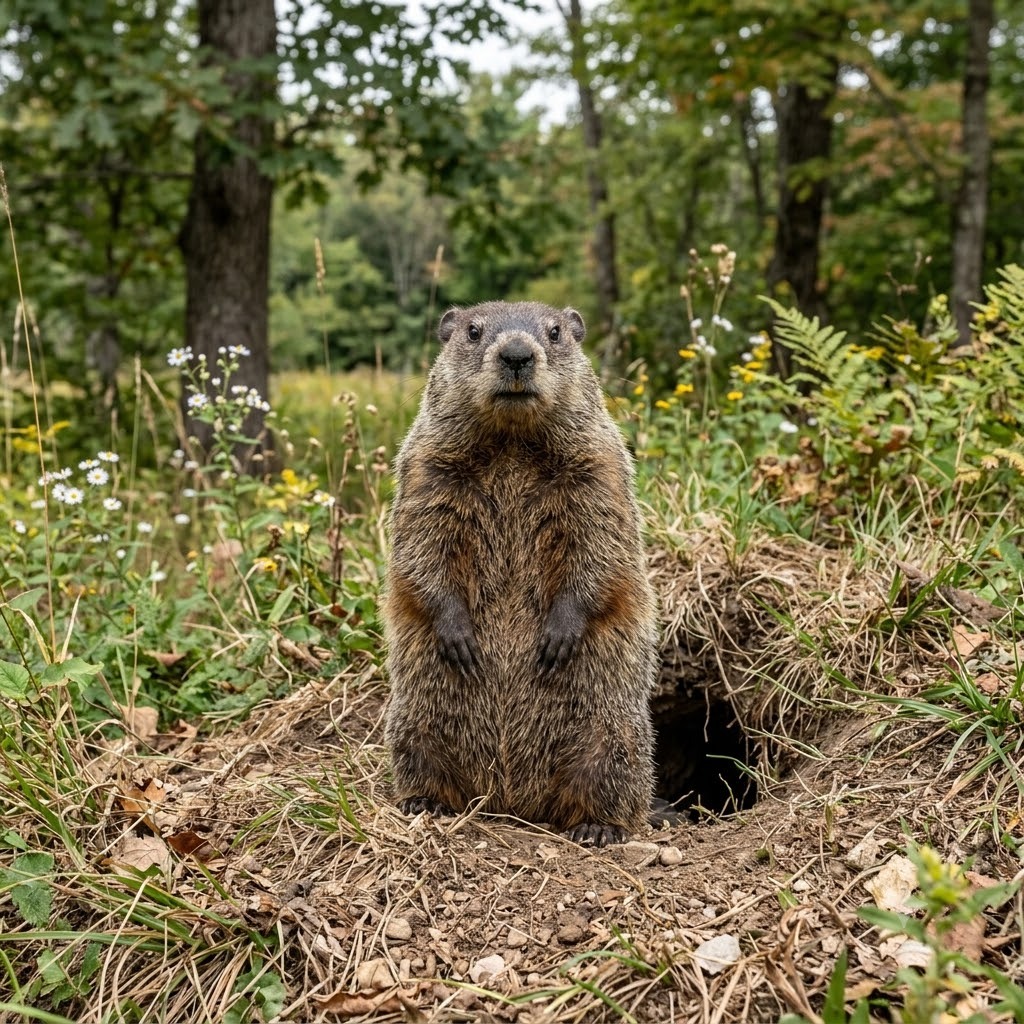
The woodchuck is a stocky, heavy-bodied marmot, typically 5-13 pounds and 16-27 inches long including the short bushy tail. Its fur is grizzled brown to tan with a frosted look, with darker feet and a blunt, rounded face, and powerful legs and long claws mark it as a serious digger. Standing upright on its haunches to survey for danger - the "picket pin" posture - is its signature pose and often the first thing a hunter spots across a field. Its low, thick build distinguishes it from the ground squirrels and prairie dogs of the West. Animals are heaviest in late summer before hibernation.
Range & Habitat (US)
The woodchuck ranges across the eastern and central United States, throughout the Northeast, the Midwest, the Appalachians, and into the northern Plains, extending far up into Canada and Alaska. It is an animal of edges and open ground: hayfields, pastures, crop margins, fencerows, roadside banks, and the borders of woodlots. Groundhogs need well-drained soil for their burrow systems and open, grassy feeding areas nearby. The classic landscape is the rolling agricultural patchwork of green fields, hedgerows, and scattered woods - exactly where a rifleman finds long, clear shooting lanes.
Behavior & Sign
Woodchucks are diurnal, most visible in the cool of morning and again in late afternoon. They are true hibernators, denning up through the cold months and emerging in spring, which frames the hunting season. Groundhogs feed heavily on grasses, clover, alfalfa, and garden crops, rarely straying far from a burrow they can bolt into at any alarm. The most obvious sign is the burrow itself: a large entrance with a mound of excavated dirt, plus hidden back doors and worn feeding paths radiating through the grass. A chuck sitting upright at its hole, or the flash of one bolting underground, is the classic field observation.
Hunting Seasons & Timing
Groundhogs are typically classified as unprotected nuisance or nongame animals, and many states allow year-round hunting with no bag limit, though rules vary and some require a license. The practical season runs spring through late summer, after the animals emerge from hibernation and while crops and hayfields are green. Peak activity, and the best shooting, comes in the cooler hours of morning and evening, especially on warm, calm, sunny days when chucks feed and bask. Because groundhogs are treated so differently from state to state, always confirm your local classification, license needs, seasons, and any restrictions before heading afield.
Hunting Methods
Groundhog hunting is fundamentally long-range varmint shooting with a rifle. The core method is to glass open fields from an elevated vantage, spot a chuck feeding or sitting at its burrow, range it, build a stable position, and make a precise shot - often at 100 to 300 yards or more. Shots are taken prone off a bipod, off shooting sticks, or across a truck hood or fence rail. Patience and glassing skill matter as much as trigger control, and some hunters stalk closer along hedgerows for a steadier shot. Because a groundhog is a small target that vanishes at the first alarm, first-round accuracy from a solid rest is everything.
Where to Find Them - Reading the Terrain
Read the farm country. Groundhogs live where open grass meets diggable, well-drained soil, so scan the margins of hayfields, pastures, and crop fields, along fencerows, hedgerows, ditch banks, and the brushy corners where fields meet woods. Look for the tell-tale burrow mounds of fresh, light-colored dirt and the worn feeding paths leading from them. Sunny south-facing banks and rock piles are favored dens, and elevated ground with a long view across green fields is the ideal shooting position. Ask farmers where the holes are: they know which fields are riddled and will often point you straight to the problem animals.
Gear & Optics Needed
This is an optics-and-rifle game. A flat-shooting varmint rifle - anything from a .22 rimfire for close work up to fast centerfire rounds for long range - topped with a quality variable scope is the heart of the kit. A laser rangefinder is essential for the longer shots, and good binoculars or a spotting scope let you find distant chucks and read the wind. A bipod, shooting sticks, or a shooting bag gives the stable rest precise shooting demands. Add ear and eye protection and comfortable clothing for long, sunny hours of glassing from a field edge.
Shot Placement & Field-Dressing / Cleaning
A groundhog is a small vital target, and the goal is a clean, instant kill with a precise shot to the head or the chest just behind the front leg. Accurate cartridge selection and a confirmed rifle zero at the expected distance are the keys to ethical shooting, so practice at realistic ranges first. Because most groundhogs are shot for pest control rather than food, many hunters simply confirm the animal is down and dispatched, then dispose of carcasses responsibly and away from livestock or pets. If it is to be eaten, it is skinned and gutted promptly, the fat trimmed, and the meat cooled quickly and kept clean.
Meat & Eating Quality
Groundhog is rarely eaten today, and honestly most hunters take them strictly as pests and never consider the table. That said, the meat is edible and was a genuine food source in earlier generations of rural America. It is dark, lean, and somewhat strong, best from young animals taken in spring before they fatten. The traditional treatment is to trim away the scent glands under the forelegs and the heavy fat, then parboil or brine the meat before slow-cooking, braising, or stewing. Cooked thoroughly and handled well it is respectable fare, but for most modern hunters the appeal is the marksmanship, not the meal.
Common Mistakes
The most common mistake is misjudging distance and wind - a groundhog is small, and a shot off by inches becomes a miss or a wounded animal, so range every shot and read the breeze. Shooting from an unstable position instead of a solid rest ruins accuracy at the ranges this game demands. Beginners also skip confirming their rifle's zero at realistic distances, then blame the animal for their misses. Ignoring what lies beyond the target is dangerous in open farm country, so always know your backstop. Finally, assuming groundhogs are legal to shoot anywhere leads to trouble; classification and license rules vary, so confirm them first.
Regulations & Conservation Note
Woodchuck populations are abundant and stable, and in farm country they are often managed as pests because their burrows damage machinery and injure livestock. Even so, regulations apply. Because groundhogs are classified differently across states - unprotected nuisance in some, nongame requiring a license in others - confirm your state's classification, license requirements, and any restrictions. Safety is paramount in the open, populated terrain where chucks live: identify a safe backstop, know what lies beyond the target, and never shoot toward buildings, roads, or livestock. Get landowner permission, respect property lines, and dispatch every animal cleanly.
Best Suited For
Groundhog hunting is ideal for the rifleman who wants to sharpen precision skills - range estimation, wind reading, position building, and first-round accuracy - in a low-pressure, high-volume setting. It suits shooters who enjoy a patient, glassing-and-shooting style over a warm summer field rather than a stalk or a call, and it is a natural fit for hunters who want to help farmers with pest control and earn access to more land. For anyone learning long-range field marksmanship, few pursuits offer better practice.
FAQ
What is the best cartridge for groundhogs? It depends on range. A .22 rimfire is fine inside 75 yards, while a flat-shooting centerfire varmint cartridge is the standard choice for the longer 150 to 300-yard shooting groundhog hunting often demands. Match the cartridge to the distances you expect.
Do I need a license to hunt woodchucks? It varies by state. Many states treat the groundhog as an unprotected nuisance with year-round hunting, but others classify it as nongame and require a license. Always confirm your local rules before heading out.
When is the best time to hunt them? Spring through late summer, after they emerge from hibernation and while fields are green. The cooler hours of morning and evening on calm, sunny days are most productive, since that is when chucks feed and bask.
Can you eat groundhog? Yes, though few do today. The meat is edible and was traditional rural fare, best from young spring animals with the fat and scent glands trimmed and the meat parboiled before slow-cooking. Cook it thoroughly.
Why do farmers welcome groundhog hunters? Groundhog burrows create dangerous holes that damage machinery and can lame livestock, and the animals eat crops. A hunter who removes problem chucks provides real pest control, which is why many farmers grant access.