Sora
The sora is one of the most overlooked game birds in North America, and that is exactly why it deserves a closer look.
🗓️ Last reviewed: June 2026
Overview
The sora is one of the most overlooked game birds in North America, and that is exactly why it deserves a closer look. This small, secretive rail of freshwater and tidal marshes supports a classic September season that almost no one hunts, so the marshes are quiet and the birds are plentiful. Where most early-season action means crowded duck flats, sora hunting is a slow, deliberate game of pushing a small boat through stands of wild rice on a high tide and shooting birds that flush weakly underfoot. It is low on gear, low on competition, and surprisingly good on the table. For a hunter looking for something different and uncrowded, the sora is a quiet gem hiding in plain sight.
Identification & Appearance
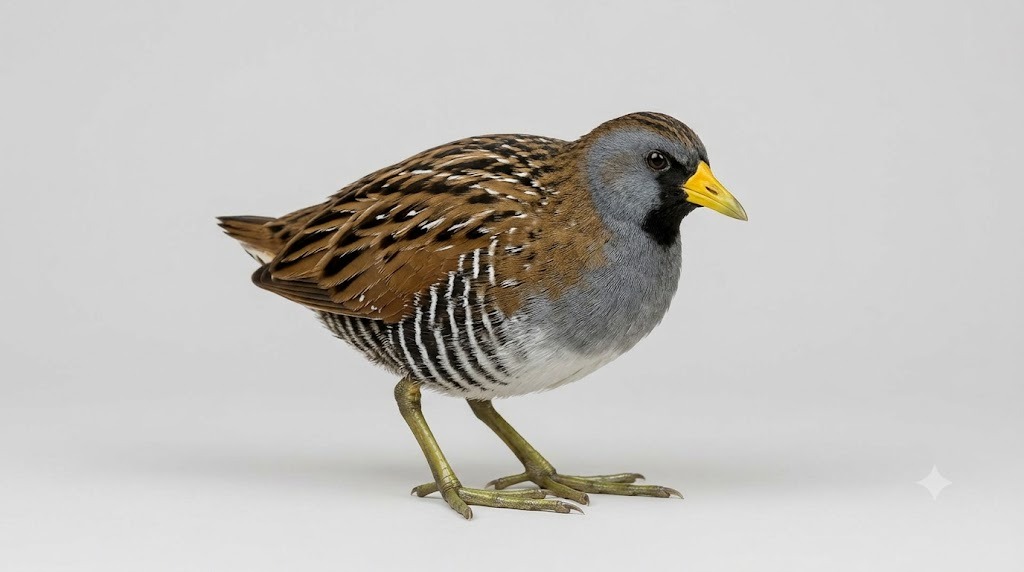
The sora is a plump, chicken-like marsh bird about the size of a small dove, with a short, stubby, bright yellow bill that sets it apart from every other rail. An adult shows a slate-gray face and breast, a black mask and throat patch around the base of the bill, a warm brown back streaked with black and white, and barred flanks. The legs are long and greenish-yellow, and the body is famously thin from side to side - the source of the old phrase "thin as a rail" - which lets the bird slip between marsh stems. In flight the sora is weak and fluttery, dangling its legs and dropping quickly back into cover after a short distance. Its frequent call, a clear descending whinny and a sharp rising "ker-wee," often reveals birds you would never otherwise see.
Range & Habitat (US)
The sora is the most widespread and abundant rail in North America. It breeds across much of the northern United States and Canada in freshwater marshes thick with cattails, sedges, and other emergent vegetation. During fall migration it concentrates in shallow freshwater and brackish marshes, with the famous gatherings occurring in stands of wild rice and in coastal tidal marshes along the Atlantic and Gulf coasts. Birds funnel into these food-rich marshes to fatten before pushing south, and the sora winters from the southern United States through Mexico, the Caribbean, and into northern South America. Wherever there is dense, shallow marsh vegetation over soft mud and a few inches of water, soras are likely passing through in September.
Behavior & Sign
Soras are secretive, ground-loving birds that spend almost all their time walking and skulking through dense marsh cover rather than flying. They feed on the seeds of wild rice, smartweed, and other marsh plants, along with snails and aquatic insects, picking through the mud and shallow water. Pressed by a boat or a dog, a sora would rather run and hide than flush, and when it finally does flush it flies only a short, weak distance before dropping back into the grass. They are far more often heard than seen: the descending whinny and the rising "ker-wee" call carry across a marsh and betray birds hidden in the stems. Sign includes muddy tracks and feeding probe marks along the edges of openings, and the calls themselves are the surest indication that a marsh holds birds.
Hunting Seasons & Timing
Rail seasons, including the season for sora, open early - typically in September - under the federal migratory bird framework, well before most duck seasons begin. This early timing matches the peak of sora migration, when birds pile into wild rice and tidal marshes to feed. The single most important factor in timing a sora hunt is the tide and water level: in tidal marshes the hunt is built around a high tide that floats a boat up into the rice and forces birds toward the thinning cover. Hunters watch the tide tables and plan to be poling through the marsh on the push of a high tide. As with all migratory birds, dates, shooting hours, and bag limits are set annually, so confirm your state's exact rail-season framework before you go.
Hunting Methods
The classic method for hunting sora is poling, or push-poling, a small flat boat through a stand of wild rice on a high tide. One person stands in the stern and pushes the boat through the marsh with a long pole while a second stands ready in the bow with a shotgun. As the boat slides through the rice, soras flush weakly ahead and to the sides, offering short, close shots, and the pusher works the boat to keep birds moving. The high tide is essential: it lifts the boat into water too shallow to float at low tide and crowds the birds into less cover. Where poling is impractical, hunters also walk and wade through shallow marsh, sometimes with a steady flushing dog, kicking through dense vegetation to put birds into the air. Either way it is close, fast, deliberate work.
Where to Find Them - Reading the Terrain
To find soras, find their food and cover together: dense stands of wild rice, smartweed, and other seed-bearing marsh plants growing over soft mud in shallow fresh or brackish water. The great traditional sora marshes are tidal river systems where wild rice grows thick and the tide floods the flats. Look for the thickest, most food-rich vegetation rather than open water, and let the calls guide you - a marsh ringing with descending whinnies at dusk is a marsh full of birds. In tidal country, study the tide so you arrive on a rising high tide that floods the rice. In non-tidal marshes, focus on shallow, weedy flats with stable water and heavy seed-plant cover. The denser and seedier the marsh, the more birds it will hold.
Gear & Optics Needed
Sora hunting is about the lightest, simplest waterfowling there is, and optics barely matter. The two defining tools are a small, shallow-draft boat - a marsh skiff or push-boat - and a long, sturdy push-pole to move it through the rice. A light, open-choked shotgun in 20 or 28 gauge, or even .410, is plenty for these small, close-flushing birds, paired with light non-toxic loads in small shot. Because flushes are close and quick, an improved-cylinder or skeet choke serves better than a tight one. Lightweight, breathable clothing suits warm September marshes, and serious insect protection is a must. A pair of compact binoculars is optional; far more useful is a current tide table and a marsh you have scouted for birds.
Shot Placement & Field-Dressing / Cleaning
Soras are taken on the wing with a shotgun, so "placement" means a quick, clean gun mount and a smooth swing on a bird that flushes close and flies slow. Because the shots are short and the birds are small and weakly built, restraint matters: a tight pattern at close range can ruin the little meat there is, which is why open chokes and light loads are the rule. After recovery, soras are usually breasted out - the two small breast fillets are the prime meat - though birds can also be plucked whole. In warm early-season weather, cool and clean the birds promptly, since September marsh heat spoils meat faster than a cold late-season hunt. Mark downed birds carefully, because they fall into thick cover and are easy to lose.
Meat & Eating Quality
Despite the sora's small size and humble reputation, it is genuinely fine eating, and old marsh traditions held sora as a delicacy. Fattened on wild rice and marsh seeds in early fall, the birds carry tender, mild, rich meat with none of the muddy taint people sometimes expect from a marsh bird. The breasts are small, so it takes a number of birds to make a meal, but they are excellent cooked simply and quickly - sauteed or pan-roasted to a rosy medium and not overcooked. A plate of rice-fed sora is one of the quiet rewards of the early marsh season and a big part of why the tradition endured among those who knew it.
Common Mistakes
The most common mistake is hunting the wrong water at the wrong time - poling a tidal marsh on a low tide that leaves the boat grounded and the birds spread through cover too thick to work. Choosing a tight choke and heavy loads is another error, since close flushes and small birds call for open chokes and light shot. Many hunters give up because they cannot see the birds, not realizing that soras hold and run rather than flush, so quitting before working the cover thoroughly leaves birds behind. Mounting slowly on a close, slow flush leads to misses behind the bird. And failing to mark downed birds in dense marsh grass means losing birds that should have been recovered - always watch them down and go straight to the spot.
Regulations & Conservation Note
Soras are migratory game birds managed under the federal migratory bird framework, with rail seasons, shooting hours, and bag limits set annually by the states within that framework. Hunters need a state hunting license, HIP registration, and must use non-toxic shot in the marsh. Although rails are lightly hunted and populations are considered healthy, the wetlands they depend on are not guaranteed - draining and degrading marshes is the real threat to soras and every other marsh bird. Hunting them responsibly means confirming the current season dates and limits, identifying your target, and supporting the wetland conservation that keeps these marshes and their birds intact.
Best Suited For
Sora hunting suits the hunter who wants a quiet, uncrowded, traditional experience rather than fast volume shooting in a packed duck marsh. The light gear, warm September weather, close shooting, and near-total lack of competition make it accessible and relaxed, while reading the tide and working the cover offer real skill to master. It is ideal for those who enjoy small boats, marsh country, an old waterfowling tradition kept alive by a few, and a surprisingly good bird on the table.
FAQ
Why does almost no one hunt sora? Soras are small, secretive, and easy to overlook, and the tradition of poling a boat through wild rice on a high tide has faded in most places. That neglect is the appeal: the marshes are quiet, the birds are plentiful, and the competition is almost nonexistent.
What is the best way to hunt sora? The classic method is poling a small, shallow boat through a stand of wild rice on a high tide, with one person pushing and one ready to shoot. The high tide floats the boat into the rice and crowds birds toward the thinning cover, producing close, short flushes.
Why does the tide matter so much? In tidal marshes a high tide lifts the boat into water that is too shallow to float at low tide and pushes soras out of the thickest cover. Hunting the rising or peak high tide is what makes the birds workable, so the hunt is planned around the tide table.
What shotgun and choke should I use? A light, open-choked shotgun is ideal - a 20 or 28 gauge, or even a .410, with an improved-cylinder or skeet choke and light non-toxic loads in small shot. The flushes are close and the birds are small, so an open pattern is both more effective and easier on the meat.
Are sora actually good to eat? Yes. Fattened on wild rice and marsh seeds in early fall, soras carry tender, mild, rich meat that was once prized as a delicacy. The breasts are small, so it takes several birds for a meal, but they are excellent cooked quickly to a rosy medium.