How to Trap American Badger
An advanced, honest guide to trapping the powerful digging badger on open prairie and grassland, using heavy footholds at fresh diggings, bomb-proof anchoring, and careful, humane dispatch.
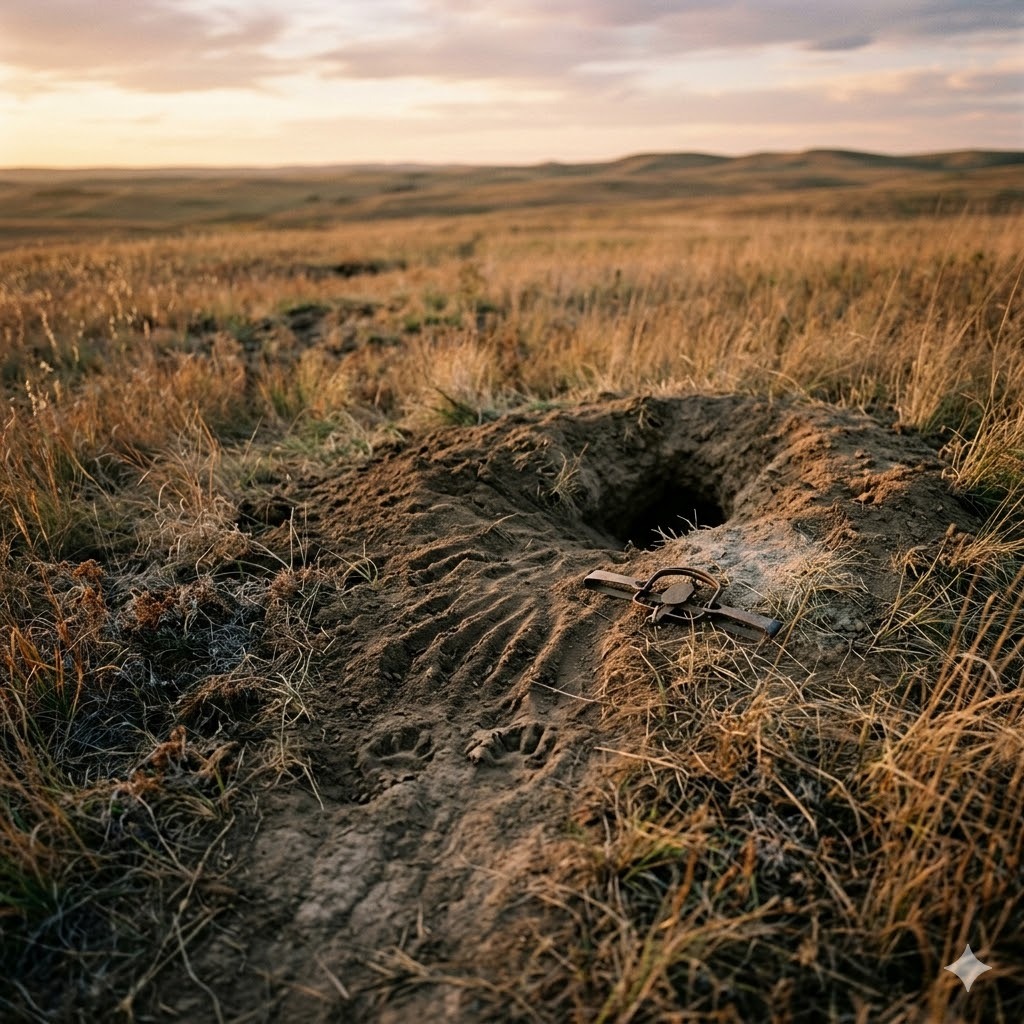
Badgers are strong and bite hard - use a heavy trap, a bomb-proof stake, and great care in dispatch and handling. Follow licence and season rules; check whether they are protected in your area.
The American badger is a serious animal to trap, and it earns the "advanced" label the moment you catch one. It is a low, broad, powerfully built digging predator of open country, built like a machine for tearing into the burrows of ground squirrels, prairie dogs and gophers. Everything about it, from its long front claws to its loose thick hide, is made for digging and for not being dug out, and that same power is what makes it demanding to handle at the trap.
This is not a species to cut your teeth on. A badger will pull a light stake, twist out of an underbuilt set, and fight hard once caught, so the whole job hinges on heavy gear and solid anchoring rather than cleverness. It is also strong and capable of a serious bite, which makes dispatch a task that demands care and respect. Before you begin, treat the badger as an animal that will find any weak point in your set and any lapse in your caution, and build accordingly.
Why trap American badger
Badgers are trapped for their fur and, in some places, as predator or agricultural control. The pelt is a coarse, durable fur with a genuine market, and a prime cold-weather badger is a substantial animal. On farmland and rangeland, badgers are sometimes controlled because their large diggings can damage ground, undermine banks and create holes that livestock or machinery can drop into, though that same digging is also part of a healthy grassland ecosystem.
That tension is worth being honest about. A badger doing real damage on managed ground is a fair target where the law allows it, but badgers are also valued predators of rodents and are protected or restricted in some areas. So the reason to trap should be a real one, fur or genuine damage, not simply that the animal is there. Where you can spare the badger, and especially where its status is uncertain, restraint is the honest choice.
Reading the sign and finding them
Badgers live in open, dry country: prairie, grassland, sagebrush, rangeland, field margins and the edges of crop ground, wherever burrowing rodents are common. Find the rodents and you will usually find the badger, because it follows its prey and hunts by digging them out.
The sign is big and unmistakable. Badger diggings are large, wide holes, often flattened and oval rather than round, with a broad fan of freshly turned soil thrown out behind them, quite different from the small neat cones a skunk leaves. You will find these diggings scattered across a rodent colony where the badger has worked it. Tracks show long front claws and a pigeon-toed, wide-bodied gait, and the trails run between diggings and along field edges and fence lines. The key is freshness: look for dark, moist, newly turned earth that tells you the badger is working the area now. A fresh dig or an active travel route between diggings is where your set belongs, not an old collapsed hole.
Sets and gear
Badger trapping is won or lost on gear and anchoring. This is heavy foothold work, and everything must be oversized for the animal. Use a strong, appropriately sized foothold trap rated for badger, with good jaw spread and reliable springs, set where the badger is actually travelling: at or beside a fresh digging, on the trail between diggings, or at the entrance the animal is using.
The anchor is the part that must be bomb-proof. A badger will pull a stake that would hold most furbearers, so use a heavy stake driven deep, a long anchor, or a solid drag or immovable object, and check it as if your catch depends on it, because it does. Bed the trap firm and level in the loose soil so it does not shift, and site it so a caught badger cannot immediately reach a bank or hole to dig into. Because badgers work loose dug earth, pay attention to keeping the set stable in ground that wants to move. See the gear page for trap sizes and anchoring hardware; for the badger, err toward heavier and more solid at every choice.
Handling, dispatch and fur
A caught badger is a strong, defensive animal, and you approach it accordingly. It will hiss, growl, lunge and fight, and it can deliver a hard, damaging bite with real force behind it. Keep your distance, never put a hand near it, and do not underestimate how far and fast it can move within the set. Heavy gloves are a minimum, and your whole approach should assume the animal is capable of hurting you if you are careless.
Dispatch must be quick, certain and carried out with control, following the methods your regulations allow. Because the badger is powerful and hard to restrain, this is a task that demands a steady, deliberate approach and respect for the animal's strength, both for your safety and to end things humanely without a prolonged struggle. Do not rush it and do not improvise. Once dispatched, the badger has a tough, loose hide and coarse fur; skin and handle it properly if you are keeping the pelt, and be prepared for a large, heavy animal to process. Throughout, keep treating even a subdued badger as capable of a sudden, forceful reaction until you are certain it is dead.
Ethics and the law
This is the most important section on the page. The badger's power and its uncertain status in many places put a heavy responsibility on the trapper, and you should read the ethics page in full before setting anything.
The core ethics apply with extra force here. Check your sets frequently, at least as the law requires and ideally daily, because a strong animal held in a set for too long will fight itself into a bad state. Anchor and bed the trap so the badger is held cleanly rather than damaging itself or working loose. Dispatch, where lawful, must be humane, immediate and carried out safely for both of you. And target the badger for a genuine reason, sparing it where you can.
On the law, badger rules vary a great deal. In some jurisdictions it is a regulated furbearer with a season and licence; in others it is protected, restricted, or subject to specific trap and method rules. You must confirm whether the badger is protected in your area and exactly how it may be taken before you begin, rather than assuming. Check the current regulations for your location, get landowner permission, and make sure your traps, anchoring and dispatch methods are all legal where you are working. When the status is confirmed and your gear and plan are squared away, return to the wider trapping section to place badger work sensibly within an experienced season.