How to Trap Beaver
Beaver are the big prize of water trapping - a large, water-wise furbearer taken with heavy body-grip or drowning sets, worthy of real skill and respect.
Heavy body-grip traps are dangerous to set - learn safe setting tongs and technique first. Follow your state's trapping licence, seasons, set rules and any conibear restrictions. Cold, deep water and waders are a drowning risk.
The beaver is North America's largest rodent and, for many trappers, the animal that defines serious water work. It builds dams, lodges and channels, and it lives its whole life around water it has shaped to suit itself. That engineering is exactly why beaver are trapped: for a dense, valuable pelt and castor, for meat, and often for management where a colony floods roads, fields or woodland.
The one thing that shapes the whole pursuit is water. Beaver are strong, wary and completely at home submerged, so almost everything you do is built around water - reading it, setting in it, and using it to dispatch the animal quickly and humanely. This is not beginner work. Heavy body-grip traps are genuinely dangerous to set, cold deep water carries real risk, and a mistake can hurt you. Beaver trapping suits a patient, experienced person who respects both the animal and the gear.
Why trap beaver
Beaver are trapped for two honest reasons: fur and management. The pelt is thick, durable and among the more valuable furs when it is prime and handled well. Castor - the scent gland - has value to lure makers and the fragrance trade. The meat is edible and traditionally used. Just as often, beaver are trapped because a colony has flooded a road culvert, drowned timber or undercut a field, and the landowner needs the numbers reduced.
Be honest with yourself about the reward. Beaver are heavy, wet work. Pelts take real effort to skin, flesh and dry, and fur prices swing year to year. If you are chasing quick money, this is not it. If you value the skill, the fur and the management, it is deeply satisfying.
What you get from a beaver:
- A large, dense, durable pelt (when prime and well handled)
- Castor glands, which have their own small market
- Edible meat, traditionally used
- Genuine management value where flooding is a problem
Reading the sign and finding them
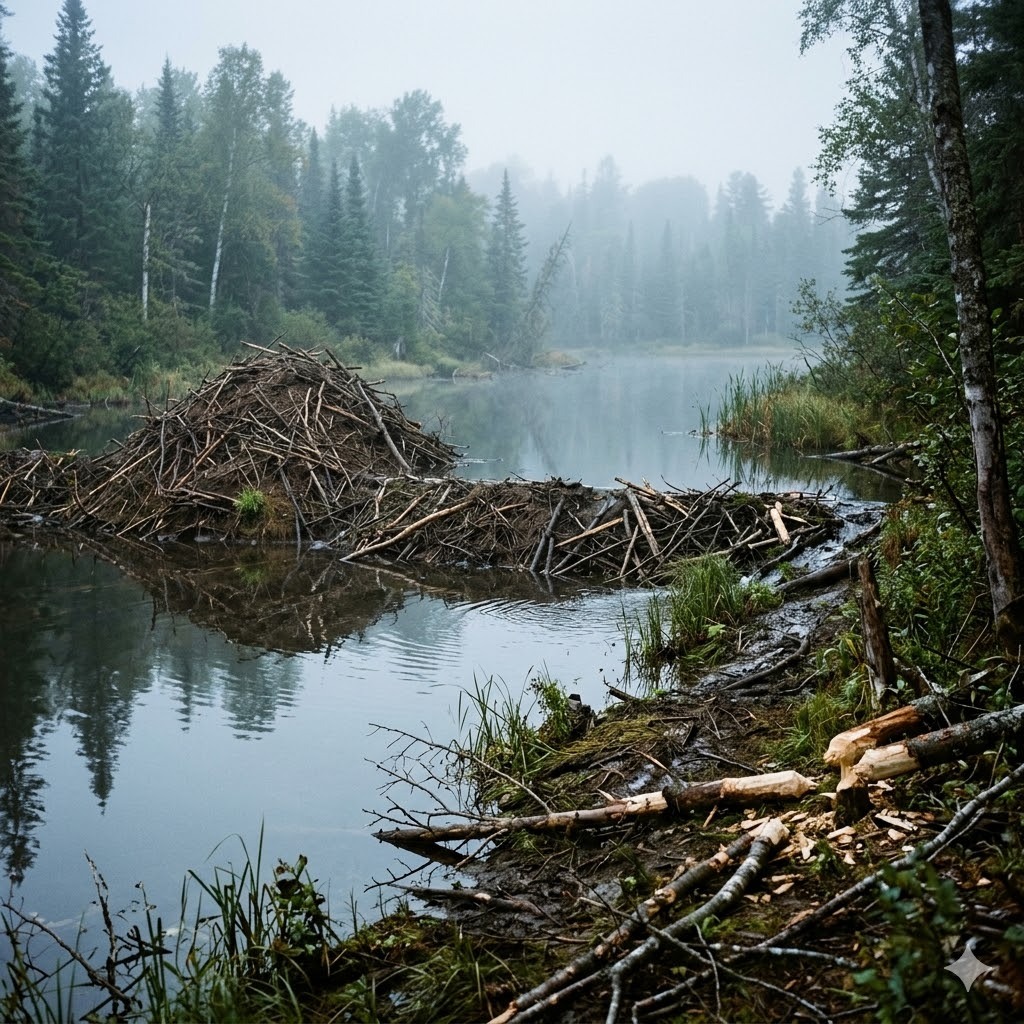
Beaver sign is some of the most obvious in the woods once you know it. Look for dams, lodges and bank dens, felled or gnawed trees with the classic pencil-point cut, mud-and-stick food caches near the lodge, and worn slides where they enter and leave the water. Fresh mud pushed up on scent mounds along the bank tells you a colony is active and marking.
The best sets are where the animal is funnelled and where water depth lets you drown quickly and humanely. Dam crossovers, the narrow throats of channels, den and lodge entrances, and the runs between feeding areas all concentrate travel. Deep, still water beside these spots is what you want, because a proper drowning set needs depth. Take your time reading a location before you ever open a trap - a well-read set catches; a rushed one does not.
Season and water conditions shape everything. Pelts are prime in the colder months, which is usually when the legal season falls, but that same cold makes deep-water work genuinely hazardous, so plan for it. In freezing conditions ice changes where beaver travel and where you can safely set, and a colony's activity shifts as they lay in their food cache for winter. Fresh mud on scent mounds, newly cut sticks and open, worked channels tell you where a colony is active right now, and that is where your reading pays off. Confirm the colony is genuinely active before committing a heavy, carefully built set - beaver work is too much effort to waste on a stale location.
Sets and gear
Two families of set dominate beaver work. Both demand respect.
Heavy body-grip (Conibear-style) traps - the large 330 size - are the standard tool. Set in a channel throat, dam crossover or den entrance where the beaver must pass through the frame, they are designed to strike and dispatch quickly underwater. These traps are powerful enough to injure you. Learn to use setting tongs or a proper setting tool, keep the safety catches on until the trap is placed, and never set one with cold, numb hands. Practise on dry land many times before you ever set one in the field.
Foothold-and-drowning sets are the other main approach. A foothold is placed at a slide, scent mound or channel edge, rigged on a one-way drowning slide-wire anchored in deep water so the caught animal moves to deep water and is dispatched quickly, without being able to return to the surface. Setting this correctly - the right wire, the right lock, the right depth - is the whole skill, and it is what makes the set humane. Castor-based lure at a scent mound can improve a foothold set.
Practical steps for a beginner working up to beaver: learn body-grip safety on dry land first; start with drowning-rigged foothold sets under an experienced trapper; carry the right tools every time - setting tongs, wire, a reliable anchor and cold-water clothing. Good waders and a wading staff matter as much as the traps. See our gear notes for water-trapping basics.
Handling, dispatch and fur
The set does the dispatch, and that is the point. A correctly built body-grip or drowning set kills quickly underwater, which is why building it properly is an ethical duty, not just a technical one. If you ever find an animal alive in a set, dispatch it swiftly and humanely by an approved method - never let it linger. Getting the set right is what avoids that situation.
Handle beaver carefully. They are heavy, the incisors are formidable, and a wet carcass is awkward. Skinning a beaver is an open, flat skin rather than a cased one on most markets - the pelt is cut up the belly and worked into a round board. Flesh it clean, removing fat and membrane, then stretch and dry it on a board or hoop in a cool, dry, airy place out of direct sun. Save the castor glands if you want them; dry them separately. Take the same care with the meat if you plan to use it.
Cleanliness protects you and the fur. Wear gloves, cover any cuts, and wash up afterwards - beaver can carry parasites and disease, so handling carcasses cleanly matters. A well-fleshed, evenly dried pelt is worth far more than a rushed one, and it honours the animal you took. Beaver are fatty and heavy work to flesh properly, so give the job the time it needs rather than rushing a large pelt at the end of a cold, tiring day on the water.
Ethics and the law
This is the most important section. Beaver trapping is closely regulated, and for good reason.
Get properly licensed and tagged before you set anything. Many places require a trapping licence, and some require tags, sealing or reporting for beaver - check your local season, limits and rules first, and never assume. Body-grip (Conibear) traps in particular are restricted in many jurisdictions: there are often rules about size, where they may be set, submersion, and distance from trails or public areas. Legal trap types and sets vary widely, so confirm what is allowed where you trap through your regulations source before you go.
Check your traps daily, at minimum, and more often where the law or conditions demand it. Daily checks are both a legal requirement in most places and a basic duty to the animal. Build your sets to avoid non-target animals and pets - be very careful with body-grip traps near where dogs, otters or people travel, and keep them in water and locations where a pet is unlikely to reach them. Dispatch must be swift and humane, which comes back to building the set correctly.
Handle carcasses with gloves and cover cuts; beaver can carry parasites and disease. Above all, treat the animal with respect - trapping is ethically serious, and a beaver deserves a clean, quick, lawful death. Read our full trapping ethics guide before your first season, and browse the rest of the trapping section for related species and technique.