How to Trap Muskrat
The muskrat is the classic first furbearer - abundant, readable and forgiving - making it the honest place for a new trapper to learn quick, humane water sets.
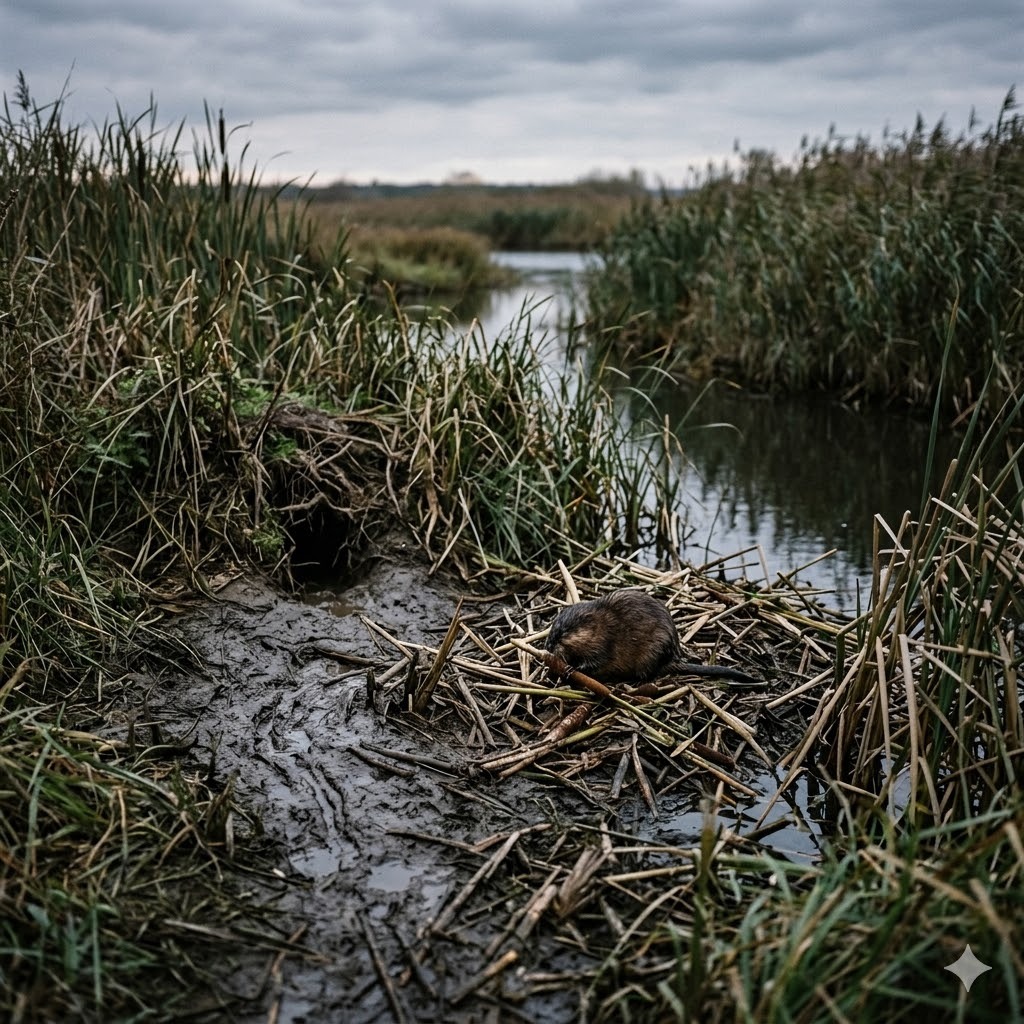
Use quick, humane water sets. Follow licence, season and set rules. Rinse hands and gear - muskrats can carry parasites and disease, so handle with care and cover any cuts.
The muskrat is a small marsh rodent, roughly the size of a large squirrel with a scaly, rat-like tail, that lives its whole life in and around shallow water. It is trapped for its fur, sometimes for meat, and often simply because it is the natural first species for anyone learning to trap. Muskrat are abundant, they leave sign a beginner can actually read, and the sets that catch them are simple, cheap and quick to build.
The one thing that shapes muskrat trapping is how readable they are. They travel the same runs, use the same bank dens and feed beds, and build obvious huts in marshes. Once you learn to see that pattern, catching them is mostly about placing a small trap where the animal already goes. That makes muskrat ideal for a patient beginner who wants to learn water trapping properly before moving on to warier furbearers.
Why trap muskrat
Muskrat are trapped mainly for fur and for learning. The pelt is small but genuinely useful, and in a good marsh you can catch numbers, which is what makes them a practical starter species. The meat is edible and traditionally used in some regions. And because muskrat are forgiving of small mistakes, they teach you the core skills - reading sign, building a set, checking a line - without the frustration of a truly wary animal.
Keep expectations honest. Muskrat pelts are modest in value, so the reward is more in the learning, the numbers and the enjoyment than in the money. That is exactly why they suit a first-year trapper.
What you get from a muskrat:
- A small but usable pelt, catchable in numbers
- Edible meat, traditionally used
- The perfect species to learn quick, humane water sets
- Confidence and skills to carry to harder furbearers
Reading the sign and finding them
Muskrat sign is everywhere in the right marsh, and it is a joy to learn on. Look for their domed huts of vegetation in shallow water, bank dens with an underwater entrance, worn runs and channels along the bottom, feed beds where they cut and eat vegetation, and floating scraps of chewed reed. Droppings on logs or mudbanks confirm activity.
The best places to set are where the animal is naturally pinched into a narrow path. Channels between feed beds, den entrances, the edges of huts, and the throats of ditches all funnel muskrat travel. Because they follow these routes so faithfully, a small trap placed in a pinched run - where the water narrows the animal's path - catches reliably. Set in shallow water with depth close by so the catch is quick and humane.
Time of day and season also matter. Muskrat are most active around dawn and dusk and through the night, so fresh sign in the morning tells you a run is worth setting. Pelts are best when the fur is prime in the colder months, which is usually when the legal season falls - another reason to let the regulations, not impatience, decide when you start. A marsh with plenty of huts and open channels will carry far more muskrat than a steep-banked ditch, so spend your first outings simply walking water and learning to see the sign before you set a single trap. That reading habit is the most valuable thing muskrat teach.
Sets and gear
Muskrat sets are simple, which is the whole appeal. The workhorse is a small body-grip trap set in a pinched run or a den entrance. Placed where the channel narrows so the muskrat must swim through the frame, it strikes and dispatches quickly underwater. Because the trap is small, it is far safer to handle than the large body-grips used for beaver, though you should still learn to set it carefully.
A few practical, beginner-usable steps: find a clean, active run or den entrance; narrow the opening slightly with a couple of sticks so the animal is guided through the trap frame; anchor the trap so a caught animal stays in the water; and set it at a depth that lets the animal be dispatched quickly. Keep your hands and the trap reasonably clean, but do not agonise over scent the way you would for a wary mink - muskrat are forgiving, which is exactly why they are the right species to make your early mistakes on.
Colony-style cage traps set in a run can take several muskrat at once and are useful where the law allows them, and small footholds at feed beds and slides are another option. Still, the small body-grip in a pinched run is the classic, humane first set to learn, and mastering it teaches the core lesson of all water trapping: place the trap where the animal already goes, and let its own path carry it through.
Gear is minimal and cheap - a handful of small body-grips, some wire, a few stakes, a setting tool if you like one, and waders. That low cost is another reason muskrat make the ideal starter: you can build a working line for very little and learn without a large outlay. See our gear page for the basics.
Handling, dispatch and fur
A properly built water set dispatches the muskrat quickly, which is the humane point of setting in water. If you ever find one alive, dispatch it swiftly by an approved method - but a correct set should do this for you. Building the set right is the first ethical step.
Handle muskrat with care. Skin them cased - pulled off inside-out over the body like a sock - flesh away the fat and membrane, then dry the pelt fur-side-in on a small wire or wooden stretcher in a cool, airy, shaded spot. They are easy to skin and forgiving to learn on, which again suits a beginner. Take the same care if you use the meat.
Cleanliness matters. Muskrat can carry parasites, so wear gloves, cover any cuts, and wash thoroughly afterwards. It is a small animal, but it deserves the same respect and clean handling as any other. A tidy, evenly dried pelt is worth more than a rushed one, and building good handling habits now - careful skinning, thorough fleshing, proper drying - will serve you on every species you trap later.
Ethics and the law
This is the most important section, even for the humble muskrat. Get properly licensed first - most places require a trapping licence, and there may be seasons, limits or rules specific to muskrat. Check your local season, limits and trap rules before you set, and never guess.
Legal trap types and sets vary by area, so confirm through your regulations source which body-grip sizes and sets are allowed and where. Check your traps daily, at minimum - it is both a legal duty in most places and a basic obligation to the animal. Build your sets in water and in narrow runs to avoid catching non-target wildlife and pets; keep sets away from where dogs or people travel, and be thoughtful about placement.
Handle muskrat with gloves and cover cuts, as they can carry parasites. And treat this small furbearer with the same respect you would a beaver or otter - learning to trap ethically on muskrat sets the habits you will carry for life. Read our trapping ethics guide before you start, and see the wider trapping section for the next species to learn.