How to Trap Nutria
The nutria is a large invasive marsh rodent that damages wetlands, so trapping it is habitat control as much as fur - numerous, less wary, and never to be released alive.
⚠️ Invasive - never release a live nutria; dispatch humanely and legally. Some regions run bounty or year-round programmes, but still follow local rules. They can carry disease, so handle with gloves.
The nutria is a large, semi-aquatic rodent, bigger than a muskrat and smaller than a beaver, with orange front teeth and a round rat-like tail. It is not native across most of its range, and where it has spread it does serious damage - eating out marsh vegetation down to the roots, undermining banks and levees, and turning healthy wetland into open mud. For that reason, trapping nutria is habitat control as much as it is fur trapping.
The one thing that shapes nutria trapping is that they are an invasive pest, not a native furbearer to be conserved. They are often numerous, less wary than native species, and readily drawn to bait, which makes them relatively straightforward to catch. That combination - abundant, unwary and genuinely harmful - makes nutria a good species for a beginner who wants to do real conservation work while learning to trap. It also comes with one absolute rule: never release a live nutria.
Why trap nutria
Nutria are trapped first for control and second for fur. The conservation case is strong: reducing nutria protects marshes, banks and levees from the erosion and vegetation loss they cause, and in some regions there are organised removal or bounty programmes, sometimes running year-round rather than in a limited season. The pelt has some value, and the meat is edible, but the main reward is the management itself.
Be honest about what the work is. Nutria trapping is often less about a prize pelt and more about steady, useful removal of a damaging animal. That said, they are catchable in numbers, less frustrating than wary native species, and the good you do for a wetland is real.
What you get from a nutria:
- Genuine habitat control - protecting marsh and banks from damage
- A usable pelt, and edible meat, as a secondary benefit
- Where they exist, access to bounty or removal programmes
- A forgiving, high-numbers species to build trapping skill on
Reading the sign and finding them
Nutria sign is bold and easy to read, which suits a beginner. Look for well-worn slides and trails between water and feeding areas, floating cut vegetation and feeding platforms, burrows dug into banks and levees, and the wide, obvious tracks and droppings they leave along the water's edge. Because nutria are numerous where they occur, active sign is usually easy to find.
The best places to set are along their heavy trails and slides, at burrow entrances, and at feeding platforms - anywhere they concentrate. Because they are less wary than native furbearers and readily take bait, you have more latitude in placement than you would with mink or otter. Set where the animal is clearly and repeatedly travelling, and let their numbers and boldness work in your favour.
One practical advantage of nutria is that they leave a lot of sign, so a wetland with a nutria problem is rarely hard to identify. Cropped-down, muddy patches of marsh where the vegetation has been eaten to the roots - known as "eat-outs" - are a clear signature of heavy nutria activity and a good indicator that control is genuinely needed there. Their burrows into banks and levees are another obvious sign, and one of the main reasons managers want them removed, since the tunnelling weakens flood defences and undercuts the ground. Reading nutria sign is easy compared with wary native species, which is part of what makes them a confidence-building species to learn on while doing worthwhile work.
Sets and gear
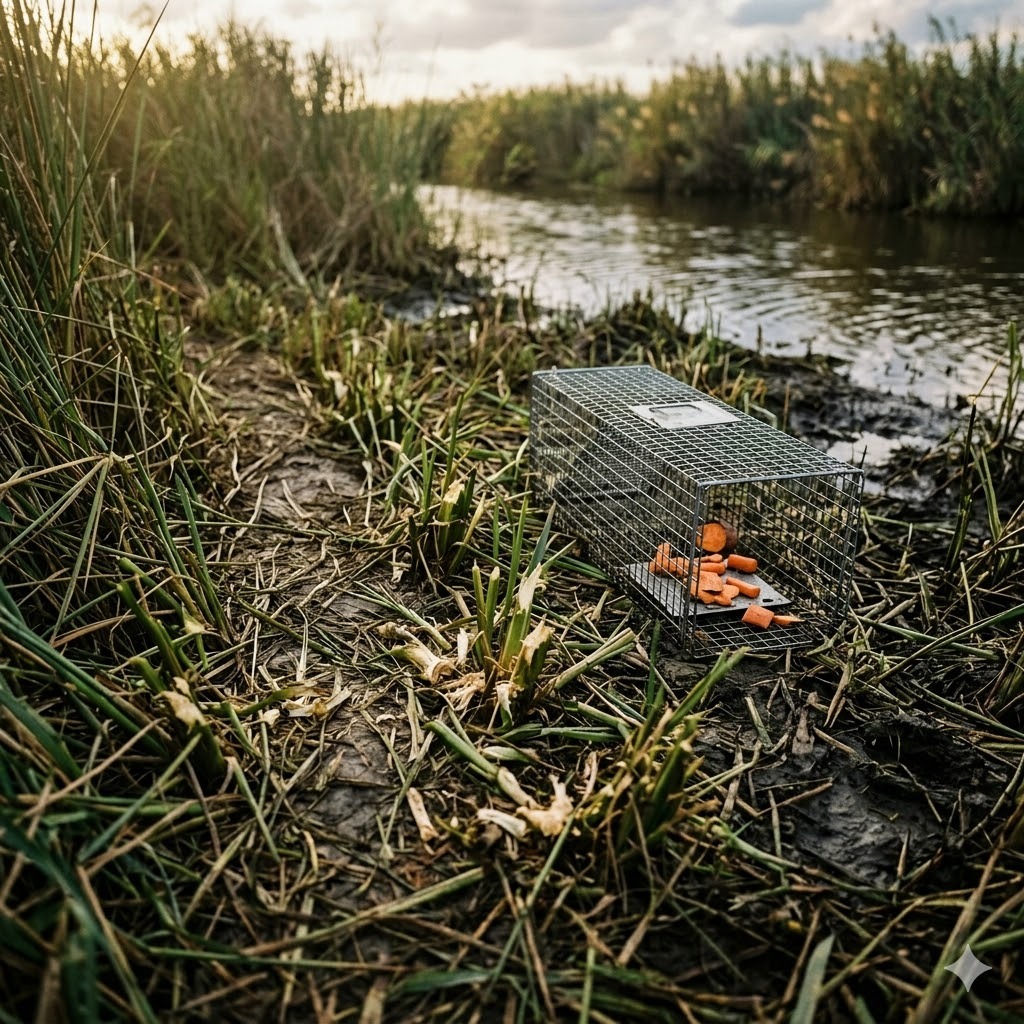
Nutria are taken with straightforward, beginner-usable sets, and their willingness to take bait is the key. Baited cage traps set on a trail or at a feeding area are a simple, safe starting point: a carrot, sweet potato or similar sweet vegetable draws the nutria in, and a cage trap holds it live for humane dispatch on check. Baited foothold sets along slides and at burrow entrances also work well, rigged appropriately for the animal's size.
Practical steps for a beginner: place a baited cage trap on a heavily used trail or feed platform; anchor it so it cannot be dragged or tipped into deep water in a way that harms non-targets; refresh bait as needed; and, crucially, check often so any caught animal is dealt with promptly. A cage trap has a real advantage for a beginner - it holds the animal unharmed and lets you clearly see and release any non-target that wanders in, which happens often enough that it is worth planning for.
Body-grip and drowning-rigged foothold sets are used in some organised control programmes too, and can remove larger numbers, but they demand more skill and carry the same safety concerns as any body-grip work. Baited cage and foothold sets are the accessible, teachable place to start, and they let you learn steady, humane removal without the hazards of heavy gear.
Gear is simple and affordable - cage traps, footholds, sweet vegetable bait, gloves and waders. Because nutria are numerous, a modest set of traps run diligently can remove a meaningful number over a season. See our gear page for the basics, and always handle nutria with gloves.
Handling, dispatch and fur
Because cage traps hold nutria alive, humane dispatch on check matters enormously. Dispatch swiftly and calmly by an approved method as soon as you reach a caught animal - do not let it linger, and do not handle it roughly. Foothold and drowning sets should be built to dispatch quickly on their own. Either way, a quick, clean end is the standard, invasive pest or not.
Never release a live nutria. It is invasive, it does real harm, and releasing it undoes the whole point of trapping it - in many places it is also illegal. Skin them cased if you want the pelt, flesh it clean, and dry it fur-side-in on a stretcher in a cool, airy, shaded place. The meat is edible if you choose to use it.
Handle nutria with gloves and cover any cuts. They can carry disease and parasites, so cleanliness is not optional - wash thoroughly after handling carcasses or resetting baited traps.
Ethics and the law
This is the most important section, even for an invasive pest. Get properly licensed or enrolled first - many places require a trapping licence, and some run specific nutria control or bounty programmes with their own rules, which may allow year-round trapping. Check your local season, limits, programme rules and trap regulations before you set, and never assume.
Legal trap types and sets vary by area, so confirm through your regulations source which cage, foothold and body-grip sets are allowed and where. Check your traps daily at minimum - with baited cage traps holding animals alive, prompt checks are both a legal duty and a basic welfare obligation. Build sets to avoid catching non-target wildlife and pets, since nutria share their marshes with native species; place and bait sets thoughtfully, and be ready to release any native non-target unharmed.
Never release live nutria, handle carcasses with gloves, and cover cuts, as they can carry disease. And even though this is a pest species, treat it with respect and give it a clean, quick, humane death - the invasiveness justifies the removal, not carelessness. Read our trapping ethics guide before you start, and see the wider trapping section for related wetland species.