How to Trap Ringtail
An honest guide to trapping the shy, nocturnal ringtail in the rocky canyons of the arid Southwest, using gentle cage and box sets in crevices and ledges, with a firm reminder to check its protected status first.
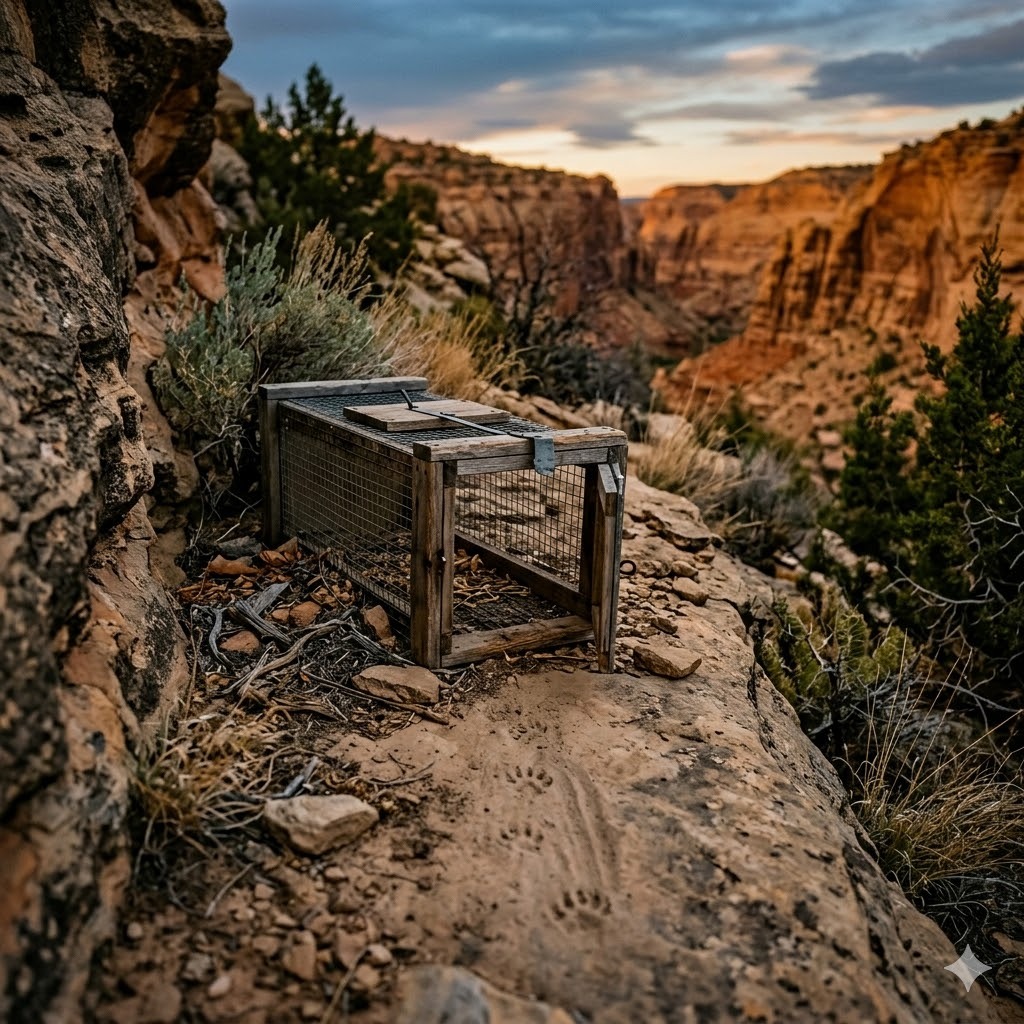
Ringtails are protected or limited in some states - check status before setting. Use humane cage/box sets, handle with gloves, and follow licence and season rules.
The ringtail is one of the quieter, prettier furbearers a trapper will meet, and one of the least often seen. A slender, big-eyed relative of the raccoon, it wears a long tail banded in black and white that is longer than its body, and it moves through rocky country with a cat-like agility. It lives in the canyons, cliffs, rock piles and arid brush of the Southwest, comes out only at night, and spends its life in cover, so most people who share ground with a ringtail never know it is there.
That shyness and localised range shape everything about trapping it. This is not an animal you pursue in numbers or chase across open ground; it is one you meet on its own terms, tucked into the rocky places it travels. It is also an animal that is protected or limited in a number of states, so the first job, before any set, is to confirm what the law allows where you are. Where trapping is permitted, gentle cage and box sets in the right rocky nooks are the way to catch a ringtail cleanly, and handling it calls for the same restraint the animal itself lives by.
Why trap ringtail
Where it is legal, the ringtail is trapped mainly for its fur, a soft pelt from a small, handsome animal, and occasionally is caught incidentally by trappers working for other species in the same rocky country. It is not a nuisance animal in the way a skunk is, and it rarely causes the kind of damage that drives control trapping, so the honest reason to set for a ringtail is usually the pelt and the interest of a shy, localised species.
That makes restraint the natural default. Ringtails are secretive and often thin on the ground, and some populations are protected or capped, so the fur alone is a modest reason to pursue an uncommon animal. If you trap where the law clearly permits it and the population can spare a few, handle the pelt properly. But this is a species where leaving them be, especially where status is uncertain, is often the right call.
Reading the sign and finding them
Ringtails are animals of rock and aridity: canyon walls, cliff bases, boulder fields, rocky slopes, dry washes and the brushy arid country of the Southwest, often near a little water. They den in rock crevices, hollow trees, old mine workings and sometimes outbuildings, and they travel along ledges, cracks and the natural highways that rock provides.
Their sign is subtle and takes patience to read. Look for droppings placed on ledges, boulders and prominent rocks, sometimes at regular latrine sites, and for small tracks in dust or soft washes showing five toes. Around a den you may find worn traces at a crevice or hollow, and in dusty rock the polished, well-used look of a regular travelway. Because the ringtail is nocturnal and secretive, you are reading faint clues rather than obvious trails, so take your time to work out the crevices, ledges and canyon routes it is actually using before you place anything. A set on a genuine travelway through the rocks will do far more than one guessed at in open ground.
Sets and gear
For the ringtail, gentle enclosed sets are the right approach, both because they suit a small, cautious animal and because they let you release anything you did not intend to catch. A cage or box trap is the tool: solid-sided or covered, sized for a small furbearer, and tucked into the rocky ground the ringtail travels.
Placement is everything with such a secretive animal. Ease the trap into a rock crevice, along a ledge, at the mouth of a den, or across a canyon travelway where the ringtail has to pass, so the set sits inside its world rather than out in the open where it has no reason to go. Bait with something a ringtail will work for, such as a scrap of meat, fish or fruit, and set the trap firm and level on the uneven rock so it does not rock or shift. Keep the set low-key and blended into the crevice; a ringtail is wary and will avoid anything that feels wrong. See the gear page for cage and box options and fur-handling kit, and favour the gentle, enclosed set every time for this species.
Handling, dispatch and fur
A ringtail in a cage set is a small, nervous, easily stressed animal, and it should be handled quietly and calmly. Approach slowly, keep your movements small, and if the trap can be covered to settle the animal in the dark, do so. Even a small furbearer can bite and scratch when frightened, so wear gloves and keep your hands clear of the wire, and treat the animal with the calm care its shyness deserves.
The first decision at the trap is often whether the catch is legal to keep at all. Where the ringtail is protected or the catch is non-target, the right action is a careful release, and a gentle cage set makes that possible with minimal harm. Where the law does permit taking the animal, dispatch must be quick and certain, carried out with the animal kept calm, using the methods your regulations allow, and never rushed or improvised on so small and stressed an animal. If you are keeping the pelt, skin and handle the soft fur promptly and carefully. Throughout, let the theme of this whole guide guide your hands: this is an uncommon, retiring animal, and restraint and gentleness are the right defaults.
Ethics and the law
This is the most important section, and for the ringtail it carries particular weight because the animal is uncommon and, in many places, protected. Read the ethics page before you set anything, and let it shape every choice above.
The general ethics apply fully. Check your sets often, at least as the law requires and ideally daily, so no animal sits caught and stressed. Use gentle cage and box sets that let you release non-target and protected animals unharmed. Where dispatch is lawful it must be humane and immediate, and where it is not lawful, careful release is the only right answer. Beyond that, the ringtail asks for real restraint: if you are not confident an area can spare the animal, leave it be.
The legal picture is decisive here. In a number of states the ringtail is protected, has no open season, or is subject to strict limits, and its status varies from place to place. You must confirm the current status for your exact location before trapping, rather than assuming it can be taken. Check the regulations for your jurisdiction, get landowner permission, and be certain that trapping the ringtail is both legal and appropriate where you are before you begin. When the status is confirmed and everything is squared away, return to the wider trapping section to fit ringtail work sensibly and respectfully into your season.