How to Trap Spotted Skunk
An honest guide to trapping the smaller, agile spotted skunk in brushy and rocky country, with covered sets, safe handling of a rabies vector, and a clear warning to check its protected status first.
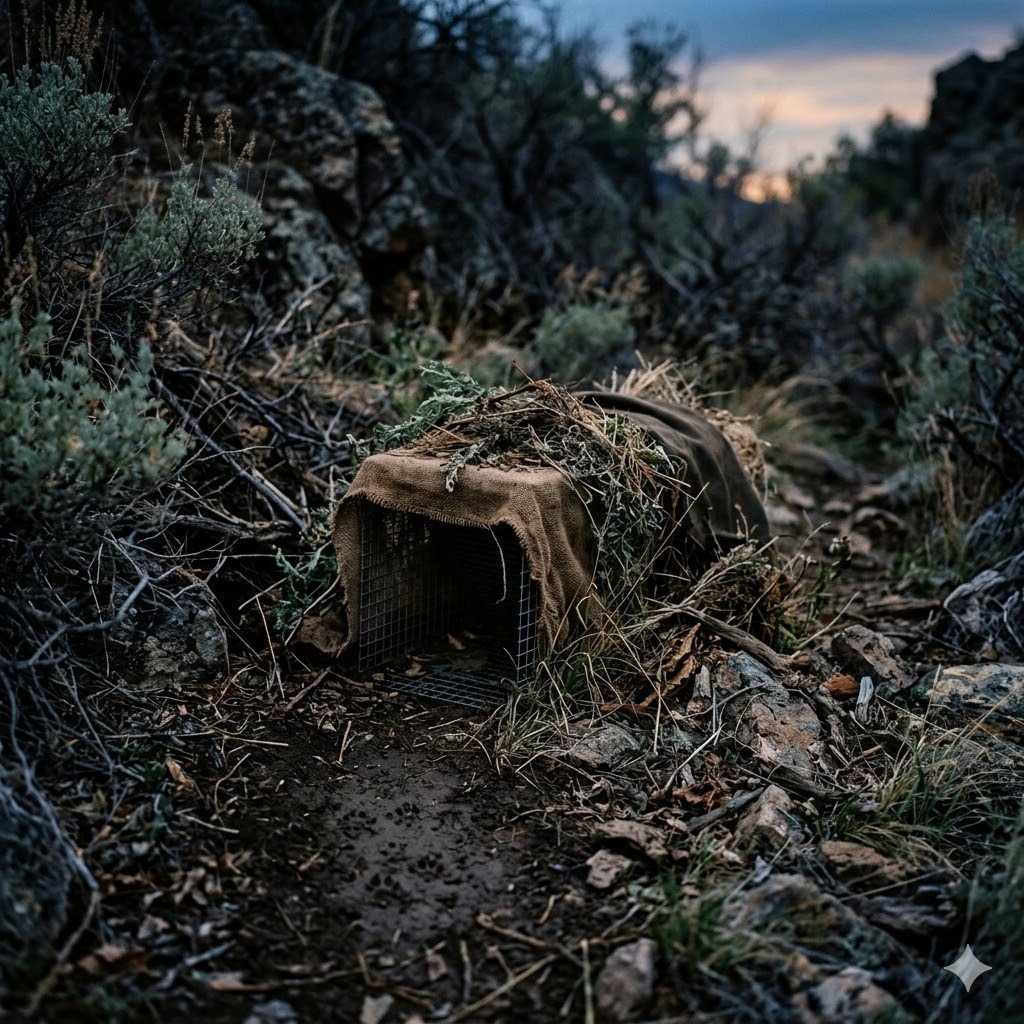
🔴 Like all skunks, a rabies vector - never handle a live or sick-acting one. Some populations are in decline and may be protected, so check status. Wear gloves and know local rules.
The spotted skunk is the striped skunk's smaller, quicker, more secretive cousin, and most people who spend time outdoors have never seen one. It is a slight, agile animal, marked with broken white spots and streaks rather than two clean stripes, and it climbs and squeezes into places the bigger skunk cannot reach. Where the striped skunk trundles along the ground, the spotted skunk slips through brush piles, rock crevices and the walls and roof spaces of old buildings. It is nocturnal, localised and easy to overlook.
Because it is less common and, in places, in trouble, spotted skunk trapping starts with a question rather than a set: is it legal and appropriate to trap here at all. Some populations are declining and some are protected, so before anything else you need to confirm the status where you are working. Where trapping is allowed, the animal is caught in much the same way as its larger relative, with the same covered box and cage sets and the same firm safety rules. It is the where and the whether, more than the how, that make the spotted skunk different.
Why trap spotted skunk
Where it is legal and where numbers allow, the spotted skunk is trapped mostly as localised nuisance control and for a small, fine pelt. It gets into buildings, poultry houses, sheds and grain stores, drawn by rodents and eggs, and once inside it can be a persistent problem in a way that suits a targeted catch better than a broad campaign.
Be cautious about the fur. The pelt is small and the market modest, and given that some populations are declining, the fur should never be the reason you set. If you are removing an animal that is genuinely causing trouble on ground where the law permits it, handling the pelt properly is fair. But this is a species where restraint is the right default, and there are places and seasons where the honest answer is to leave it alone entirely.
Reading the sign and finding them
Spotted skunks favour rough, broken country: brushy draws, rocky hillsides, canyon edges, timbered creek bottoms, and the tumbledown outbuildings and barns of farmland. They like cover they can disappear into and travel routes with plenty of hiding places, so you will find them where rock, brush and structure come together rather than out in the open.
Their sign is subtler than the striped skunk's. Being a keen climber, the spotted skunk leaves droppings and traces on ledges, in rock crevices, on beams and in loft spaces as well as at ground level, so look up as well as down. You may find small diggings, tracks in dust or soft soil showing five clawed toes, and a musky smell around a den in a rock pile, hollow log, brush heap or building void. On farms, the report of a small skunk getting into a building or a poultry run is often your best lead. Confirm you are dealing with a spotted skunk and not a young striped one, then place any set on the route or entrance it is actually using.
Sets and gear
As with all skunks, the trap keeps you safe, so use a covered box or cage trap. A spotted skunk that is enclosed and cannot see a threat will very seldom spray, so a solid-sided box trap, or a wire cage trap covered with sacking or a fitted sleeve, is the right tool. Keep it covered from the moment it is set.
Because this animal works rocky and structural cover, tuck the trap into the crevice, ledge, gap or entrance it is using rather than leaving it in the open. A cage set eased into a rock cleft, along a canyon travelway, or at the hole into a building meets the skunk where it lives. Bait with something greasy and strong such as fish, egg or canned meat. Set it firm and level so it does not rock, and make sure the trap and location suit a small, agile animal that will test every edge. Check the gear page for trap options and fur-handling kit, and choose the enclosed, out-of-sight set every time for this species.
Handling, dispatch and fur
Handle a caught spotted skunk exactly as carefully as you would a striped one, and watch first for the animal's own warning. The spotted skunk is famous for a distinctive threat display: before it sprays, it will often rise up into a handstand on its front legs, back end raised toward you. If you see that display, back off, keep the trap covered, and give the animal space and quiet. It is a clear signal, and honouring it protects you both.
Approach a covered trap slowly and keep it covered. Before handling anything, watch the animal for signs of illness: a skunk that is unsteady, unafraid, active in daylight, aggressive without cause or moving strangely may be rabid, and you should keep well back and contact your wildlife or animal-health authority. Never handle a live or odd-acting skunk. Bites and scratches are a medical emergency, because skunks are an important rabies vector, and any bite or scratch must get immediate medical care and be reported.
Where dispatch is lawful, it must be quick and certain, with the animal kept covered and calm, using the methods your regulations permit. Wear heavy gloves, keep your face clear, and treat every spotted skunk as a possible disease carrier. If you are keeping the small pelt, skin promptly and handle the musk glands with care rather than crushing them. And keep coming back to the same point that runs through this whole species: on ground where the population is thin or protected, the right handling decision may be not to have set the trap at all.
Ethics and the law
This is the most important section, and for the spotted skunk it carries extra weight because of its conservation status. Read the ethics page before you set anything, and let it guide every choice above.
The general ethics apply in full. Check sets often, at least as the law requires and ideally daily, so nothing sits caught and stressed. Use covered box and cage sets that let you avoid and release non-target animals. Where dispatch is lawful it must be humane and immediate, and you must never let curiosity push you into handling an animal that might be rabid. Beyond all that, the spotted skunk asks for restraint: if you are not confident an area can spare the animal, do not trap it.
The legal picture is the decisive one here. In some states and regions the spotted skunk is protected, has no open season, or is subject to tight limits, and in others populations are recognised as declining. You must confirm the current status for your exact location before trapping, rather than assuming it is treated like the striped skunk. Check the regulations for your jurisdiction, get landowner permission, and be certain that trapping this species is legal and appropriate where you are before you begin. When you have the status confirmed and everything squared away, return to the wider trapping section to place spotted skunk work sensibly within your season.