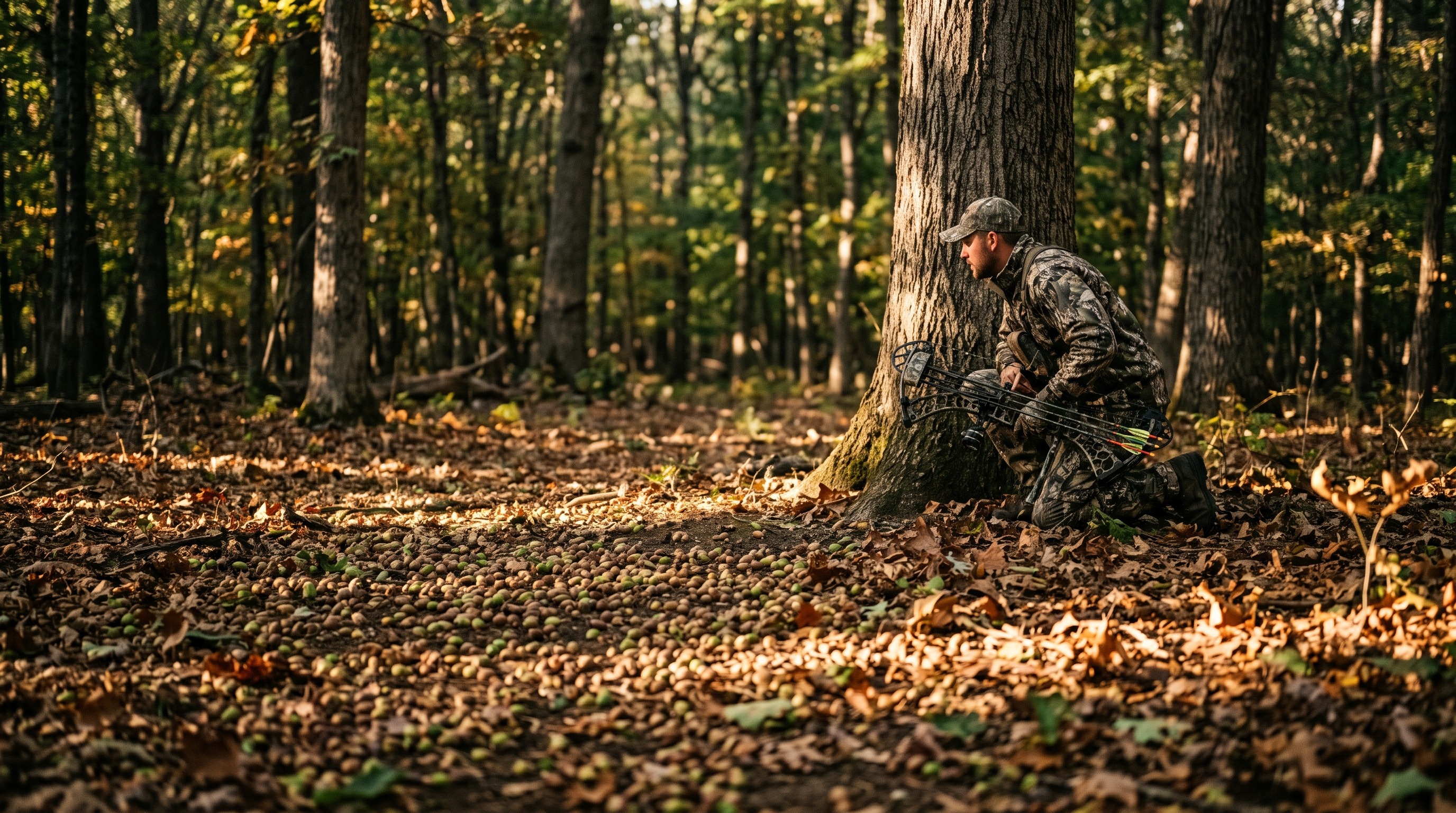
Bear Hunting with Bait
Bait hunting is the most productive way to take a mature black bear. Know the states, the legal bait mix, and how to build a site that pulls a shooter…
Bait hunting is the most productive way to take a mature black bear in many parts of North America. A well-managed bait site lets you study individual bears for weeks, pick a specific animal, and take it from a controlled stand with a clean shot. The catch: only certain states allow it, the rules vary enormously, and a sloppy site either pulls every yearling in the county or no bears at all. This guide covers where you can legally bait, how to build a productive site, what to put in the barrel, and how to hunt over it.
States Where Bear Baiting Is Legal
As of the 2026 seasons, legal bear baiting (varying restrictions) exists in:
- Alaska - extensive, regulated bait stations
- Idaho - popular spring and fall baiting
- Maine - premier baiting state for big bears
- Michigan - fall bait season
- Minnesota - extensive bait season
- New Hampshire, Vermont - limited
- Utah - limited spring baiting
- Wisconsin - bait season with restrictions
- Wyoming - limited spring baiting in certain units
Many other states with healthy bear populations (Colorado, California, Montana, Washington, Oregon) prohibit baiting entirely. Verify current state regulations before planning a hunt - rules change yearly.
Resident vs Outfitted
Maine and Alaska in particular have substantial outfitted bait industries. A guided spring or fall bait hunt typically runs $2,500-5,500 including lodging, tags, and meat care.
For DIY hunters in Idaho, Wisconsin, Minnesota, and Michigan, you can place and hunt your own bait stations on public land with appropriate permits. Apply for tags 6+ months in advance.
Choosing a Site
A good bait site has:
- Thick cover within 30 yards for bears to enter and exit
- A natural travel corridor - creek, ridge, drainage
- Wind that consistently blows away from the stand approach
- A backdrop that gives bears a sense of security
- A clear shooting lane of 15-25 yards from your stand
- Truck/access road at least 1/4 mile away so noise doesn’t spook bears
- Permission if on private land; legal placement if on public
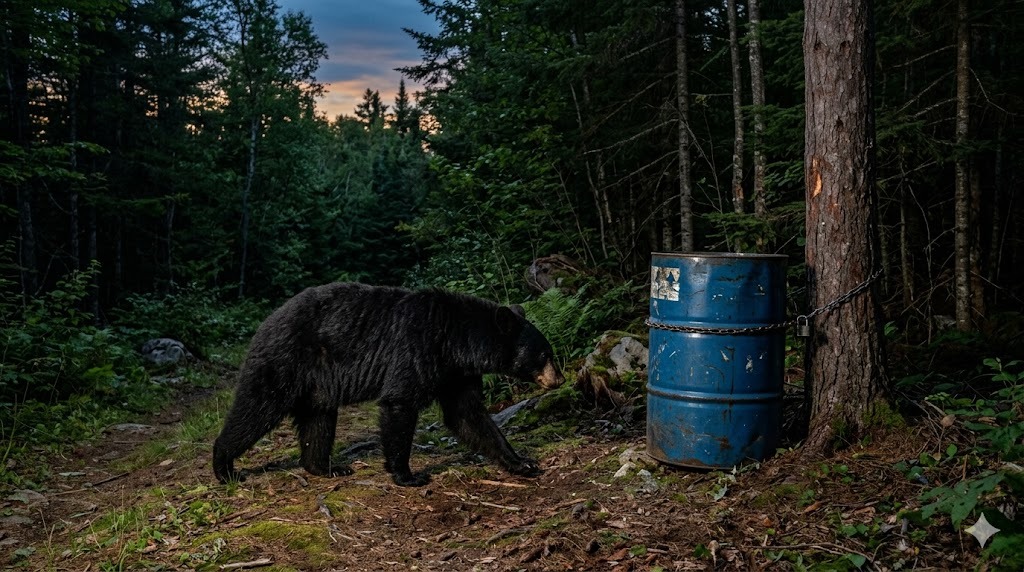
Set the bait barrel against a large tree, anchored, with cover behind it. Place your stand crosswind, 18 to 25 yards away, in a tree large enough to support a hang-on or climber stand at 18+ feet height.
The Bait Mix
Bears are omnivores with massive caloric needs (especially in spring). The classic bait formula combines:
- Pastries, donuts, breads (high sugar, calorie-dense)
- Sweet liquids - molasses, corn syrup, used fryer oil
- Trail mix, granola, oatmeal
- Bacon grease and meat scraps (where legal - check state)
- Anise extract and strawberry/raspberry syrup as long-range attractants
Maine baiters famously use pastry-shop dumps - week-old donuts, leftover loaves of bread, expired pies. Bears can’t resist sugar.
What to avoid:
- Chocolate (toxic to bears in large quantities, illegal in some states)
- Meat (illegal in many states - verify regulations)
- Anything containing bones or shells that bears can choke on
The Bait Barrel
Two main setups:
Drilled-hole barrel: A 55-gallon drum with 1-inch holes drilled around the sides, anchored to a stump or tree with steel cable. Bears reach in with paws to extract bait. Slows feeding rate, makes bait last longer, encourages bears to linger.
Open dump site: Bait poured directly on the ground or in a shallow pit. Eats fast, attracts every scavenger, often requires daily refills.
For sustainable hunts, the drilled barrel system is superior.
Setup Timeline
For a fall hunt, start baiting 3-4 weeks before season opens. For spring hunts, begin as soon as bears emerge from dens (April-May depending on latitude).
Week 1: Place barrel and small bait. Use trail camera to confirm bear presence. May take days to weeks for bears to find the site.
Week 2: Bears finding it; replenish 2-3 times per week. Photos identify individual bears.
Week 3-4: Site is established. Sufficient bear traffic for hunting.
Hunting: Refresh bait only as needed; minimize human presence at the site.
A scent trail of bacon grease dragged 200 yards in multiple directions helps bears find a new site faster.
Bear Identification at the Bait
Knowing what to shoot matters more in bear hunting than almost any other discipline. Sows with cubs are illegal in every state and ethically off-limits everywhere.
Look for:
- Body size - mature boars look long-bodied, blocky, with smaller-appearing heads relative to body
- Belly size - heavy boars hang low; sows after cubs are skinnier
- Behavior - boars approach a bait site cautiously and dominantly; sows often arrive with cubs in tow or scan nervously for them
- Trail camera review - multiple weeks of pictures show the same bears repeatedly; you can pattern individuals
Wait for a clear, lone bear of confirmed sex (boar) and size. Don’t shoot the first bear that walks in.
The Shot
Black bears are heavily muscled and densely-built. Double-lung broadside shots are the standard. The bear’s vital area is further forward and lower than on deer - aim for the front shoulder crease, not the standard “third-of-the-way-back” deer hold.
Use enough gun:
- Bow: 60+ lbs draw, 425+ grain arrow with sharp two-blade or large-cut three-blade broadhead
- Rifle: .30 caliber and up; .308 Winchester, .30-06, .300 Win Mag classic picks
- Bullet: Tough controlled-expansion (Barnes TSX, Nosler AccuBond, Federal Trophy Bonded) penetrates the dense bone and fat
Bears bleed slowly due to thick fat. Don’t expect a blood trail - many bears leave almost none. Wait at least 45 minutes after the shot before tracking, and bring a partner or tracker dog where legal.
Field Care
Get the bear opened and cooled within an hour. Bears carry a thick fat layer that holds heat aggressively - meat sours fast.
Skin out the entire animal at the kill site if temperatures are above 50°F. Pack out the skinned carcass in quarters or boned form, plus the cape and skull if you’re mounting.
Bear meat is excellent when properly cared for. Process within a few days; freeze ground bear with a 90/10 ratio of bear-to-pork-fat for grinding into burger and sausage.
Trichinosis Warning
Bear meat can carry trichinella parasites. Always cook bear meat to 160°F internal temperature. Never eat undercooked bear. This is not negotiable.
FAQ
How long does the bait last? A 55-gallon drum full of dense pastries lasts 1-2 weeks with normal bear traffic.
Can I check a bait site daily? You can but shouldn’t. Bears patterning the site will become wary of human scent. Once weekly is plenty.
What’s the best time of day to hunt? Bears feed actively the last 2 hours of daylight. Most baited shots happen 30 minutes before legal end of shooting light.
Do I need to be in a tree stand? Tree stands are strongly preferred - bears wind ground hunters easily. Where stands are impractical, an elevated platform or ground blind works.
What about grizzly safety? In grizzly bear country (parts of Idaho, Wyoming, Montana, Alaska), bait sites can attract grizzlies. Carry bear spray and a sidearm; never bait in grizzly recovery zones.
Conclusion
A properly managed bait site lets you study and select a mature black bear instead of taking the first opportunity. Verify state regulations, pick a site with cover and wind, run the bait timeline 3-4 weeks ahead, identify your target through trail cameras, and use enough gun. Process the meat fast, cook it thoroughly, and you’ll have one of the most satisfying hunting experiences in North America.
🛒 Recommended Gear on Amazon
- No-glow trail camera - browse current options and reviews on Amazon.
- Bear spray - browse current options and reviews on Amazon.
- Bear attractant scent - browse current options and reviews on Amazon.
As an Amazon Associate, we earn from qualifying purchases - at no extra cost to you. This helps us keep producing free, in-depth guides.