Hunting in Snow
Snow turns the woods into a transparent book - every animal that moved last night left a written record. But cold and wet kill hunters who didn't plan…
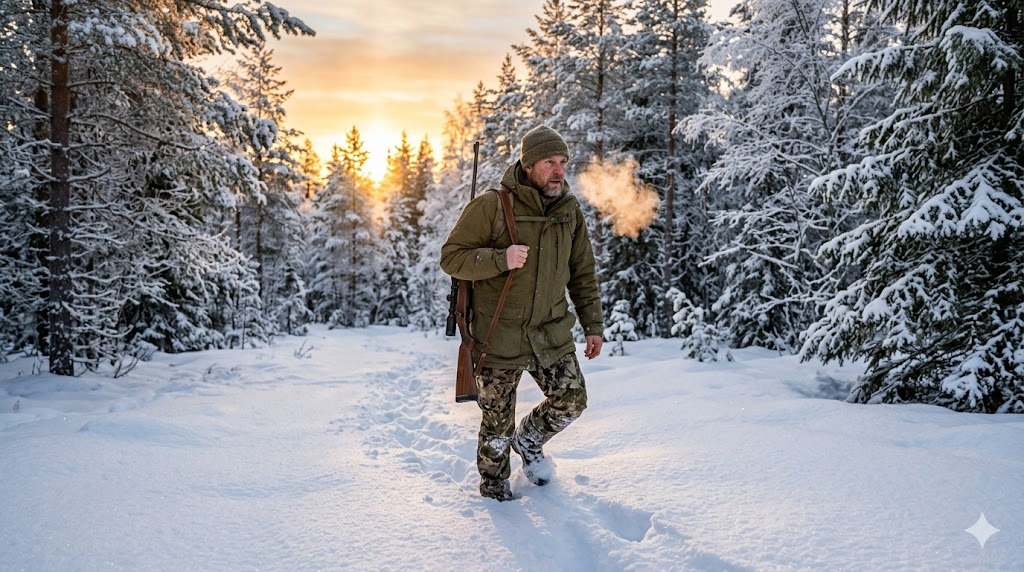
Snow turns the woods into a transparent book. Every animal that moved last night left a written record - direction of travel, time, whether it was running or feeding, sometimes the bed it spent the night in. Late-season snow hunts are the most productive of the year for tracker hunters and stand hunters alike, and they pair well with the broader cold and snow hunting tactics that keep you safe when the temperature drops. But the same snow that reveals deer punishes hunters who didn’t plan for cold, wet, or wind. This guide covers the gear, the tactics, and the cold-weather rules that matter when temperatures drop below freezing.
Layering: The Foundation
Cold-weather hunting clothing works as a system of three to four layers. Each layer has a job; mixing the jobs ruins the system.
Base layer: Merino wool or synthetic next to skin. Never cotton. Midweight merino (200-250 g/m²) is the universal answer.
Mid layer: Insulation. Fleece, wool, down, or synthetic puffy. Weight depends on the day.
Insulation layer (for sits): A heavy down or synthetic puffy goes over your active layers when you sit down. This is the layer most hunters underbuy.
Outer shell: Wind and waterproof. Gore-Tex, eVent, or similar. For sit-still hunting, this layer should also be quiet - fleece-faced softshells make a difference.
The principle: dress to be slightly cold on the walk in, then add insulation when you sit. Sweat is the enemy in cold weather - wet base layers conduct heat away from your body and lead to hypothermia in minutes.
The Critical Puffy Jacket
For stand hunting in single-digit temperatures, the most important piece of gear is a true expedition-weight puffy - either down (Sitka Kelvin Lite Down, First Lite Uncompahgre, Outdoor Research Helium Down) or synthetic (Sitka Kelvin Aerolite, Stone Glacier Grumman). Pack it in a stuff sack, layer it on the moment you sit down, and remove it before the walk out.
A $400 puffy lets you hunt 5 hours in 10°F weather. The same hunt without it ends in 90 minutes.
Boots and Feet
Below freezing, insulated rubber boots with 800-1600 grams of insulation (LaCrosse AlphaBurly Pro, Muck Arctic Pro) win for stand hunting. They block moisture completely, run warmer than leather boots, and accept a foot warmer in the toe.
For active spot-and-stalk in snow, insulated leather boots with 400-600 grams of insulation (Schnees Beartooth, Kenetrek Mountain Extreme, Crispi Idaho) plus gaiters work better - leather breathes enough to handle sweat from movement.
Add boot blankets or insulated overboots for sits below 20°F. A $40 pair of boot blankets extends a stand sit by hours.
Hands and Head
You lose 10-20% of body heat through the head; hands and feet have the smallest blood supply per surface area. Both need attention.
Heated gloves (Volt, Ororo) genuinely work for extended cold sits. For active hunting, layer thin liner gloves under heavier shooting gloves so you can take shots without exposing skin.
Hand muffs (heated or chemical-warmer style) attached at the waist keep hands functional without removing gloves.
Hat: A wool beanie covers the standard need. For brutal cold, add a face cover or balaclava - cheeks and nose lose heat shockingly fast in wind.
Neck gaiter: Pulls up over the face, retains breath warmth, blocks wind on the carotid arteries.
Reading Snow Tracks
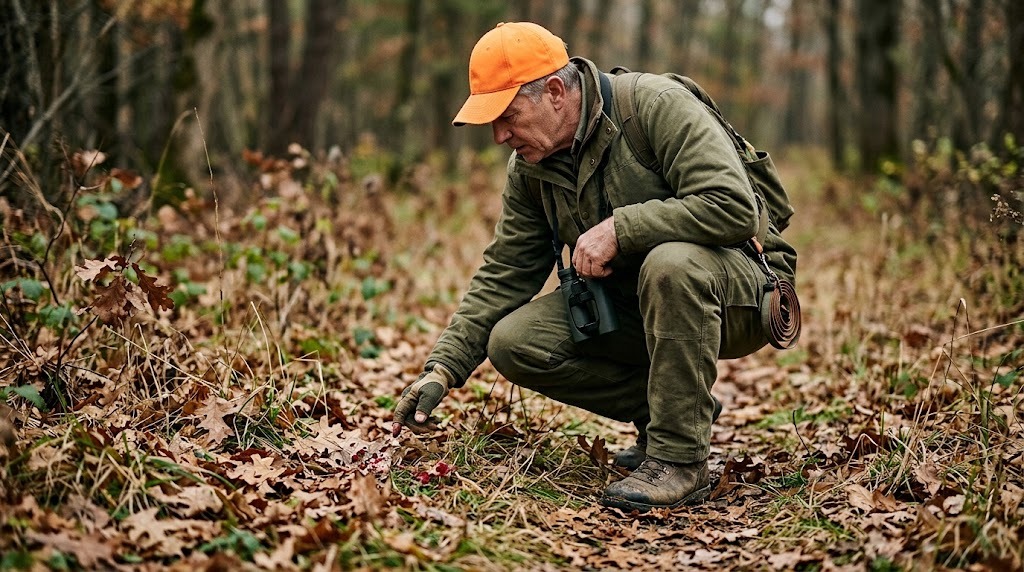
Fresh snow under 24 hours old is gold for tracking. Look for:
- Cleanly defined tracks with sharp edges - fresh
- Tracks half-filled by drifting snow - older
- Snow knocked off branches above tracks - animal was running
- Tracks with no overprinting - single animal or hours apart
- Bed shapes - oval depressions where a deer or elk lay
- Yellow snow or droppings in the trail - bonus info on diet and timing
A buck print is typically 3 inches long or larger in soft snow, with the dewclaws often visible. Doe prints rarely exceed 2.5 inches.
Snow Tracking Tactics
Once you cut a fresh track, two main approaches:
Direct tracking - follow the track quietly, scanning constantly, expecting the deer to be just over the next rise. Works best in fresh light snow with no wind at your back.
Cutting off the loop - bucks often loop back into bedding. Determine likely bedding cover and circle wide to enter from downwind, intercepting rather than following.
Both require fast, quiet movement. Snow muffles your footfalls but it also amplifies every snapped branch.
Wind in Snow
Snow doesn’t change scent rules - it amplifies them. Cold air sinks and flows downhill at night; thermals reverse in the morning sun. Always hunt into the wind, no exceptions.
A small windicator (powder bottle, milkweed) tells you instantly what you can’t feel. Use it every 5 minutes.
Vehicles and Access
Late-season snow means difficult truck access. Always carry:
- Tow strap or chains
- Snow shovel
- Sand or kitty litter for traction
- Spare blankets and food in the cab
- Charged phone with offline maps
Tell someone your exact destination. A vehicle stuck on a logging road in 10°F is a medical emergency timer.
Hypothermia Warning Signs
Even moderate cold can cause hypothermia in wet conditions. Recognize these in yourself and your partners:
- Uncontrolled shivering (mild) - still functional, get warm
- Slurred speech, fumbling fingers (moderate) - stop activity, force warmth in
- Confusion, paradoxical “feeling warm” undressing (severe) - medical emergency
Get out of wet clothes, into a sleeping bag with a hot drink, and call for help. Don’t try to walk out severely hypothermic.
FAQ
Can I hunt in extreme cold (-10°F or colder)? Yes, with the right gear and short sits. Movement breaks generate heat. Limit stand sits to 2-hour blocks.
Do deer move in snow? They move heavily before and after major snowfall, then bed during severe weather, then move heavily once the storm clears.
What about chemical hand warmers? Carry 6+ pairs for an all-day hunt. Open them in the truck and let them warm fully before placing in gloves/boots.
Is silicone face protection worth it? For sub-zero hunts, yes. Standard balaclavas freeze your breath into a damp mask; silicone-faced styles shed moisture.
Will scent control sprays freeze? Yes - keep them inside a jacket pocket, not in the pack.
Conclusion
Snow hunting is the most rewarding hunting of the year for hunters willing to suffer for it. Layer correctly, carry a real puffy, protect feet and hands, and learn to read tracks before you depend on them. Track in fresh snow with the wind in your face, sit warm in your puffy when you stop, and respect the cold - and you’ll see more deer in two days of late season than two weeks of opening week.
🛒 Recommended Gear on Amazon
- Snow camo - browse current options and reviews on Amazon.
- Insulated hunting boots - browse current options and reviews on Amazon.
- Hunting gaiters - browse current options and reviews on Amazon.
As an Amazon Associate, we earn from qualifying purchases - at no extra cost to you. This helps us keep producing free, in-depth guides.