Hunting Small Properties Effectively
On a small parcel, boundaries, access and wind matter most: know the lines, talk to neighbours before a retrieval, plan stands for specific winds and hunt sparingly, following the Missouri Department of Conservation, Virginia DWR and the Alaska course.
On a small property every mistake carries further: your scent, your route in and out, and the property lines are all close. This guide covers boundaries, access, wind and setups, following the Missouri Department of Conservation (MDC), Virginia’s Department of Wildlife Resources (DWR) and the Alaska Bowhunter Safety Course.
Know the boundaries
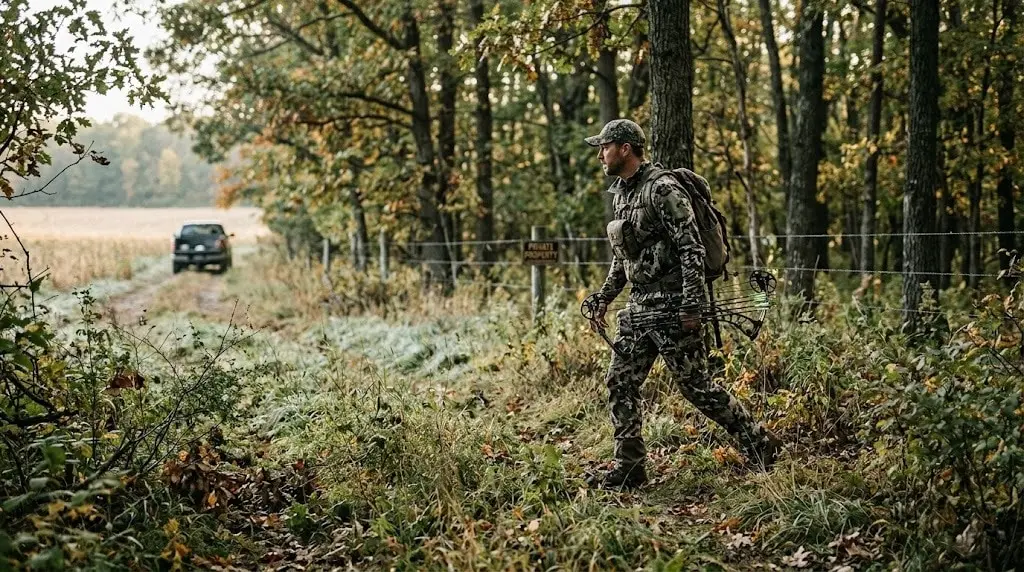
- Know exactly where the lines are: MDC says ownership can be found at the county courthouse, the assessor’s office or in a plat book.
- Trespass includes retrieval: MDC is clear that a hunting permit doesn’t give you the right to trespass, including following a deer that crosses a property line; ask that owner for permission to search. On a small parcel this is likely, so meet the neighbours before the season.
- Permission yearly: if you don’t own the land, MDC notes permission one year doesn’t carry over to the next. Our landowner permission guide covers asking.
Access is the whole game
Plan routes in and out that don’t cross where deer bed or feed and that keep your scent off them. Virginia DWR’s advice to keep landowners informed after every visit also helps you track how often you’ve been in.
Wind discipline
The Alaska course says to set up downwind or crosswind of where you expect deer, because your scent drifts downwind. On a small parcel, plan each stand or blind for a specific wind and only hunt it on that wind. See our wind and scent control guide.
Give deer a reason to stay
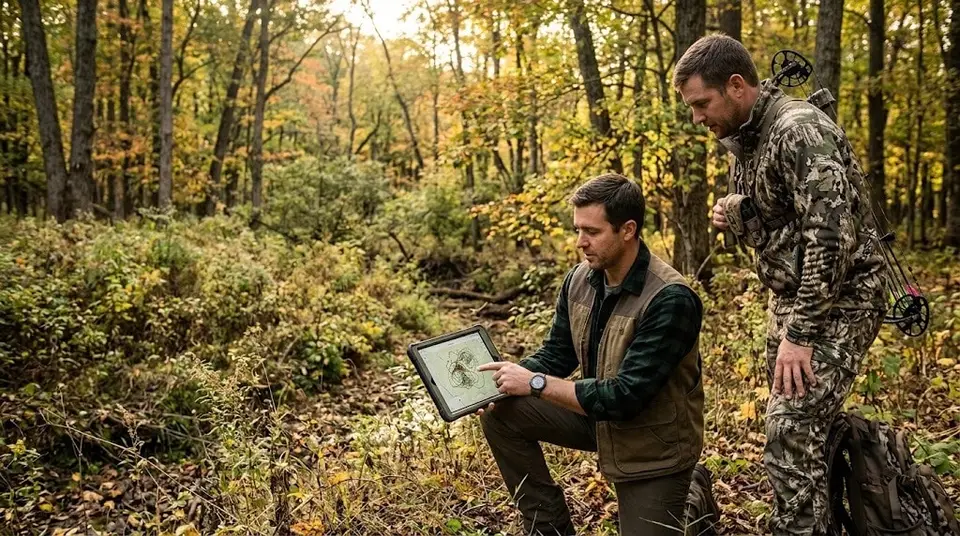
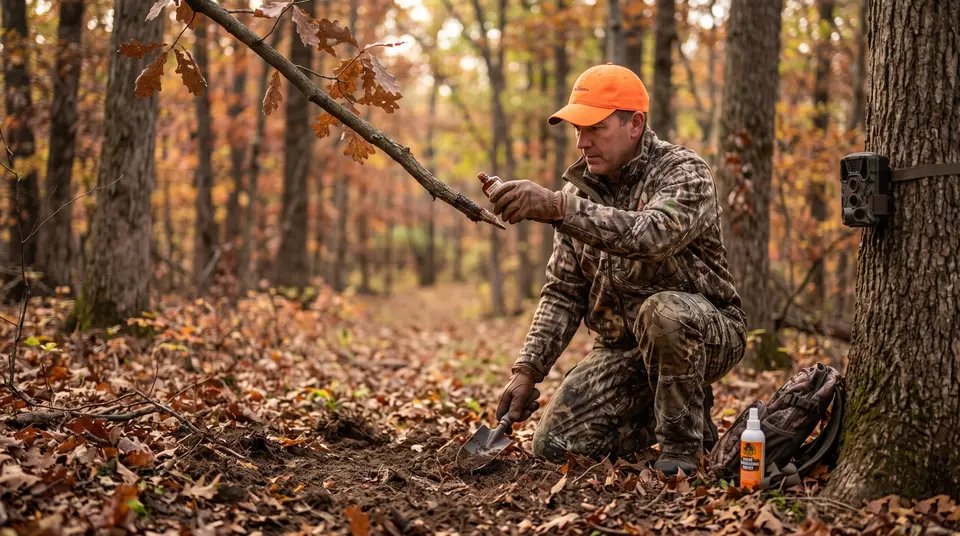
Ask the owner about their goals: MDC suggests helping meet them, such as taking does where the owner wants fewer deer. Learn where the parcel’s food, cover and water are from sign and cameras; see our trail camera placement guide.
Setups that suit tight ground
- Ground blinds can be set up ahead of time along trails and hide you well, but make your scent and movement easier to detect at ground level (Alaska course); see our ground blind guide.
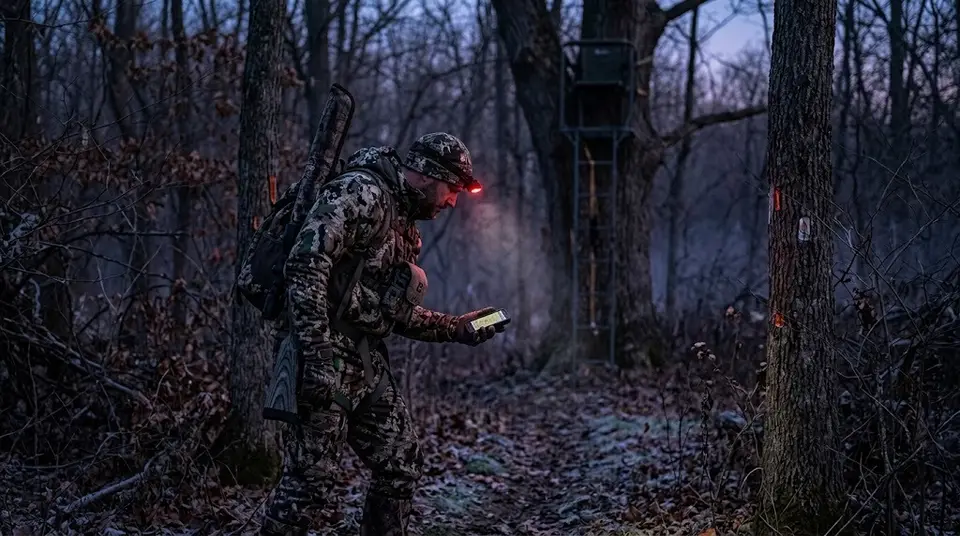
- Tree stands get your scent above a deer’s nose, but the Alaska course reminds hunters to watch wind currents that can carry scent down, to wear a fall-arrest system and to use stands only in daylight; see our tree stand safety harness guide.
- Safe shooting: on small ground, houses, roads and neighbours may be close. The Alaska course’s rule is to shoot only with a safe backstop and to be sure of what is beyond your target; check local rules on discharge distances.
The realistic expectation
Hunt a small parcel sparingly and only on the winds you planned for, and judge it over a whole season rather than a few sits.
Sources
- Missouri Department of Conservation, Hunting on private land. Read 28 October 2026.
- Virginia Department of Wildlife Resources, How to gain hunting permission. Read 28 October 2026.
- Alaska Bowhunter Safety Course (bowhunter-ed.com): Ground blinds, White-tailed deer tips, Protect against accidental falls and Archery safety. Read 28 October 2026.
Recommended Gear on Amazon
- Wind checker powder - browse current options and reviews on Amazon.
- Lock-on treestand - browse current options and reviews on Amazon.
- Climbing sticks - browse current options and reviews on Amazon.
As an Amazon Associate, we earn from qualifying purchases - at no extra cost to you. This helps us keep producing free, in-depth guides.