Addax
The addax is a pale desert antelope that has all but vanished from its native Sahara, yet thrives on the exotic-game ranches of Texas, making it one of the most meaningful and unusual big-game animals an American hunter can pursue.
🗓️ Last reviewed: June 2026
Overview
The addax is a pale desert antelope that has all but vanished from its native Sahara, yet thrives on the exotic-game ranches of Texas, making it one of the most meaningful and unusual big-game animals an American hunter can pursue. Critically endangered in the wild - with only a tiny remnant population left across North Africa - the addax has found an unlikely stronghold on private Texas ranches, where managed herds have grown into the hundreds and the species is genuinely secure. A handsome, sandy-white antelope with long twisting spiral horns carried by both sexes and broad splayed hooves built for soft sand, the addax offers an open-country spot-and-stalk hunt, fine meat, and a striking trophy with a real conservation story behind it. For the hunter who wants something distinctive and substantive, the addax is a remarkable choice.
Identification & Appearance
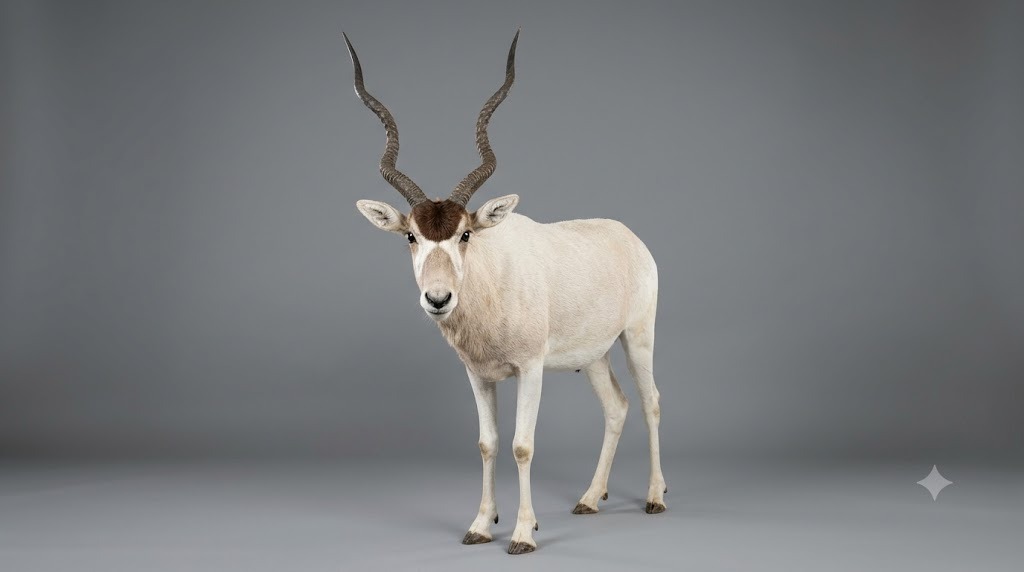
The addax is a stocky, medium-large antelope with a coat that shifts from grayish-brown in winter to a pale, almost white sandy hue in the warm months, an adaptation that reflects the desert sun. It carries a short, dark mane on the nape, a chestnut-brown tuft of hair across the forehead, and faint white facial markings that give the species its name. Its most famous feature is the pair of long, slender horns that spiral in two to three full twists and are carried by both bulls and cows. Telling the sexes apart is tricky because both are horned - cows' horns tend to be more slender, while bulls' are heavier and thicker, and bulls are generally larger and more robustly built. The addax also has notably broad, splayed hooves that spread its weight on loose sand. Mature animals commonly weigh from around 130 up to roughly 270 pounds. The pale coat, twisting horns, and desert build make it unmistakable.
Range & Habitat (US)
In the United States, addax are found almost entirely on private exotic-game ranches, concentrated heavily in the Texas Hill Country and across the brush and ranch country of South and West Texas. There are no free-ranging wild herds in North America; instead the animals live within large, often low-fenced or high-fenced ranches that manage them as part of a mix of exotic species. Built for the desert, addax do well in the hot, dry, open country of Texas, ranging across grassland flats, sandy draws, and sparse brush where they can see far and travel widely. They favor the same kind of open, long-sightline terrain that suits desert antelope, relying on their eyes, their endurance, and the heat tolerance that let them survive the Sahara. This desert hardiness is exactly what allows them to flourish on Texas range.
Behavior & Sign
Addax are hardy, wide-ranging desert animals adapted to scarce water and brutal heat, and on open ranch country they rely on eyesight and distance to keep clear of danger. They are social, typically moving in small herds of cows, calves, and younger animals, with mature bulls sometimes solitary or running in small bachelor groups. They are most active in the cooler hours of morning and evening and can cover a lot of ground in search of forage. Addax are generally less skittish than truly free-ranging desert game, but on larger ranches they can be genuinely wary and hard to approach. Sign across sandy ground includes the distinctive broad, splayed tracks the species leaves, droppings, and well-used trails toward forage and water. As with other open-country animals, finding addax is largely a matter of glassing wide terrain and spotting their pale bodies at distance.
Hunting Seasons & Timing
Because the addax is an exotic rather than a native game animal, there is no draw and no closed season in Texas: it may generally be hunted year-round with a valid Texas hunting license and landowner permission, with no state-issued tag required. This makes it an accessible, no-draw opportunity available any month of the year. That said, the cooler months from late fall into winter are by far the most comfortable and practical, easing long stalks across open country and the care of a large carcass in a hot climate, and the winter coat tends to be at its most handsome. Hunts are arranged directly with ranches, which set their own pricing, access, and management rules. Always confirm the current license requirement and the specific ranch's terms before you go, as exotic and game-animal rules can change.
Hunting Methods
Spot-and-stalk across open ranch country is the defining method for addax and a genuinely engaging one. Hunters glass stretches of grassland, sandy flats, and sparse brush from high points or while covering ground on foot and by vehicle, locate a herd or a lone bull, then plan a stalk that uses subtle terrain and the wind to close the distance on a sharp-eyed animal. Shots are often at moderate to extended range in the open, placing a premium on marksmanship and a steady rest. Some ranches also allow archery and other methods for those who want a closer, more demanding challenge. Because addax are durable animals built to endure, hunters should bring adequate rifle and bullet and be prepared for a clean follow-up if needed. Patience, careful glassing, and disciplined shooting are the keys to a good addax hunt.
Where to Find Them - Reading the Terrain
Glass the open ground: grassland flats, sandy draws, and sparse brush where addax feed and travel, and the long sightlines that let you spot pale bodies at distance. Look from elevated vantage points at first and last light, scanning for the sandy-white coats and twisting horns of animals against the country. The species' broad, splayed tracks on soft sand, droppings, and well-used trails toward forage and water concentrate movement and help you pattern where animals are working. Because addax range widely even within a ranch, expect to cover and glass a fair amount of ground to locate them. Once you find animals, use what terrain relief and brush exist to plan a stalk, keep the wind in your favor, and be ready for an open final approach - the kind of stalk that defines this desert-antelope hunt.
Gear & Optics Needed
Addax hunting is an open-country, glassing-intensive pursuit, so good optics matter. A quality 10x42 binocular and ideally a spotting scope let you locate animals and judge horns across distance, and a reliable rangefinder helps with the open shots common on ranch flats. Bring a flat-shooting, accurate rifle - cartridges in roughly the .25 to .30 caliber class with a well-constructed bullet suit a durable animal of this size, and the addax does not demand the heaviest magnums. A steady rest such as a bipod or shooting sticks is valuable for shots across open ground. Add rugged boots for sandy and brushy terrain, plenty of water and sun protection for the Texas heat, and a plan to quarter and cool a couple hundred pounds of meat quickly in a warm climate. Practice at realistic field ranges before the hunt so you can make a clean, confident shot.
Shot Placement & Field-Dressing
A clean, ethical harvest on a durable desert antelope depends on precise shot placement and an adequate, well-aimed bullet. The broadside shot to the heart-lung area, tight behind the front shoulder and into the lower third of the chest, offers the best margin, and on a heavy bull that might travel in open country, taking the shoulder helps anchor it. Wait for a calm, well-ranged, unobstructed shot from a steady rest, and be ready to follow up if needed. Approach a downed addax calmly and from behind, mindful that the long spiral horns can injure. Field care is demanding in Texas heat: a mature addax yields a generous amount of meat that should be skinned, quartered, and cooled quickly. Work cleanly, keep the meat shaded and ventilated, and follow all carcass-handling and ranch rules.
Meat & Eating Quality
Addax venison is excellent - lean, fine-grained, and mild, comparing favorably with other prized desert antelope and well regarded by those who take one. As with all wild game, eating quality depends heavily on field care, and the Texas heat makes rapid cooling and clean handling especially important. The tender loin and backstrap shine with quick, high-heat cooking, while the larger hindquarter muscles roast, braise, or grind very well, and a mature animal yields a satisfying supply of lean red meat. For meat hunters, an addax delivers both a distinctive trophy with a genuine conservation story and a generous amount of fine table fare, fully rewarding the effort of an open-country stalk.
Common Mistakes
The most common mistake with addax is treating an exotic-ranch hunt as a guaranteed, effortless one - on larger ranches these are wary, wide-ranging animals, and hunters who are not ready to glass open country, cover ground, and shoot accurately can still struggle. Misjudging distance in the deceptive open without a rangefinder is a frequent error, as is failing to get a steady rest for an open shot. Bringing too light or poorly matched a bullet can lead to lost game on a durable animal. Hunters also sometimes approach a downed animal carelessly, risking injury from the spiral horns. Finally, underestimating the Texas heat and the mass of meat can spoil a hard-won harvest. Patience, accurate shooting, the right gear, and care all matter.
Regulations & Conservation Note
The addax occupies a striking place in conservation: critically endangered and nearly gone from the wild Sahara, the species survives in real numbers largely thanks to managed herds on Texas ranches, where regulated hunting gives the animals economic value that funds their care, habitat, and continued breeding. In Texas the addax is hunted as an exotic under landowner authority, with a valid hunting license and no state tag, and the revenue from hunts directly supports the ranches that maintain these conservation herds. Responsible hunters apply fair-chase ethics, take only clean shots with adequate equipment, fully use the meat, and follow all license, access, and carcass rules. Hunting addax legally and ethically supports a model that has, in practice, helped keep a species alive that might otherwise have disappeared entirely.
Best Suited For
The addax suits the hunter who wants a distinctive open-country spot-and-stalk hunt with a real conservation story, available year-round with no draw and accessible to a wide range of experience levels. It rewards careful glassing, a patient stalk, and disciplined marksmanship at moderate to longer ranges, and it offers a striking sandy-white trophy with twisting horns plus excellent meat. Hunters who enjoy open terrain, glassing, and a fair, ranch-based hunt will find the addax very rewarding, and the no-season, no-draw access makes it easy to plan. It is a manageable hunt for newer hunters under good guidance, while still offering enough challenge on larger ranches to satisfy experienced ones - a desert antelope that is both attainable and genuinely meaningful to take.
FAQ
Do I need a special permit to hunt addax? In Texas, addax are hunted as an exotic with a valid Texas hunting license and landowner permission - there is no draw and no state-issued tag required. Hunts are arranged directly with private ranches, which set their own terms. Always confirm the current license requirement and the specific ranch's rules before you go.
Why are addax challenging to hunt? On larger ranches addax are wary, wide-ranging desert animals with good eyesight that rely on open country and distance to stay safe, so locating and approaching them takes glassing, patience, and accurate shooting. They are also durable, which rewards a well-placed bullet.
When is the best time to hunt addax? Addax can be hunted year-round in Texas, but the cooler months from late fall into winter are most practical, easing long stalks and the care of a large carcass in the heat, and the winter coat is at its handsomest.
Is addax meat good to eat? Yes - it is lean, fine-grained, and mild, comparing well with other prized antelope, and a single animal yields a generous amount. Fast cooling and clean handling in the Texas heat are essential.
What rifle should I bring for addax? A flat-shooting, accurate cartridge in roughly the .25 to .30 caliber class with a well-constructed bullet and a steady rest is well suited to a durable antelope of this size - you do not need a heavy magnum, just good shot placement.