Barasingha
The barasingha, or swamp deer, is one of the most elegant of all deer - a tall, wetland-loving animal whose Hindi name means "twelve-tined," a nod to the many-pointed antlers a mature stag carries.
🗓️ Last reviewed: July 2026
Overview
The barasingha, or swamp deer, is one of the most elegant of all deer - a tall, wetland-loving animal whose Hindi name means "twelve-tined," a nod to the many-pointed antlers a mature stag carries. In its native India the species is strictly protected, a conservation icon brought back from the brink, so there is no hunting it there. In the United States, the barasingha exists almost entirely on exotic-game ranches, chiefly in Texas, where a limited number are managed and hunted. For the hunter, it is a spot-and-stalk animal of open, moist grasslands and wetland edges, prized above all for its ornate, wide-sweeping rack. It is a specialty pursuit - uncommon, visually spectacular, and best approached with patience and respect for the animal's protected status elsewhere.
Identification & Appearance
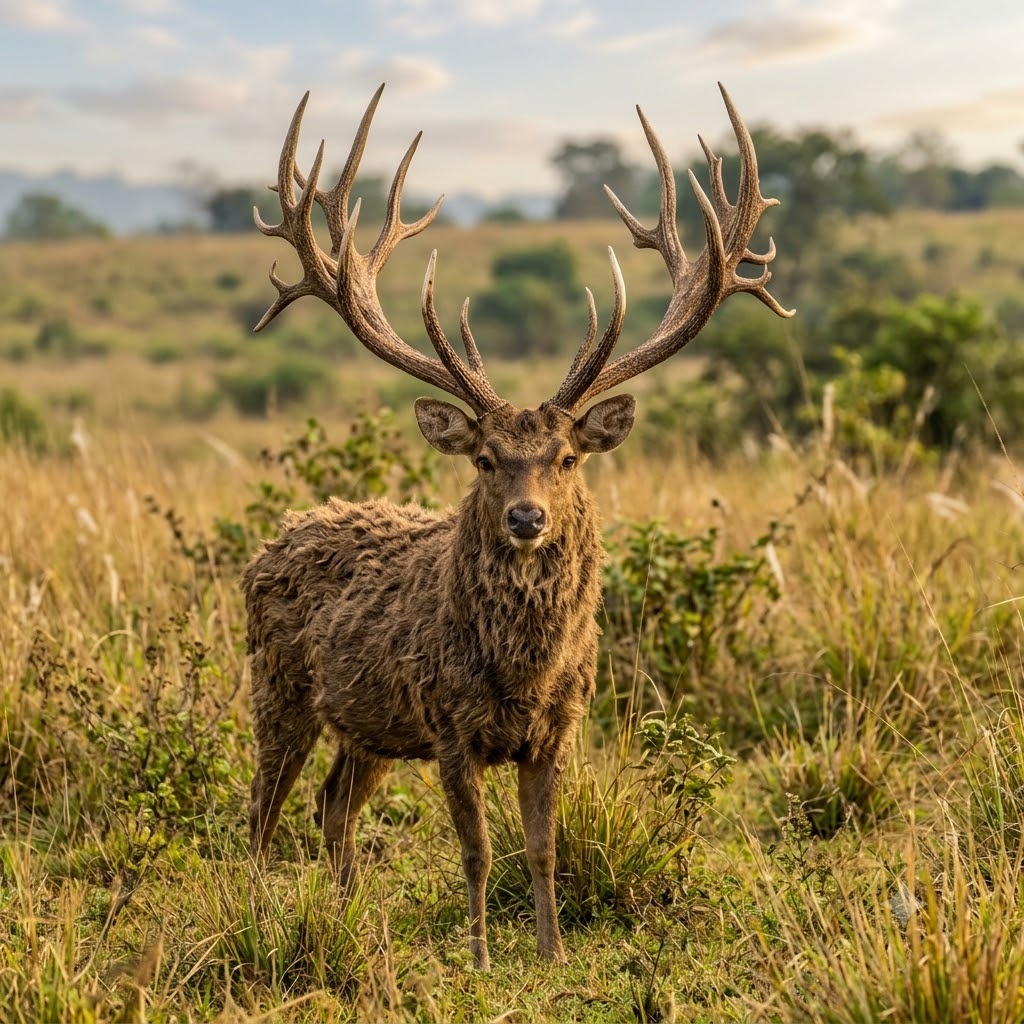
The barasingha is a large, graceful deer standing roughly 44 to 46 inches at the shoulder, with a rangy, long-legged build suited to soft wetland ground. The coat is a woolly brown - richer and slightly reddish in summer, grayer in winter - with a paler underside and, on some animals, faint pale spotting. The species' hallmark is the stag's antler: a many-tined rack, often carrying twelve or more points, with the beams curving up and out and multiple tines branching near the tops in an ornate, sweeping crown. Adult stags commonly weigh 375 to 550 pounds, among the heavier exotic deer, while hinds are smaller and antlerless. The overall impression is of a tall, dignified deer built for marshy country.
Range & Habitat
In the United States, the barasingha is found on exotic-game ranches in the Texas Hill Country and South Texas, where ranches maintain the open, grassy, moisture-holding pastures the deer prefer. Its native range is the wetlands and floodplain grasslands of India and Nepal, where it is protected. True to its "swamp deer" name, the barasingha favors tall grasslands, marsh edges, and moist meadows with open grazing and nearby cover. On ranches this translates to open pasture and grassland with brushy or timbered edges. The recurring theme is open, grassy feeding ground with low, damp terrain the animal is adapted to.
Behavior & Sign
Barasingha are social deer, typically found in herds rather than as solitary animals, grazing in the open on grasses and aquatic vegetation. They are most active during the cooler hours of morning and evening, moving to shade or cover through the heat of the day. During their rut, stags become more vocal and gather groups of hinds, though the display is less dramatic than the roaring rut of some other deer. Because they favor open grassland, they are often visible at distance, and their herd behavior means spotting one deer frequently reveals others. Sign includes grazed feeding areas on open ground, worn trails through grass to water and shade, and beds pressed into tall grass or marsh-edge cover.
Hunting Seasons & Timing
Because the barasingha in the United States exists as a ranch-raised exotic outside the state game-season framework, it can generally be hunted year-round, with timing guided by ranch policy, animal condition, and antler development. Many hunters target the cooler months for comfort and for stags in prime hard-antler condition. There is no wild, publicly regulated season for barasingha in the US, and there is no legal hunting in its protected native range. The best day-to-day timing follows the deer's habits: cool mornings and evenings when herds graze the open in good light. Always confirm the specific ranch's rules and recommended timing before the hunt.
Hunting Methods
Spot-and-stalk is the primary method for barasingha, well suited to their open, grassy habitat: glass to locate a herd and the stag worth pursuing, then use terrain, cover, and wind to close the distance. Because the deer are often in the open and in groups, careful, unhurried stalking that avoids alerting the herd is key - a single spooked animal can move the whole group. Ambush from a stand or blind over a favored grazing area or water source also works. Given the animal's size and open habitat, patient glassing and a well-planned approach matter far more than covering ground.
Where to Find Them - Reading the Terrain
Read the country as open feeding ground with cover and water close at hand. Barasingha graze tall grasslands, moist meadows, and marsh edges and retreat to shade or brushy cover in the heat, so glass the open pastures at first and last light. Look for grazed feeding areas, trails worn through the grass toward water, and beds in tall cover along the damp edges. Because the deer herd up and favor open ground, a slow scan with good glass will usually turn them up; then it is a matter of reading the wind and the terrain folds to approach unseen. Position downwind of the herd and let the stalk develop patiently.
Gear & Optics Needed
Quality optics lead the kit: a 10x42 binocular for scanning open grassland and a spotting scope to judge a stag among the herd. A rangefinder is important where open distances deceive. Quiet, muted clothing keeps you concealed on long stalks, and sturdy, water-tolerant boots handle the soft ground these deer favor. A shooting stick or bipod steadies a shot at a stag standing among hinds. Round out the kit with a sharp knife, a capable pack for a large animal, a headlamp, and a mapping app. Playing the wind still outweighs any gear.
Shot Placement & Field-Dressing
Ethical, fair-chase hunting demands a clean, quick harvest, and on a deer as large as the barasingha, precise placement matters. The broadside shot to the heart-lung area - low and just behind the front shoulder - offers the best margin. Wait for a calm, unobstructed, well-ranged animal clear of other deer in the herd, and pass any shot where a hind stands behind the stag or the animal is quartering hard. After the shot, give the deer time before following. Field-dress promptly to cool a large carcass in warm conditions, and follow all local carcass-handling regulations.
Meat & Eating Quality
Barasingha venison is lean, mild, and of good eating quality, in line with other large exotic deer, and a single big stag yields a substantial quantity of meat. As always, table quality depends far more on field care than on the animal: rapid cooling of the large carcass in warm conditions is critical, along with clean handling and proper aging where facilities allow. Backstraps and tenderloins are excellent for quick, high-heat cooking; the heavy hindquarters roast or grind well; and the abundant trim makes fine burger, sausage, and stew. For those who take one, the barasingha combines a spectacular trophy with plentiful, quality venison.
Common Mistakes
The most common error is ignoring the wind and the herd's collective alertness - spook one deer and the whole group leaves. Others include rushing the stalk across open ground, skylining on a rise, and misjudging distance in deceptive open terrain. Because the deer often stand in groups, hunters sometimes take a shot without a clear, safe backdrop or with other animals dangerously close behind the target. Impatience is the underlying theme. Careful glassing to find the right stag, a slow wind-conscious approach, and waiting for a clean, unobstructed shot consistently outperform hurried tactics on this open-country deer.
Regulations & Conservation Note
The barasingha is a genuine conservation story. In its native India it was reduced to precarious numbers and has been protected and painstakingly recovered, so it may not be hunted there. In the United States it exists as a ranch-managed exotic, and interest in the species has helped maintain healthy herds. Wherever you encounter it, honor that protected status abroad, and on ranches follow the property's rules and any local carcass-handling laws. Never conflate a protected native population with a huntable one. Hunting only within the law helps keep these striking deer secure.
Best Suited For
The barasingha suits the hunter seeking a rare, visually spectacular trophy and an open-country spot-and-stalk challenge. It rewards patient glassing, disciplined wind management, and steady shooting on a large animal often standing among a herd, so it fits an experienced deer or plains-game hunter. Those drawn to the unusual - a twelve-tined wetland deer available in the US only as a managed exotic - and hunters who value both an ornate rack and abundant venison will find it a worthwhile pursuit.
FAQ
Can I hunt barasingha in the United States? Yes, but only on exotic-game ranches, primarily in Texas, where they are managed as private exotics. There is no wild public season, and they are protected and unhuntable in their native India.
Why is it called "twelve-tined"? The Hindi name barasingha means twelve-tined, referring to the many points a mature stag carries on its ornate, wide-sweeping antlers - often twelve or more.
What habitat do barasingha prefer? True to their "swamp deer" name, they favor open tall grasslands, moist meadows, and marsh edges. On ranches this means open, grassy, moisture-holding pastures with cover nearby.
Is barasingha meat good to eat? Yes - it is lean and mild, and a large stag provides a lot of it. Quality depends most on cooling the big carcass quickly in warm conditions and on clean field care.
How should I approach a barasingha hunt? Plan on spot-and-stalk in open country. Glass to find the right stag in the herd, mind the wind and the other deer, and make a patient, well-planned approach for a clean, unobstructed shot.