Blackbuck
The blackbuck is one of the most elegant and challenging exotic big-game animals in the United States, a true antelope native to the Indian subcontinent that has flourished as a free-range species across the Texas Hill Country.
🗓️ Last reviewed: June 2026
Overview
The blackbuck is one of the most elegant and challenging exotic big-game animals in the United States, a true antelope native to the Indian subcontinent that has flourished as a free-range species across the Texas Hill Country. Introduced to ranches decades ago, blackbuck found the climate and terrain of central and South Texas much to their liking, and Texas now holds a thriving free-ranging population. With its striking black-and-white coat, long spiraling horns, and blazing speed across open country, the blackbuck offers a hunt defined by sharp eyes, open ground, and careful marksmanship. It is a smaller-bodied animal than most big game, hunted as much for its beauty and the difficulty of the stalk as for the table. For the hunter who loves open-country spot-and-stalk, the blackbuck is a jewel.
Identification & Appearance
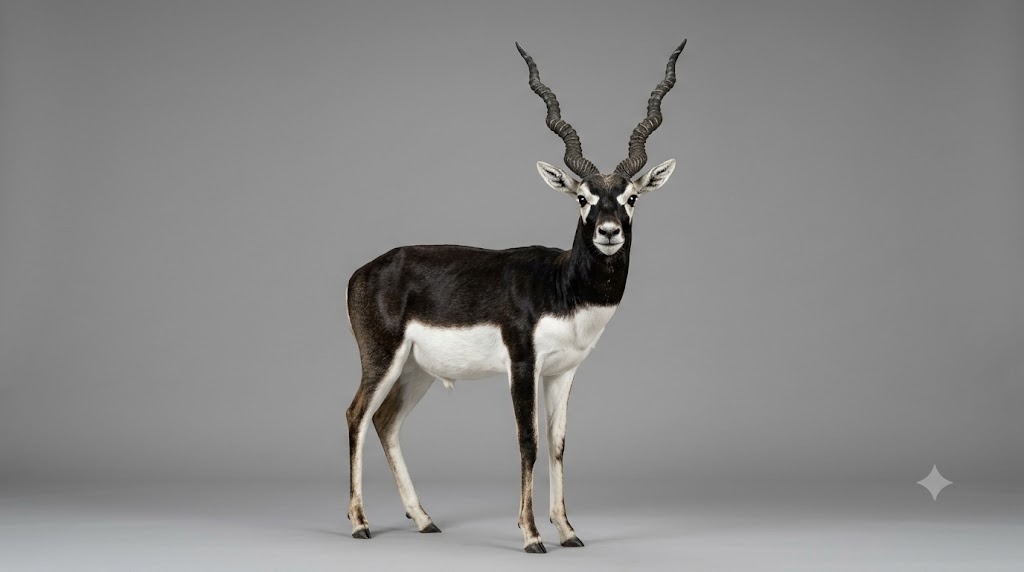
The blackbuck is a slender, graceful antelope with a dramatic coat and distinctive horns. Mature bucks are unmistakable: the upper body, neck, and outer legs turn a deep, glossy black or dark brown that contrasts sharply with a pure white belly, white rump, white legs, and bold white rings around the eyes. They carry long, ringed horns that twist in elegant spirals, often with several turns in the oldest animals, set in a distinctive V. Bucks are small compared with deer, typically weighing in the rough range of 50 to 90 pounds. Does and young are antlerless and a yellowish-fawn color, lacking the black coloration of mature bucks. The blackbuck's slim build, contrasting markings, and spiraled horns make a mature buck one of the most beautiful animals a hunter can pursue.
Range & Habitat (US)
In the United States, free-ranging blackbuck are concentrated in the Texas Hill Country, especially the Edwards Plateau region, with additional ranch herds in South Texas and elsewhere in the Southwest. They are animals of open country, favoring grassland, open savanna, and lightly brushed pastures where their eyesight and speed give them the advantage. Unlike deer that rely on heavy cover, blackbuck prefer terrain where they can see danger coming from a long way off and outrun it across the flats. They tolerate the hot, semi-arid conditions of central Texas well. The combination of open grazing land, scattered brush, and the mild Hill Country climate has allowed blackbuck to thrive as one of the most successful exotic introductions in North America.
Behavior & Sign
Blackbuck are alert, fast, and highly visual, relying on keen eyesight and tremendous speed - they are among the fastest land animals - to escape danger across open ground. They are gregarious, gathering in herds of does and young with dominant bucks holding small territories, and they are most active in the cooler parts of the day. During the breeding period a dominant buck defends a patch of ground and gathers females, displaying and chasing off rivals. Sign includes small, neat tracks across open flats, droppings, well-grazed grassland, and the dust and scrapes around a territorial buck's ground. Because blackbuck live in the open and flee at distance, much of "reading sign" is really about glassing the open country and locating herds before they locate you.
Hunting Seasons & Timing
As a non-native exotic on Texas private land, blackbuck generally may be hunted year-round with a valid Texas hunting license and landowner permission, with no fixed state season. The practical timing is driven by weather and animal condition. Many hunters favor the cooler months from fall into early spring, when the heat is less punishing for long stalks and meat care and animals move comfortably in daylight. That said, mature bucks hold their dramatic black coloration year-round, so there is no single "rut window" that dominates the way it does for deer. Summer hunts are possible but hot. Always confirm current license requirements and the specific rules of the ranch where you hunt before heading out.
Hunting Methods
Spot-and-stalk is the defining method for blackbuck and the heart of the hunt's appeal. Hunters glass open pastures and grassland from vantage points, locate a herd or a lone trophy buck, then attempt to close the distance using the terrain, brush lines, and wind - no small feat against an animal with superb eyesight standing in the open. Because blackbuck are quick to run and hard to approach, shots can be longer than with cover-loving deer, putting a premium on marksmanship and a steady rest. Some hunters set up over water or feeding areas in the heat, but active glassing and stalking is far more productive and engaging. Patience, a low profile, and disciplined shooting define a successful blackbuck hunt.
Where to Find Them - Reading the Terrain
Glass the open country: grassland flats, lightly brushed pastures, and open savanna where blackbuck graze and rest in view. The animals favor terrain with long sightlines, so look across the open ground from elevated vantage points at first and last light, when herds are most active and the light is best for spotting their contrasting markings. Watch for the flash of a black-and-white buck among the fawn-colored does. Well-grazed flats, neat small tracks, droppings, and the disturbed ground of a territorial buck mark areas in use. Plan stalks to use what little cover exists - brush lines, rises, and draws - and keep the wind in your favor, but accept that closing the final distance in the open is the central challenge.
Gear & Optics Needed
Blackbuck hunting is an open-country, glassing-intensive pursuit, so quality optics are essential. A good 10x42 binocular and a spotting scope let you pick herds and judge horns at long range, and a reliable rangefinder is vital for the open distances common on these hunts. Because blackbuck are small-bodied, a flat-shooting, accurate rifle in the lighter deer-cartridge classes (such as the .22 centerfire magnums up through the .25 and .270 calibers) with a quality bullet is well suited, prioritizing precision and trajectory over raw power. A steady rest - shooting sticks, a bipod, or a pack - is critical for the longer shots. Add sturdy boots for covering open ground, sun protection, plenty of water, and a flat-shooting setup you have practiced with at realistic ranges.
Shot Placement & Field-Dressing
Clean, ethical shooting matters especially with a small, fast animal often taken at distance. The broadside shot to the heart-lung area, just behind the front shoulder and into the lower third of the chest, offers the best margin on a blackbuck's modest vitals. Because shots can be long and the target is small, wait for a calm, well-ranged, unobstructed opportunity from a steady rest, and pass anything marginal. After the shot, mark the spot and approach carefully. Field care is straightforward but should be prompt, especially in warm weather: a blackbuck is a small animal that cools quickly, but clean handling, fast skinning and quartering, and getting the meat on ice preserve its quality. Follow all local carcass and disease regulations.
Meat & Eating Quality
Blackbuck venison is highly regarded - fine-grained, tender, lean, and mild, ranking among the better-eating exotics despite the animal's small size. As with all wild game, field care drives eating quality: rapid cooling and clean handling matter even more with a small carcass in warm Texas weather. The tender loin and backstrap are excellent for quick, high-heat cooking, while the modest hindquarters roast or are best used whole given the animal's size. Because a blackbuck yields a relatively small amount of meat compared with a deer, hunters often value it as a special, delicious portion rather than a freezer-filling harvest. Treated well in the field and kitchen, blackbuck makes superb table fare.
Common Mistakes
The most common mistake with blackbuck is underestimating their eyesight and trying to walk up on them in the open, only to watch the herd sprint away long before rifle range. Misjudging distance on the open flats leads to missed or wounded animals, so a rangefinder and a steady rest are essential. Hunters sometimes bring too much rifle for such a small animal, when accuracy and flat trajectory matter more than power, or fail to practice at the longer ranges these hunts demand. Rushing a shot at a nervous, about-to-bolt buck is another frequent error. Finally, neglecting prompt meat care on a small carcass in the heat can spoil a fine-eating animal. Patience and precise shooting are everything.
Regulations & Conservation Note
As a free-ranging but non-native species, blackbuck in Texas are hunted on private land under landowner authority with a standard Texas hunting license rather than under a fixed state game season. Their value as a sought-after exotic has made blackbuck a meaningful resource for Hill Country ranches, where managed hunting funds habitat work and broader wildlife stewardship - and, notably, the Texas population is now significant on a global scale for a species under pressure in its native range. Responsible hunters apply fair-chase ethics, take only clean shots, fully use the meat, and follow all license requirements and any disease or carcass-movement rules. Hunting blackbuck legally and ethically supports both the herds and the working rangelands that sustain them.
Best Suited For
The blackbuck is ideal for the hunter who loves open-country spot-and-stalk and the challenge of approaching a sharp-eyed animal across grassland, and who shoots well at moderate to longer ranges. It rewards patience, fieldcraft, and marksmanship over brute gear, and it offers one of the most beautiful trophies in North America. Hunters who enjoy a fast-paced, glassing-driven hunt and who appreciate a smaller, elegant quarry will love it. It is less suited to those wanting a large meat haul or a sit-in-the-timber ambush, but for an experienced or aspiring marksman seeking a stunning free-range antelope, the blackbuck is a superb choice.
FAQ
Do I need a special license to hunt blackbuck in Texas? No special tag is required for this exotic species - a valid Texas hunting license plus landowner permission is generally all you need, since blackbuck are hunted on private land rather than under a fixed state game season. Always confirm current requirements before you hunt.
Why are blackbuck hard to hunt? Blackbuck have exceptional eyesight and blazing speed, and they live in open country where they can see danger far off and outrun it. Closing the distance for a clean shot across open ground is the central challenge.
When is the best time to hunt blackbuck? The cooler months from fall into early spring are most comfortable for long stalks and meat care, though mature bucks hold their striking black coloration year-round, so there is no single dominant rut window like there is for deer.
Is blackbuck meat good to eat? Yes - it is fine-grained, tender, lean, and mild, and ranks among the better-eating exotics. The animal is small, so the yield is modest, but the quality is excellent with good field care.
What rifle should I use for blackbuck? A flat-shooting, accurate rifle in the lighter deer-cartridge range, paired with a quality bullet and a steady rest, is ideal for this small-bodied animal often taken at distance - precision and trajectory matter more than power.