Cape Grysbok
The Cape grysbok is a small, secretive antelope of the dense fynbos and thicket of the southern Cape, a coveted "tiny ten" trophy that demands patient hunting in heavy cover at first and last light.
🗓️ Last reviewed: July 2026
Overview
The Cape grysbok is a small, secretive antelope of the dense fynbos and thicket of the southern Cape, a coveted "tiny ten" trophy that demands patient hunting in heavy cover at first and last light. Rarely seen and mostly nocturnal, a ram is a hard-won prize.
Identification & Appearance
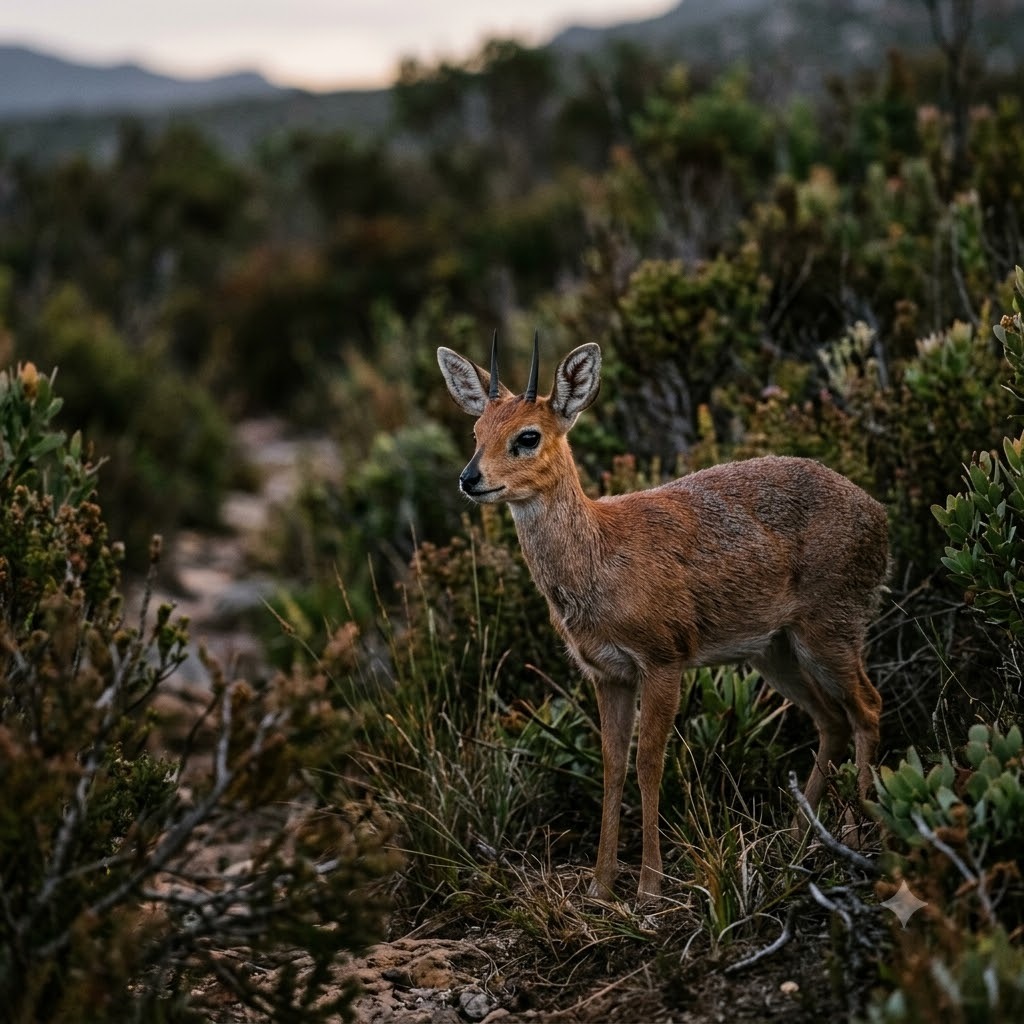
Cape grysbok are stocky and reddish-brown flecked with white hairs, giving a grizzled look, with large ears and short sharp spike horns on rams. The grizzled red-and-white coat is the giveaway.
Range & Habitat
They occupy the dense fynbos, scrub and thicket of the southwestern Cape of South Africa, sticking close to heavy cover.
Behavior & Sign
Cape grysbok are solitary and largely nocturnal, lying up in thick brush by day and feeding at the edges at night and in low light. Sign includes tracks and dung in the thickets.
Hunting Seasons & Timing
Hunted on the plains-game calendar, with the only real chances in the first and last light when they move at cover edges.
Hunting Methods
Still-hunting and glassing thick cover at dawn and dusk, and ambushing feeding edges; quick close shots are the rule.
Gear & Optics
An accurate rifle in .22 centerfire to .243, or a shotgun in cover, with bright low-light glass for the shadowed thickets.
Shot Placement & Field Care
Precise placement on a small animal in poor light; do not shoot into brush. A full mount suits the small trophy.
Meat & Eating Quality
Grysbok venison is tender and good for its size, though it is hunted mainly as a trophy.
Common Mistakes
Hunting the heat of the day when they are bedded and shooting at movement in the brush.
Regulations & Conservation
Hunted under standard licensing in its limited range. Confirm import rules. This is a reading guide, not legal advice.
FAQ
Why so hard? Secretive, nocturnal and tied to thick fynbos.
Best time? The first and last light of day.